In Rwanda’s Eastern Province, savings cooperatives are doing something larger financial institutions have long failed to do: reaching the farmers on the front line of climate change and giving them the tools to adapt.
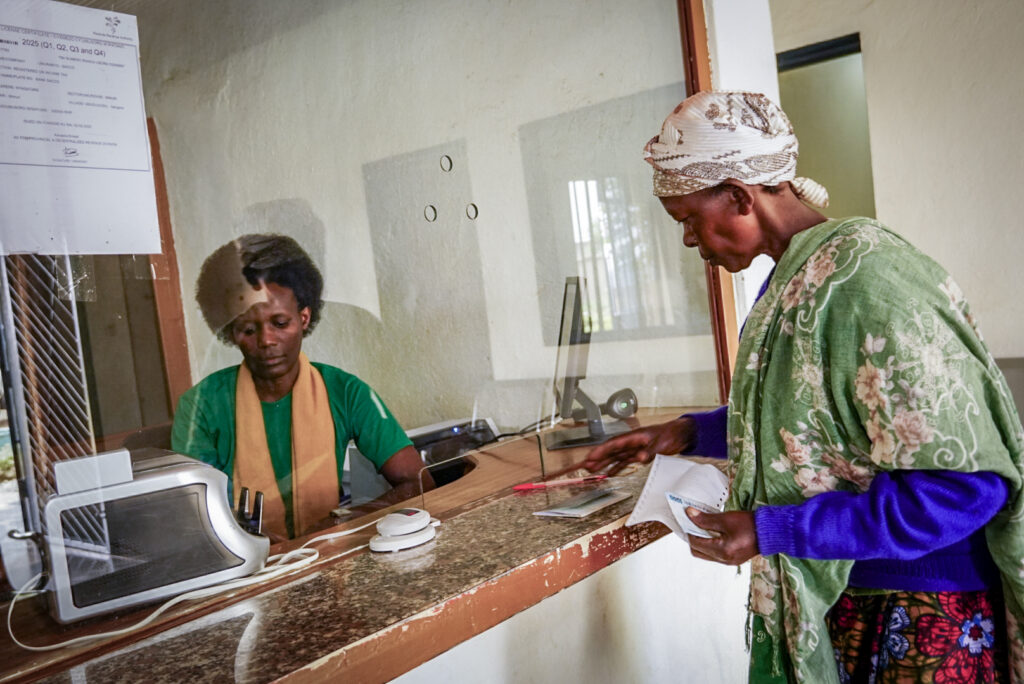
Diogene Bayingana remembers a time when banking felt like something that happened elsewhere, to other people. As manager of Umurabyo SACCO, a savings and credit cooperative, in Nyagatare District in Rwanda’s Eastern Province, he has spent nearly two decades trying to change that.
‘Mainstream banks were too far away, both physically and psychologically, for the people who needed them most,’ he says. ‘When we launched in 2008, our mission was clear: bring finance closer to communities, particularly women who had been excluded for too long.’
That mission has, by most measures, succeeded. Umurabyo now serves 18,000 people, with a membership of 8,300. Rwanda as a whole has made striking progress in financial inclusion: as of 2024, 96% of adults use or have access to financial products.
Yet what is perhaps more remarkable is what these cooperatives have started doing with that access. Increasingly, they are becoming vehicles for climate adaptation, offering loans tailored to farmers who want to invest in more sustainable, resilient ways of working the land.
‘Members trust us with their savings because we’ve removed the barriers.’
Green Loans for Greener Farms
Among Umurabyo’s most promising products is a green loan tailored to maize farmers that encourages the integration of agroforestry into their farming practices. The idea is straightforward: by combining trees with crops, farmers improve soil health, boost yields and build resilience against erratic rainfall.
Early uptake has been strong enough to inspire others, with farmers using the loans to purchase irrigation equipment and solar-powered tools.
The results have been visible in the cooperative’s books as well as in the fields. Umurabyo’s green loan portfolio grew from 80 million Rwandan francs (47,000 euros) in 2023 to 200 million Rwandan francs (120,000 euros) in 2025. ‘Farmers who have benefited from this now report better soil health and crop yields than before,’ says Diogene.
The cooperative’s reach into communities is deliberately granular. It maintains three representatives in each village who serve as a link between the institution and its members, following up on loans and providing support. ‘Members trust us with their savings because we’ve removed the barriers,’ Diogene explains.
Thinking Bigger
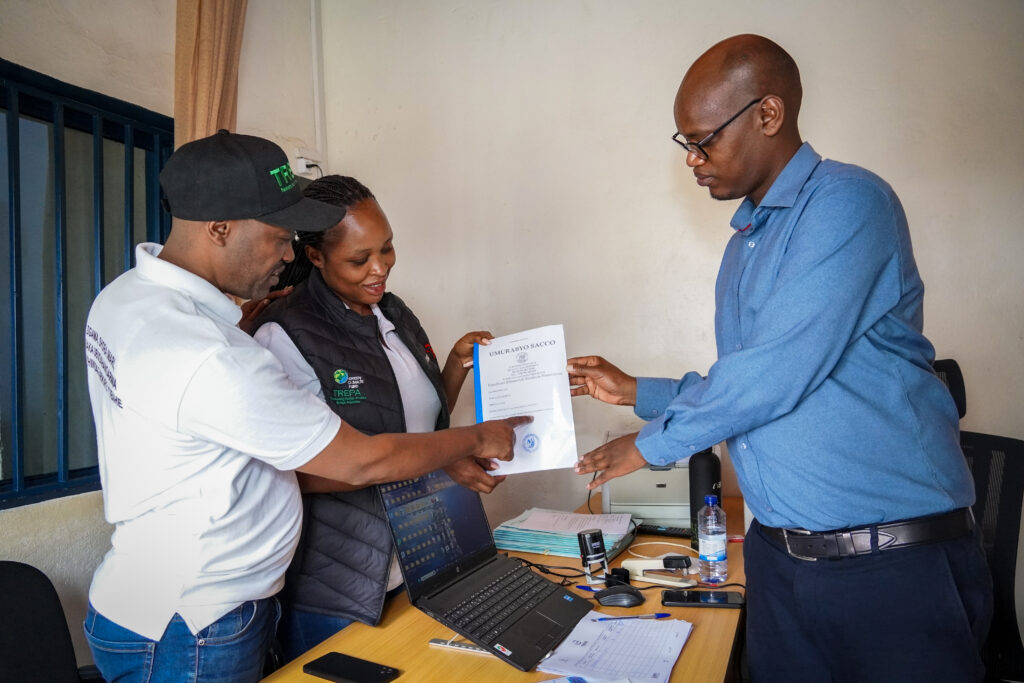
This is not happening by accident. Since 2023, the TREPA project, funded by the Green Climate Fund and implemented by a consortium that includes Cordaid, has worked to scale green finance across Rwanda’s cooperative sector. The project’s approach, says Jaques Dusabe Baziga, Senior Access to Finance Expert at Cordaid Rwanda, began with an instinct to go further than the original plan.
‘The original project plan was to work with just five microfinance institutions and public limited companies in project locations,’ he explains. ‘But seeing the need for financial inclusion and what it could do for people, we thought bigger. We invited all microfinance institutions from seven districts and 95 sectors to share knowledge about green financing and climate issues.’
‘By integrating environmental components into financial products and providing both financing and education, cooperatives are helping build a more sustainable future.’
The Outcomes Have Exceeded Expectations
That participatory approach, involving a consultant to develop training on green financial products, climate adaptation, and creditworthiness, trained 100 microfinance institutions in total. The outcomes have exceeded expectations. ‘So far, 95 cooperatives and five public limited companies have successfully piloted 57 green financial products addressing climate resilience and adaptation,’ says Charity Uwase Kabarega, TREPA Project Coordinator. ‘This is a big achievement. We’ve reached more institutions without needing more resources.’
Kabarega points to the cooperative model itself as central to the project’s success. ‘Their community-focused structure makes them ideal for supporting green solutions. By integrating environmental components into financial products and providing both financing and education, cooperatives are helping build a more sustainable future.’
The Role of Women
None of this is without difficulty. Designing financial products that align with farmers’ lived realities requires constant attention to local context, soil conditions, value chains, and food security concerns. Compliance with the terms of green loans, while generally good, is an ongoing process rather than a given.
‘We may not be at 100% on compliance within green loans, but we are approaching it as an opportunity to share ideas and learning with farmers to ease them in,’ says Diogene.
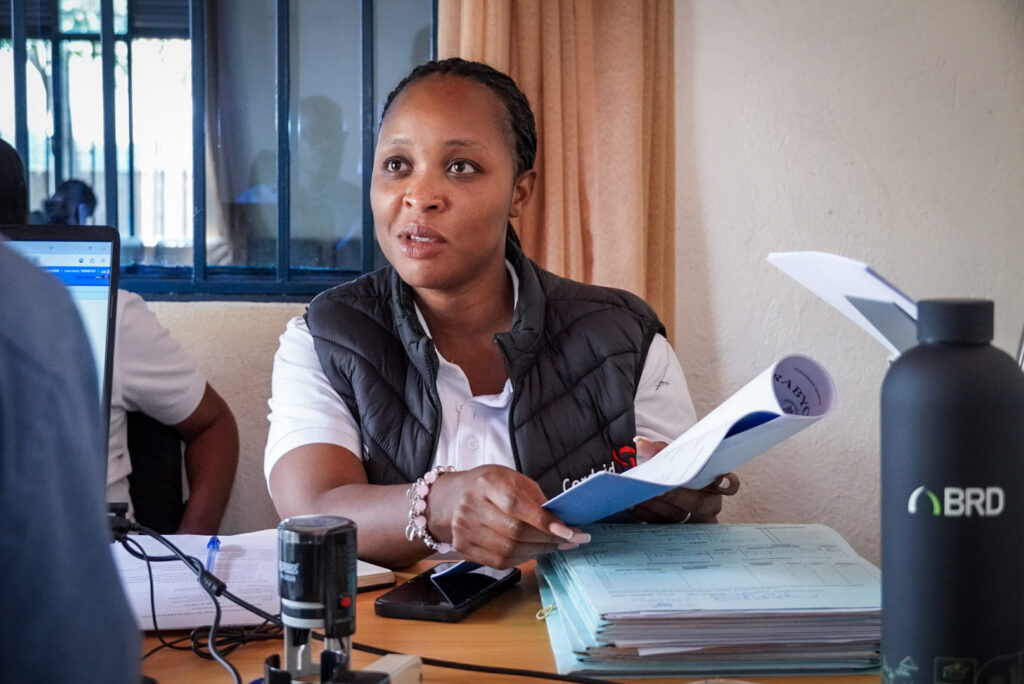
One pattern has stood out. ‘We have seen a trend of women paying back loans better than the men,’ Diogene observes. ‘Women do not divert the loans into other items; they stick to the purpose for which we agreed, like buying seedlings or irrigation equipment. This is a good sign because they can influence the men too.’
It is an observation that echoes a broader body of evidence on women’s role in climate-adaptive agriculture. And one that the cooperative sector, with its historical commitment to reaching excluded groups, may be well-placed to build on.
What Comes Next
Umurabyo is not standing still. The cooperative plans to diversify its green product range into other value chains, including rice and beekeeping, designed to encourage agroforestry and climate adaptation more broadly. The approach will be deliberately place-based, adapting products to the specific type and nature of farming in each community, and involving farmers in the design of information materials from the outset.
About TREPA
The Transforming Eastern Province through Adaptation (TREPA) project is a six-year initiative in Rwanda’s Eastern Province, funded by the Green Climate Fund, running from 2021 to 2027. Its main goal is to restore 60,000 hectares of degraded landscapes and build community resilience to climate change by promoting sustainable agroforestry, improved land management, and the development of climate-resilient value chains.
The project is led by the International Union for the Conservation of Nature (IUCN) in partnership with Cordaid Rwanda, the Rwanda Forestry Authority, World Vision, and CIFOR-ICRAF.