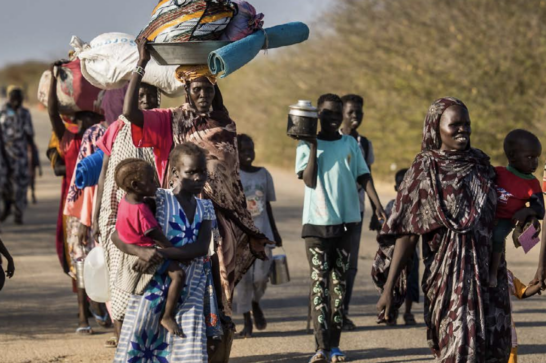
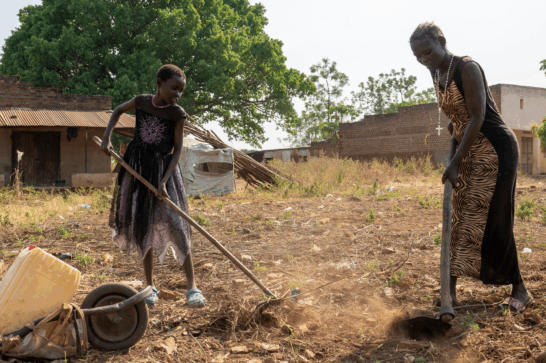
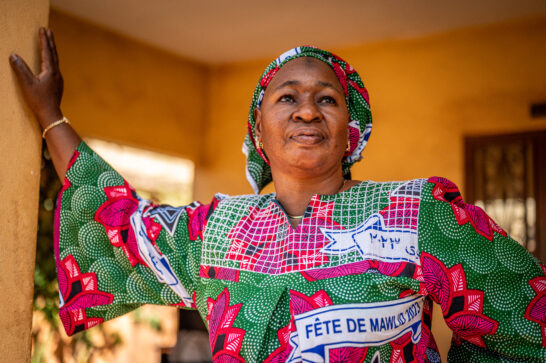
Syria’s crisis is one of the world's longest-running humanitarian emergencies. Over a decade of conflict has left millions displaced, infrastructure severely damaged, and access to basic services deeply disrupted.
While parts of the country have seen a degree of stabilisation, underlying fragility persists, and needs remain enormous, particularly for displaced families, women, children, and people with disabilities.
Cordaid supports people affected by years of conflict and displacement in Syria through a local partner network. In a context where needs remain acute and the humanitarian situation continues to shift, we work with trusted organisations with deep roots in the communities they serve.
FACTS AND FIGURES
Results & Indicators
16 million people in Syria in need of humanitarian assistance (EU Civil Protection and Humanitarian Aid 2025)
7 million people are internally displaced (EU Civil Protection and Humanitarian Aid 2025)
95% of Syrians lives below the povery line (World Bank 2025)
WHAT WE DO IN SYRIA
Our support focuses on two complementary areas: immediate humanitarian relief and sustained community-based protection and education services.
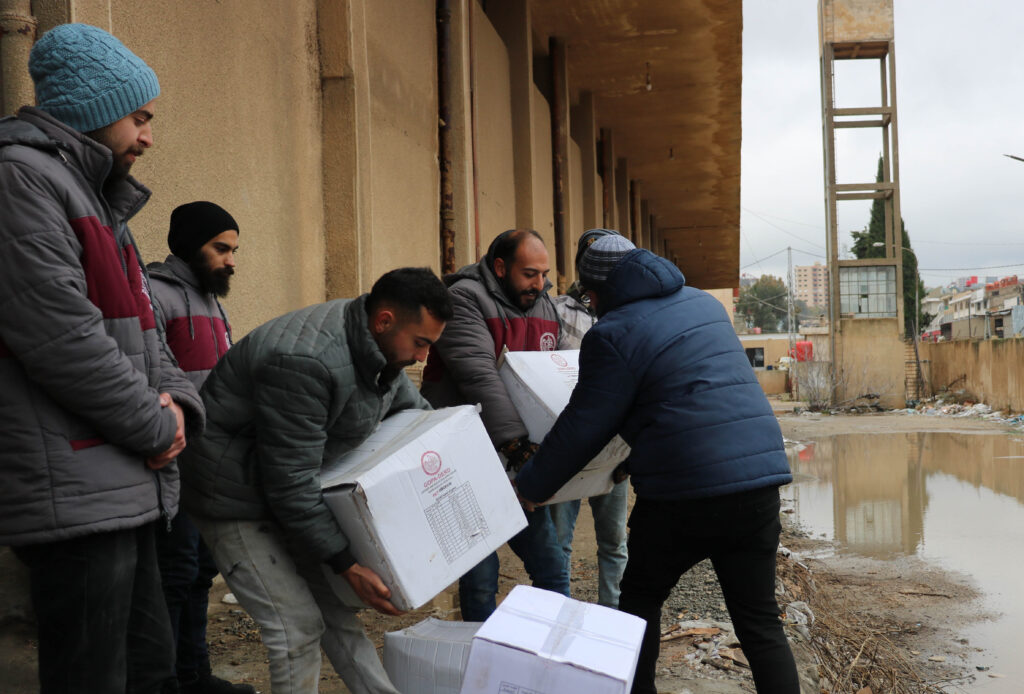
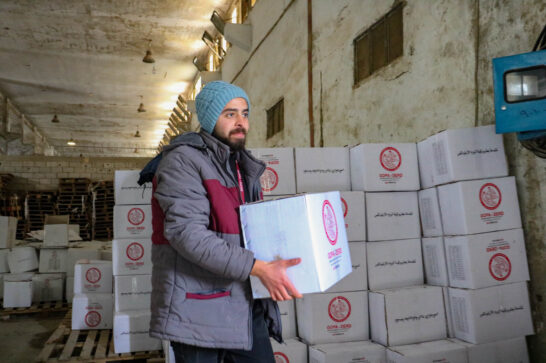
Emergency Food and Hygiene Assistance in As-Suwayda In partnership with GOPA-DERD (the Greek Orthodox Patriarchate of Antioch’s Department of Ecumenical Relations and Development), Cordaid supported an emergency response in As-Suwayda and its rural surroundings, including Salkhad and Shahba, between September 2025 and February 2026.
The project distributed food parcels and hygiene kits to 1,315 families (3,548 individuals in total). They were selected through GOPA-DERD’s Beneficiaries Relations Management System, prioritising people in the most vulnerable positions: families with elderly or chronically ill members, large households, female-headed households, pregnant or lactating women, and internally displaced people.
An aid distribution in As-Suwayda. Photograph: GOPA-DERD
Community Centre in Dweil’a, Damascus In Damascus, Cordaid supports GOPA-DERD’s community centre in the Dweil’a neighbourhood, an area home to large numbers of displaced families from across Syria, including from Aleppo, Deir Ezzor, Idlib and Raqqa. Many of these families have been displaced for years and have no safe area to return to.
The neighbourhood was further affected by a suicide bombing at a local church in June 2025, which killed at least 20 people and heightened fear among minority communities. The community centre provides a rare safe and neutral space in this fractured urban environment.
Cordaid’s support for 2026 enables the centre to continue delivering an integrated package of protection and education services in the area, including:
Child protection
Gender-based violence prevention and response
Psychosocial support
Home-based rehabilitation for people with disabilities
Remedial education classes for up to 250 students
Vocational training and small business start-up grants
The centre receives between 100 and 120 visitors daily. Its catchment area covers approximately 116,000 individuals across six neighbourhoods. The 2026 programme aims to reach 3,650 individuals with protection activities and prevent school dropout for 250 students through targeted remedial education.
FACTS AND FIGURES
Results & Indicators
3,548 people supported in As-Suwayda
3,650 people supported in Dweil'a, Damascus
OUR PARTNER
GOPA-DERD has been operating in Syria since well before the current crisis. With community centres, established selection systems, and trusted relationships with local leaders and authorities, GOPA-DERD combines humanitarian professionalism with genuine community embeddedness.
As Syria’s crisis continues, Cordaid remains committed to supporting locally rooted partners who can deliver timely, accountable, and dignified assistance.