Smallholder farmers in Rwanda make up over 70% of the population. They must navigate challenging terrain and rely on small, fragmented plots of land, unpredictable climate, pests, and volatile markets. Cooperatives unite farmers and provide collective strength that delivers stability, improved market access, and efficiency.
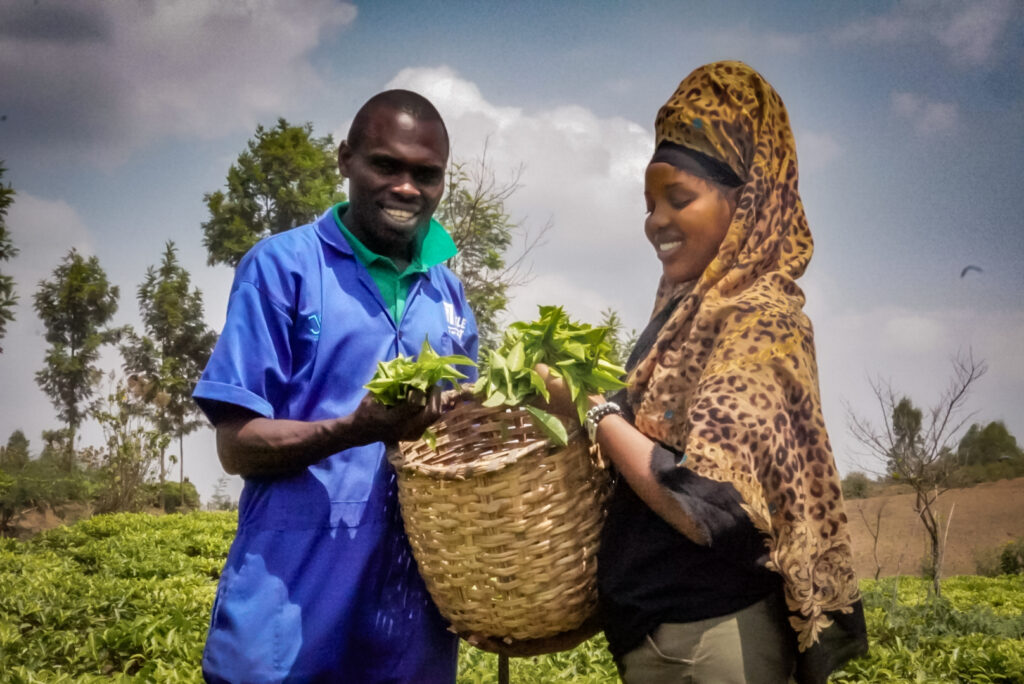
For many Rwandan farmers, a good harvest unfortunately doesn’t always guarantee a fair price, leaving them vulnerable to middlemen and market fluctuations that can wipe out a year’s work. This struggle has created a cycle of low income and limited opportunity, making it difficult for communities not only to invest but also to benefit from their trade.
Need for Change
The Hillside Organic Tea Cooperative, established in 2019, is located in Rwanda’s Rulindo District. It comprises 2,495 members, including 1,707 men, 788 women, 138 youth, and 180 persons with disabilities. It was established from a shared vision to empower tea farmers by coordinating their efforts and enhancing their livelihoods.
The cooperative’s members faced many challenges, including limited financial literacy, poor financial record-keeping, limited cooperative governance, a lack of awareness of Rwanda’s laws, and leadership committees unsure of their roles. Reliance on incomplete and poorly maintained financial records hindered accurate transaction management and led to inconsistencies in financial reporting.
The PSAC Project: a Foundation for Success
Through the Promoting Smallholder Agro-Export Competitiveness (PSAC) project, Cordaid strengthens the capacity of smallholder farmers across the tea, coffee, and horticultural value chains.
Funded by the International Fund for Agricultural Development (IFAD) and implemented in partnership with the National Agricultural Export Development Board (NAEB), the project aims to increase smallholder farmers’ incomes in export-oriented value chains.
Cordaid delivered targeted training to the cooperative executive committee, audit committee, and market commission of Hillside Organic Tea. Topics included cooperative governance and leadership for cooperative leaders; training in farming as a business; financial literacy and marketing skills for cooperative leaders; and capacity building for financial institutions on climate-resilient finance. These sessions empowered leaders and local trainers to cascade knowledge to farmer field schools.
‘I have managed to increase my income. Now, I am proud to be a trainer myself, using what I have learned to support others.’
‘We did not use to see farming as a business opportunity,’ say Tito Hakizamungu, chairperson and cooperative manager at Hillside Organic Tea Cooperative. ‘Especially handling money was challenging. We now see a significant change in our records and business income. We are also managing our expenses better.’
Tito adds that the training delivered by Cordaid has helped the supervisory committee carry out its functions and responsibilities effectively. ‘Our financial records are now well tracked. But there’s another important change. In the past, farmers relied on tea seedlings from distant tea factory nurseries. However, thanks to support from PSAC, eight local groups now produce tea seedlings, making distribution to farmers much easier and more accessible.’
Innocent’s Story
Innocent Ahoyankuye joined Hillside Organic Tea Cooperative in 2020, after struggling to sell his tea at a fair price. Although he was an ardent tea farmer in his community, he recognised the importance of joining a cooperative to ensure he benefited from his hard work.
‘To have a market for your tea, you have to sell through a cooperative,’ he says. ‘The cooperative has a code for members, and when they sell to the factories, every farmer receives their payment via individual accounts.’
As a participant in the Training of Trainers, Innocent acquired knowledge that has improved his tea farming. ‘I learned budgeting, record management, and how to manage savings. I used to plant tea by copying what others did on their farms, but through this training, I learned about good farming and business practices that can improve my income.’
Today, Innocent owns a plantation that yields 80–100 kg of tea per month, which he sells to the cooperative. He now hopes to expand this using new skills acquired through the PSAC project.
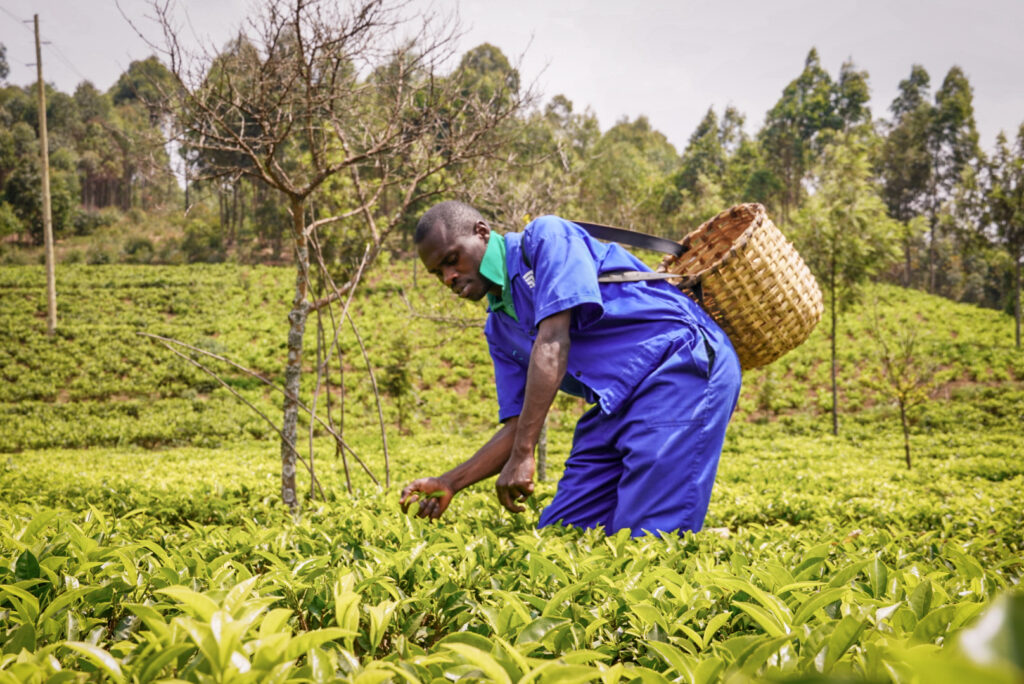
Unlike traditional tea farming, which relies heavily on synthetic fertilisers and pesticides, the cooperative focuses on organic cultivation because it works in harmony with nature’s systems. The members treat the tea plantation as a living ecosystem in which every element, from soil microorganisms to beneficial insects, plays a crucial role in maintaining balance.
Innocent says the benefits go even further: ‘Growing organic tea is rewarding because I get a better price for it than for non-organic tea. I used to have 17 acres, but I decided to sell one of my bulls and use the proceeds to buy an additional 7.5 acres of farmland. This way, I have managed to increase my income. I was compelled to do this by the training. Now, I am proud to be a trainer myself, using what I have learned to support others. During cooperative meetings, I share my experiences and help fellow members improve their farming practices. It’s rewarding to give back to the community.’
A Stronger Cooperative Benefits the Entire Community
Cooperatives have been recognised as critical agents of socioeconomic development. The member-owned, community-oriented structure has the potential to foster resilience, sustainable development, and inclusive growth.
With tea farms covering 342 hectares, the cooperative hopes to maximise its impact, and collaboration between governments and cooperatives is crucial. Communities recognise the value of cooperative enterprises as a vital component of the economy and society.
The chairperson of the cooperative shows us the evidence. ‘We now pay health insurance premiums for vulnerable people who cannot afford them. The cooperative also offers interest-free school-fee loans to members. This has greatly helped members continue focusing on important work on their farms without worrying about where the next fees or food will come from.’
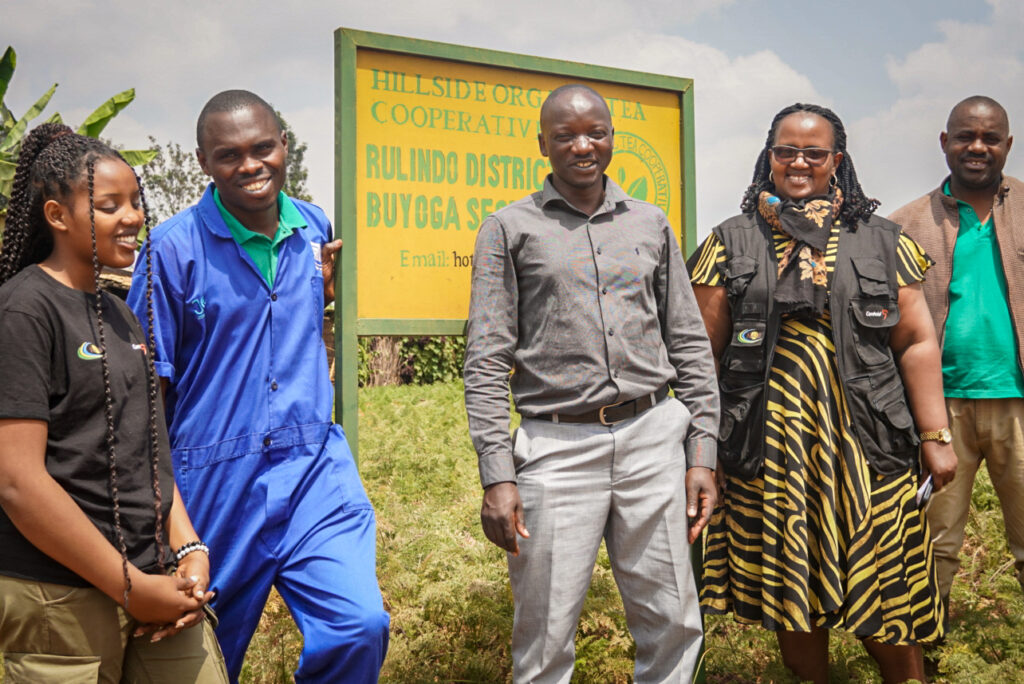
Hillside Organic Tea has also become creative in how it supports its members. For instance, it has given them a total of 167 cattle to improve their livelihoods. The cooperative benefits by collecting cow dung fertiliser for use on its tea plantations.
‘When cattle give birth, the community unanimously agrees on who takes the calf and looks after it until the cow gives birth again, when the calf is then given to a different person,’ Tito explains. ‘That way, the cooperative hopes to empower all its members by sharing the benefits of having livestock, and it also benefits from the fertiliser from them.’
A Path Towards Sustainable Growth
Building on the progress achieved through the PSAC Project, the Hillside Organic Tea Cooperative is charting a path towards sustainable growth and inclusive prosperity. Plans to implement annual dividend distributions in accordance with cooperative law and to develop a comprehensive business plan are strengthening its governance and strategic direction.
The cooperative’s renewed leadership and commitment to transparency position it not only as a producer of quality tea but also as a driver of economic empowerment for its members.
The cooperative plans to recruit three additional agronomists, bringing the total to five, to ensure effective follow-up and support for farmers’ agricultural activities.
About the PSAC Project
Funded by IFAD and implemented in partnership with NAEB, the Promoting Smallholder Agro-Export Competitiveness (PSAC) project is a six-year initiative to increase the income of smallholder farmers engaged in export-oriented value chains, specifically in tea, coffee, and horticulture. The project targets smallholder farmers organised into 108 cooperatives, with an emphasis on the inclusive participation of women (40%) and youth (30%).
Cordaid, as a key partner, is tasked with strengthening governance and leadership for cooperatives; enhancing farming-as-business skills and entrepreneurship, and financial management capacities for cooperatives and farmers; promoting inclusivity for women and youth in targeted value chains; supporting financial institutions in advancing climate-resilient financial products in targeted value chains; strengthening access to markets; and promoting digital and technological solutions for agriculture to support the broader objectives of the PSAC project.