Across the world, tensions often begin with everyday problems that go unanswered. When these problems accumulate, they can erode trust and deepen social divides long before any violence becomes visible. Today, experts explored how people-centred justice can help identify early warning signs of conflict and be one of the most effective tools for conflict prevention.
People-centred justice (justice that is accessible, fair, and grounded in people’s daily realities) offers a way to address these grievances early, before they escalate. By resolving conflicts at the community level, justice systems can help prevent tensions from hardening and strengthen resilience over time.
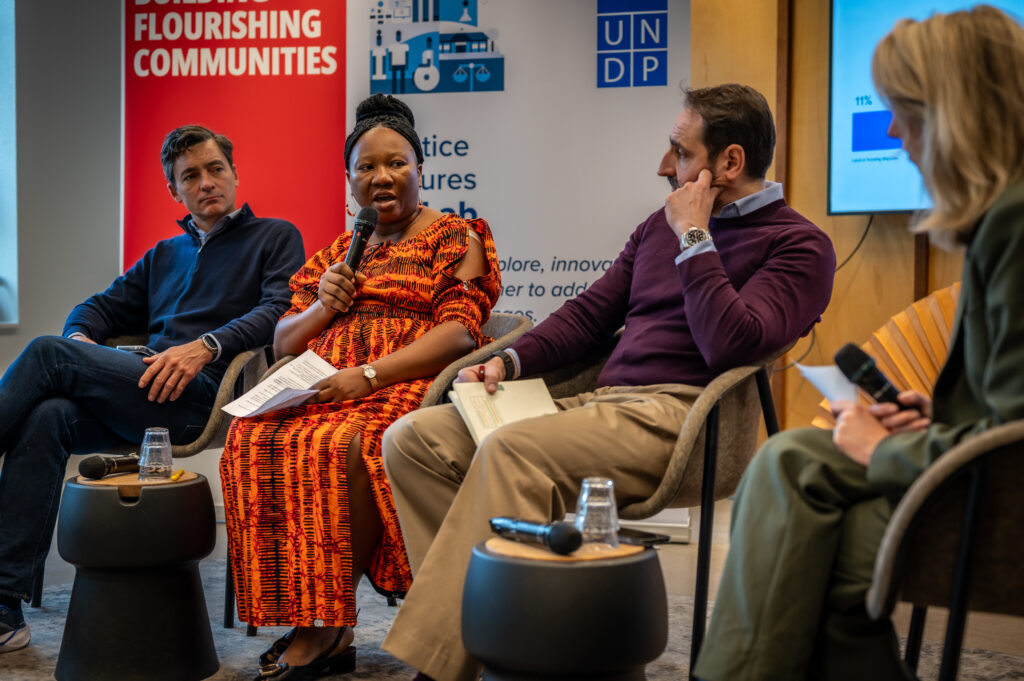
During an interactive session at the Humanity Hub in The Hague, organised by Cordaid and the Civil Society Platform for Peacebuilding and Statebuilding (CSPPS), in partnership with the United Nations Development Programme (UNDP), experts and audience members explored how people-centred justice can serve as an effective tool for early warning and conflict prevention.
The speakers drew on examples from conflict-affected contexts, including the Democratic Republic of the Congo, Ethiopia, and Nigeria, and the discussion highlighted why these lessons matter equally in more stable societies, including the Netherlands, where signs of mistrust, inequality, and polarisation are increasingly visible.
Watch the video below to hear Claudine Tsongo (Dynamique des femmes juristes), Moncef Kartas (Head of UNDP’s Peace Support Facility in Ethiopia), and Jelle Postma (Executive Director of Justice for Prosperity) share their perspectives on the importance of people-centred justice.
