In the coastal areas of Bangladesh, Cordaid trains 10,000 farmers in saline agriculture. By learning to grow salt-tolerant crops on land damaged by saltwater, farmers can make their fallow, saline soil fertile again, produce sufficient food for the community, and generate income.
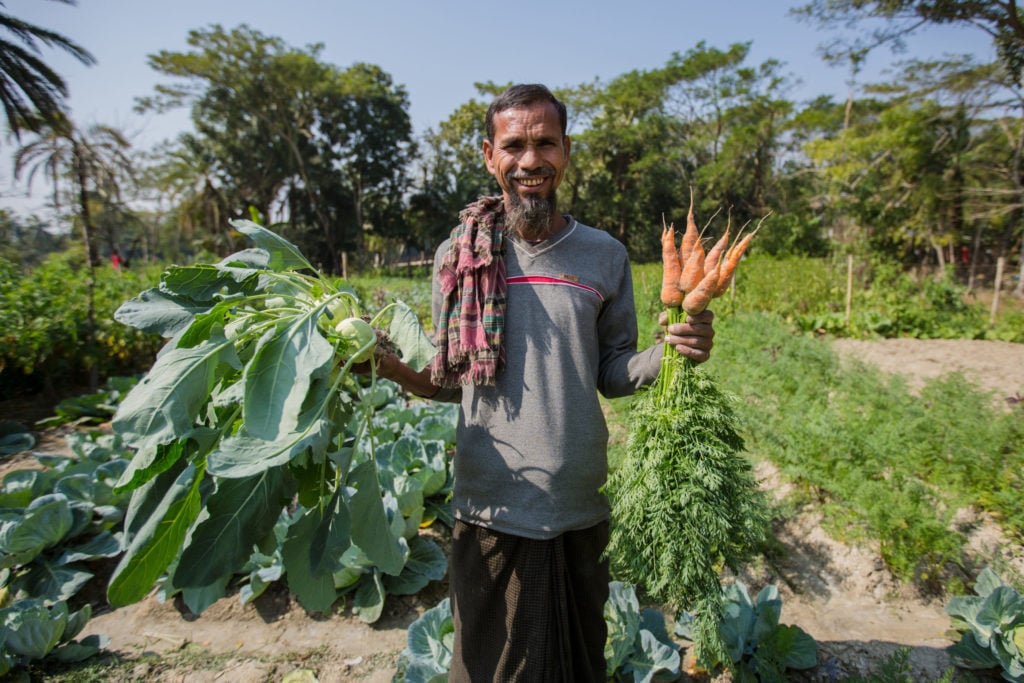
Worldwide, there is a growing shortage of land for agriculture, partly due to salinisation, the increase of salinity in the soil. This can have various causes, such as flooding from the sea or the rise of saltwater through the bottom, leading to the formation of arable land.
Salinisation is a significant problem in Bangladesh, especially in coastal areas, where climate change is driving increasingly extreme cyclones that flood farmers’ fields. The people who live in these areas often depend on agriculture, and their lives are now jeopardised.
The solution: salt-tolerant crops
Until now, farmers have mainly tried to reduce soil salinity. But the methods are expensive, and their effects are short-lived.
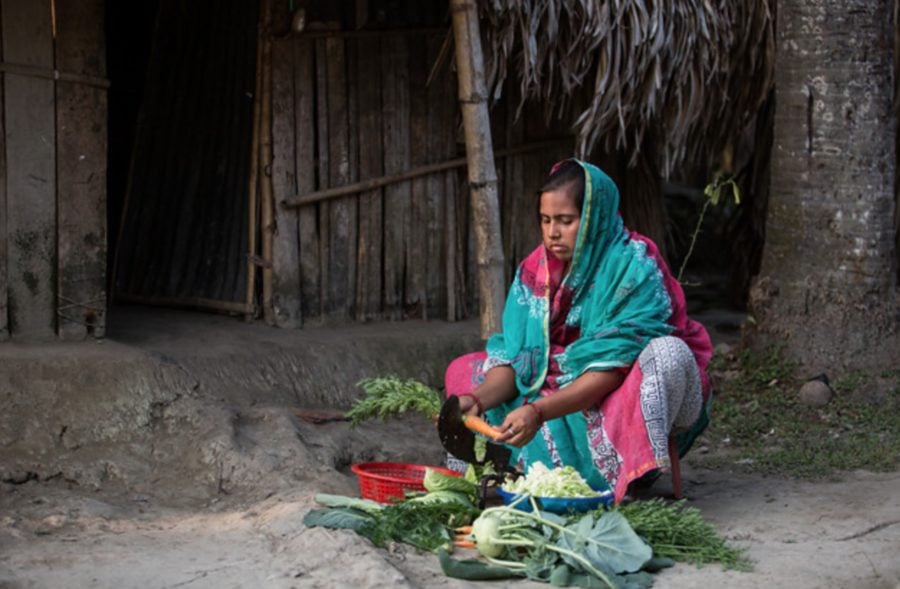
Cordaid turns a growing problem into a sustainable solution by introducing varieties of crops that grow well on saline soil. We do not try to lower the concentration of salt in the ground but use it to our advantage. This way, the degraded soil becomes productive again, offering new opportunities for farmers.
Facts and figures
- 76 million hectares of farmland worldwide threatened by salination;
- 53% of farmland in Bangladesh affected;
- 10.000 farmers receive training;
- Resulting in 2 to 3 extra harvests per year.
Watch this video about The Salt Solution in Bangladesh:

Innovation from the Netherlands
In 2015, ICCO (now part of Cordaid) invited Salt Farm Texel to investigate the possibilities of introducing salt-tolerant crops in Bangladesh. These are natural variants of regular, meaning not genetically modified crops, that grow considerably better on saline soil. Thanks to large-scale screening across many crops and varieties, the Dutch company identified the most salt-tolerant varieties at its test site on the island of Texel. Several crops were selected: carrots, potatoes, kohlrabi, cabbage and beets.
Working together with progressive farmers
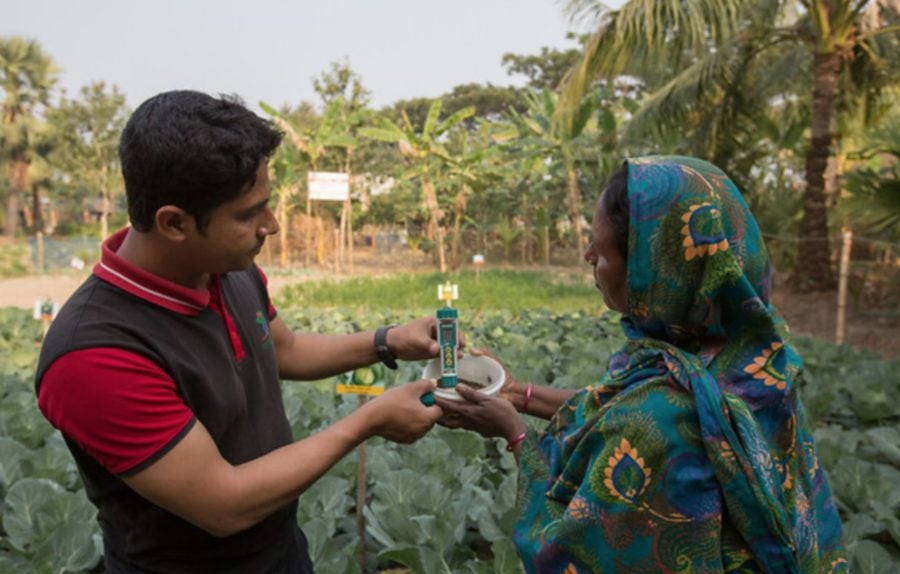
In this project, we work with farmers who are open to innovative ideas and have a respectable position in the community. As pioneers, they can put saline agriculture into practice. On their land, they will demonstrate the new techniques to other farmers and convince them to adopt saline agriculture.
Commercialisation of seeds
The next step is to make salt-tolerant seeds widely available so farmers can buy them on the market. For this, Cordaid works together with the local seed company Lal Teer. Previously, seeds were imported from the Netherlands. However, this is very expensive and time-consuming. To ensure that the salt-tolerant crops remain available after the project ends, Lal Teer is now investigating which seeds they can develop for the market.
Donors
The Salt Solution project is made possible by the Postcode Lottery. A follow-up to this project, called COASTS, is made possible by the Netherlands Enterprise Agency. COASTS is a public-private partnership comprising Lal Teer Seeds Ltd, the Soil Resource Development Institute of the Bangladesh Ministry of Agriculture, Bangladesh Agricultural University, and Cordaid.
Update: This project was completed in November 2025, but the knowledge and resilience gained will continue to exist locally. This will increase their harvests and income security.
This project is supported by
