An Investment in Local Solutions
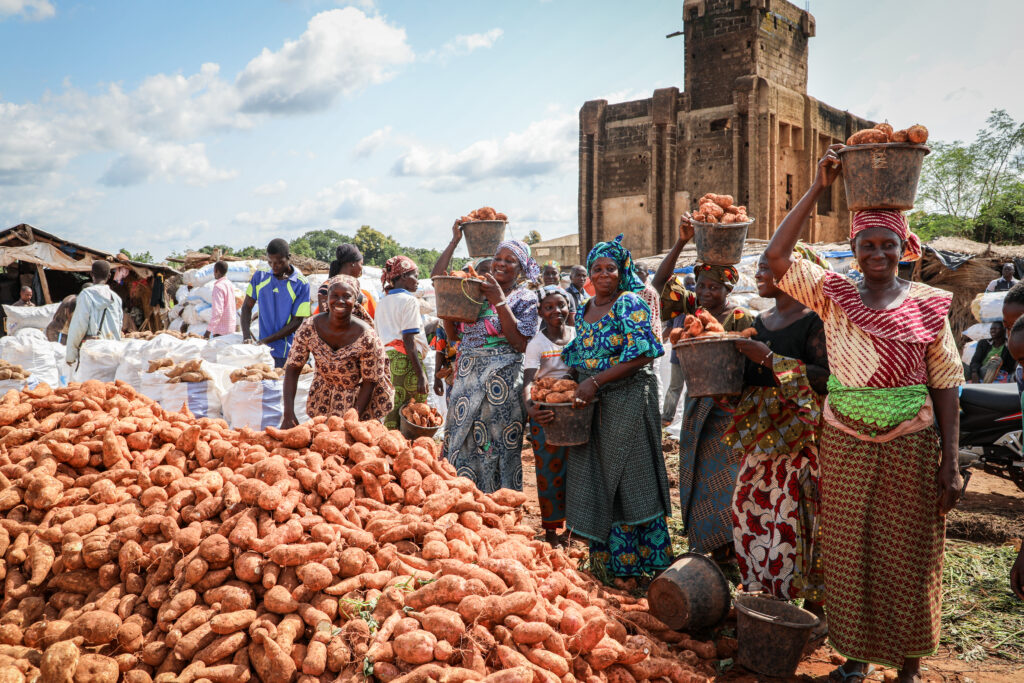
Cordaid, working alongside its Malian partner AMASSA Afrique Verte, has secured €1.7 million from the Postcode Lottery for a three-year project. The funding will support more than 20,000 farmers across 500 co-operatives in the regions of Kita, Sikasso, Ségou and Koulikoro, areas chosen for both their agricultural significance and their relative stability.
The project’s approach spans the entire supply chain. Solar-powered irrigation systems will allow farmers to grow vegetables throughout the dry season, while solar-powered refrigeration units will extend the shelf life of harvests by months. Rather than being compelled to sell at rock-bottom prices immediately after harvest, farmers will be able to wait for better market conditions, a seemingly small shift with significant consequences for household income.
Co-operatives will receive training in governance, financial management and collective bargaining, and will be connected to reliable buyers and suppliers. Farmers will be able to negotiate jointly, improve the quality of their produce and secure fixed contracts, rather than remaining at the mercy of intermediaries who set the price.
Access to capital is addressed through a microfinance model: farmers contribute 15 per cent of an investment, borrow 75 per cent from a microfinance institution, and receive a 25 per cent subsidy from Cordaid. Those who repay their loans can reinvest, turning financing from a risk into a foothold.
‘What makes this contribution so special is that it strengthens local capacity.’
Women and Young People at the Centre
Women make up around 80 per cent of vegetable producers in Mali, yet they rarely have access to land, training or credit. Young people, meanwhile, find so few opportunities in rural areas that many leave for cities or, in some cases, fall into criminal networks. The project gives both groups a central role within co-operatives, offering the prospect of stable employment and income in their own communities.
Cordaid’s country office in Bamako coordinates implementation, but the organisation is clear that lasting change depends on local ownership. Co-operatives are not simply supported; they are equipped to lead, make decisions and grow independently, including after the project ends.
The Highest Charity Yield on Record
The grant is an additional contribution to Cordaid on top of the Postcode Lottery’s regular annual donation of €4,050,000. It comes in a record year: the lottery’s 3 million participants generated €378 million for good causes in 2025, the highest figure in its history.
‘What makes this contribution so special is that it strengthens local capacity,’ said Cordaid director Heleen van den Berg. ‘With this support, farmers and co-operatives in Mali can take their own solutions further. We are deeply grateful to the Postcode Lottery and its participants.’
By the end of the project, Cordaid expects to have improved food security for more than 140,000 people, reduced crop losses by 40 to 50 per cent and increased farmers’ revenues by 20 to 30 per cent.