In this opinion article, Rosana Lescrauwaet, Global Health Advocate and Chair of the Dutch Global Health Alliance, stresses the importance of pandemic preparedness and the role of civil society in memory keeping, while criticising political incoherence.
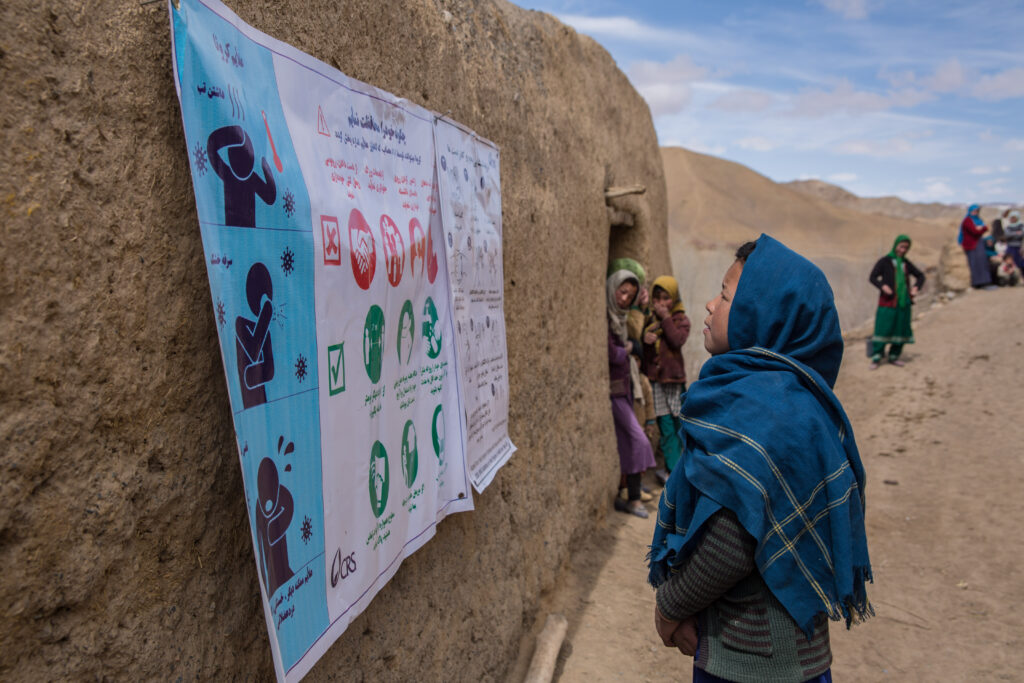
I am a different person than I was before COVID-19. Global pandemics do that to people. I understand the need to move on, to heal, to rebuild after a collective trauma. People and countries cope differently. Some made it their mission to ensure it never happens again. Some reacted by rejecting the very science that tried to save them. And some, unfortunately, are simply trying to forget it ever happened.
The Netherlands, it appears, has chosen the last path.
COVID-19 swept the world without any regard for borders or politics. It broke through our defences and exposed vulnerabilities that experts had long warned about, but which we lacked the foresight, or political will, to address.
While it was happening, we scrambled and survived through trial and error. That process cost millions of lives and, in the Netherlands, in the first year alone, €82 billion, according to the Rekenkamer (the Court of Audit, an independent body that monitors how the government spends public money).
We Said We Would Be Better Prepared…
For years afterwards, it seemed unthinkable that we would simply forget; the fear, the cost, the sacrifice. We said we would be better prepared next time. We said we would build stronger. That commitment, it turns out, lasted less than six years.
As catastrophic as COVID-19 was, it was neither the first nor the last disease with pandemic potential. In November 2025, Ethiopia reported six deaths, including a doctor and a nurse, from Marburg, a viral haemorrhagic fever outbreak, in a remote southern region. More than 30,000 passengers pass through Addis Ababa’s airport every day, travelling to five continents. The potential for spread is real and terrifying. And yet, that outbreak was contained. The world is small. Outbreaks are not.
During Afrika Dag 2025, the Dutch Global Health Alliance organised a session on health, diplomacy, and global security. We discussed these risks with experts from across the world. Since then, they have only grown more urgent.
Water management is not debated every budget cycle. We build, maintain, and repair the dikes because we understand viscerally what happens when we do not.
From €300 Million to Zero
The cuts to pandemic preparedness have, rightly, received media attention. Chris van Dam, chair of the Safety Board (OVV), has spoken in the Dutch media (NOS and de Volkskrant) about what the €300 million was actually for. His institution was commissioned to investigate what went wrong in the COVID-19 response and how to prevent a repeat.
The Rutte IV cabinet accepted every recommendation and committed €300 million accordingly: to expand GGD capacity with 185 additional FTE for early outbreak detection in communities, and to build a new RIVM coordination unit: the Landelijke Functie Opschaling Infectieziektebestrijding (LFI), able to organise mass testing, vaccination, and contact tracing at scale when the next outbreak comes.
In an era of budget cuts, €300 million earmarked for something we might not need can look like an easy accounting target. But consider what it is protecting against. According to the Court of Audit, the COVID-19 response cost this country €82 billion in 2021. Investing €300 million to guard against an €82 billion liability is a return that even the most conservative accountant would endorse without hesitation. And yet here we are.
The Schoof cabinet cut that money. The Jetten cabinet is maintaining the cuts. Van Dam’s warning should be chilling: if a new pandemic strikes, we will fight it from scratch; no lessons applied, no systems in place, chaos once more. As he put it, we will be ordering the fire truck while the house is already burning.
The Dikes We Are Not Building
The Netherlands has a cultural and political identity built on collective investment in protection against low-probability, high-impact risks. Water management is not debated every budget cycle. We build, maintain, and repair the dikes because we understand viscerally what happens when we do not. We teach children how to swim fully clothed in case a dam breaks. We do not wait for a flood to decide whether flood defences are worth funding.
Pandemic preparedness is in the same category as infrastructure. It is not an expenditure. It is protection, it is security, it is defence. Bianca Buurman, chair of the nurses’ association V&VN, makes this plain to the NOS: ‘You wouldn’t say: let’s abolish the dikes, because we’ve had very few floods.’
And yet this cabinet, in a coalition agreement that made security its defining theme, is doing exactly that. Defence receives billions in new investment. Pandemic preparedness receives nothing. That is not a trade-off. It is a blind spot.
NATO allies are now discussing health security as a core component of collective security. The EU is increasing its focus on global health resilience as a strategic priority. Meanwhile, the United States’ approach to pandemic surveillance agreements is rightly alarming the world. The Netherlands cannot take defence and security seriously while ignoring health systems. They are part of the same question.
The Netherlands cannot credibly advocate for a strong multilateral health architecture, for full implementation of the Pandemic Agreement, for equitable access to vaccines, while simultaneously switching off the lights at home.
The Global System That Has Already Protected Us
Cordaid works in countries that have never had a €300 million pandemic preparedness plan. Countries in the Sahel and Central Africa, and fragile states, have operated for decades without a well-funded equivalent of the RIVM or a robust GGD. And yet: it is precisely those countries, with international support, that have repeatedly protected us.
The Ebola and Marburg outbreaks that never reached the Netherlands were stopped in part by community health workers in the DRC, surveillance systems in Uganda, and laboratory capacity in Nigeria and Kenya.
As Boniface Hlabano, Programme Manager at Amref Health Africa and a public health leader with 35 years of experience, explained during this expert table: communities are the first to encounter any unusual event. Invest in timely notification, in local response capacity, and you prevent a local outbreak from becoming a global pandemic. ‘No country can be safe,’ he said, ‘unless all countries are safe.’
Rwanda’s response to its 2024 Marburg outbreak is the clearest recent proof of this logic. Strong governance, community engagement, and rapid deployment of vaccines and contact tracing contained the outbreak within weeks. Dr Abdi Mahmud, Director of Alert and Response Coordination at the WHO Health Emergency Programme, was unequivocal: Rwanda was a model the entire world, including the Netherlands, could learn from. It worked because the systems were already in place, built over years of sustained investment. Pandemic preparedness is not a separate emergency structure you build when the crisis arrives. It is a strong, adaptable health system built now that can respond when needed.
Mpox tells the same story in reverse. When vaccines were not equitably distributed to Central Africa, the virus spread to Germany, India, Sweden, Thailand, the United Kingdom, and the United States. Hlabano’s conclusion is not abstract: ‘Investing in health system strengthening should not be seen as an act of solidarity. It is an act of self-interest to keep citizens in the Netherlands, Canada, and the US safe from diseases that may originate far from home.’
America Is Stepping Back. And Us?
The United States has been—rightly—criticised for withdrawing from the WHO, walking away from the Pandemic Agreement, and cutting global health funding. According to a WHO survey of 108 countries in 2025, 70% reported disruptions to health emergency preparedness and response as a direct result of aid cuts. Polio, eradicated in Europe decades ago, is returning: wild poliovirus genetically linked to Afghanistan was detected in Hamburg’s wastewater in October 2025. Diseases do not respect borders, and the surveillance systems that catch them at source are now collapsing.
But while we criticise Washington, we are dismantling our own defences. The Netherlands cannot credibly advocate for a strong multilateral health architecture, for full implementation of the Pandemic Agreement, for equitable access to vaccines, while simultaneously switching off the lights at home. That is not a position. It is a contradiction.
The Netherlands holds treaty obligations through the WHO to support other countries’ health systems. Those obligations begin with not undermining our own. Put plainly, it is a mistake to assume that Dutch public health is insulated from global health. Global problems require global solutions.
Dr Mahmud framed the current moment as both a crisis and an opportunity: as other countries retract, can the Netherlands and like-minded partners use this strategic opening, not to replicate aid dependency, but to co-create equitable health solutions with partner countries? That requires presence, credibility, and investment. Not retreat.
Civil Society Holds the Memory Governments Choose to Forget
Governments forget. Budget cycles are short. Election cycles are shorter. But civil society organisations, working across both the global north and south, do not forget. We work in countries where Ebola circulates, where Marburg is endemic, where health workers die without protective equipment, and where governments have promised ‘never again’ before. We carry the institutional memory that The Hague has lost in five years.
We have seen what happens when these systems are underfunded. We work alongside communities constantly struggling to build and sustain health infrastructure. We know, from the ground, from the clinics, from the data, that dismantling pandemic preparedness is not a saving. It is a deferred cost. And as COVID-19 demonstrated, that deferred cost runs to €82 billion, and incalculable human lives.
That is why we are speaking up now. Not to be alarmists, but because we have the evidence, the relationships, and the obligation to say clearly: this is a mistake, and we have seen where it leads.
Healthcare Debate in Parliament: What Must Be Said
We understand the context. Domestic healthcare is under enormous strain. Waiting lists are long, staffing is stretched, and ministers are making painful choices across the board. We do not dismiss that reality. But cutting pandemic preparedness does not relieve pressure on healthcare. It guarantees that pressure will become unmanageable when the next outbreak comes. GGD director Marc Sprenger is direct: if the 185 FTE hired specifically for outbreak detection lose their jobs, ‘our safety is no longer guaranteed.’ This is not fiscal prudence. It is borrowing against a much larger future bill.
And here is the argument that should carry the most weight in this coalition, in this debate: if NATO spending and national defence are the organising priorities, then pandemic preparedness must be recognised as integral to that commitment.
The lessons from history are unambiguous. A country struck by disease cannot defend itself. The 1918 influenza pandemic killed more soldiers than the weapons of the First World War. COVID-19 disrupted supply chains, overwhelmed military medical services, and exposed the fragility of every institution we rely on for security.
A government that invests billions in defence, flood infrastructure, and national security, but zero in pandemic preparedness, has a fundamental flaw in its own security logic.
Lieutenant General Kees Matthijssen, who served across Bosnia, Iraq, Afghanistan, and Mali, and commanded UN forces in Mali until 2023, understands this from direct experience: ‘Security is not just about militarisation. We need to invest in diplomacy, development cooperation, and development aid as well.’ Health and security are not separate domains. They are in the same domain.
There is also a matter of political coherence. This government has invested considerable capital in warning the Dutch public about external threats: geopolitical instability, adversarial actors, and the fragility of the international order. That case is legitimate. But it becomes deeply incoherent if, having made that argument loudly, the Netherlands is brought to its knees by a respiratory virus because we chose to dismantle the institutions designed to stop it.
Preparing to repel every external threat while leaving the door open to a pandemic is not a security strategy. It is an incomplete one. No preparedness system makes pandemics impossible. But being caught unprepared — again — after all the rhetoric about defending the nation, and after everything COVID-19 taught us, would be both embarrassing and inexcusable.
Parliament has the opportunity this week to correct that. Not by reversing every cut. We understand the fiscal constraints are real. But by recognising pandemic preparedness for what it is: a requirement for our health, stability and security. Mirjam Bikker (CU) has introduced an amendment to allocate €95.8 million for pandemic preparedness. This is an important first step to avoid long-term damage.
Build the Dike
The next outbreak is coming. That is not pessimism, it is epidemiology. The RIVM describes the probability of a major new outbreak as ‘real’. Virologist Marion Koopmans is clear about it: more and larger outbreaks are a given. The question is not whether we need to be prepared. The question is whether we choose to be.
A government that invests billions in defence, flood infrastructure, and national security, but zero in pandemic preparedness, has a fundamental flaw in its own security logic.
Health preparedness is not the soft sector. It is hard security. It is the dike. And you do not build a dike after the flood.