Sara Savva has lived and worked in Damascus since 2016. As Deputy Director General of GOPA-DERD, the largest faith-based organisation in Syria and a key humanitarian partner for Cordaid in the country, she discusses unreported atrocities, failing infrastructure, and why the world has moved on too quickly.
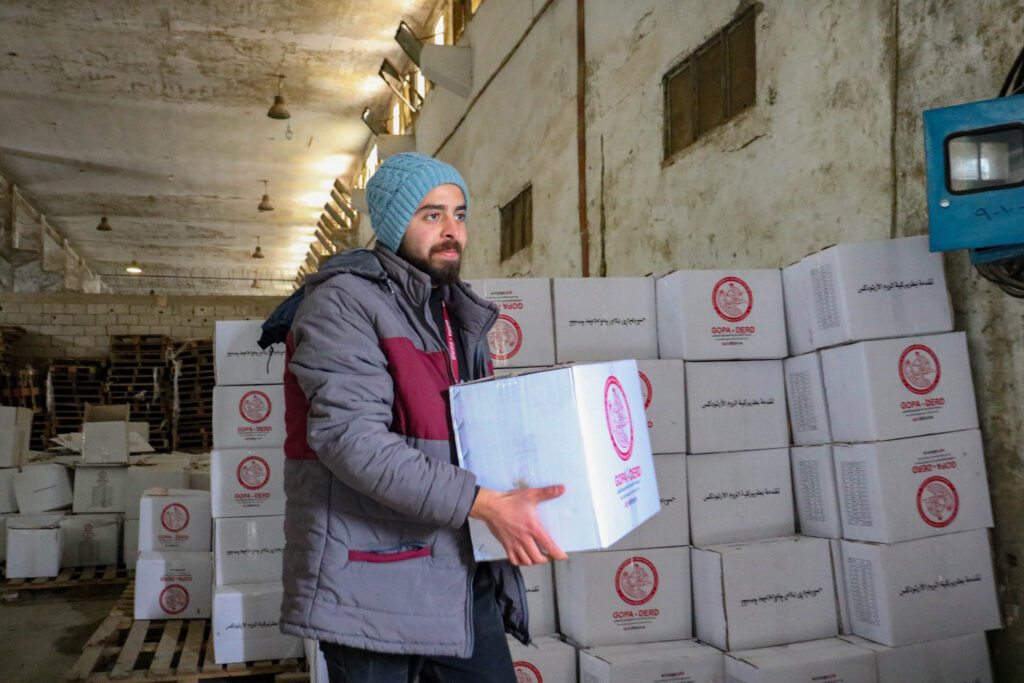
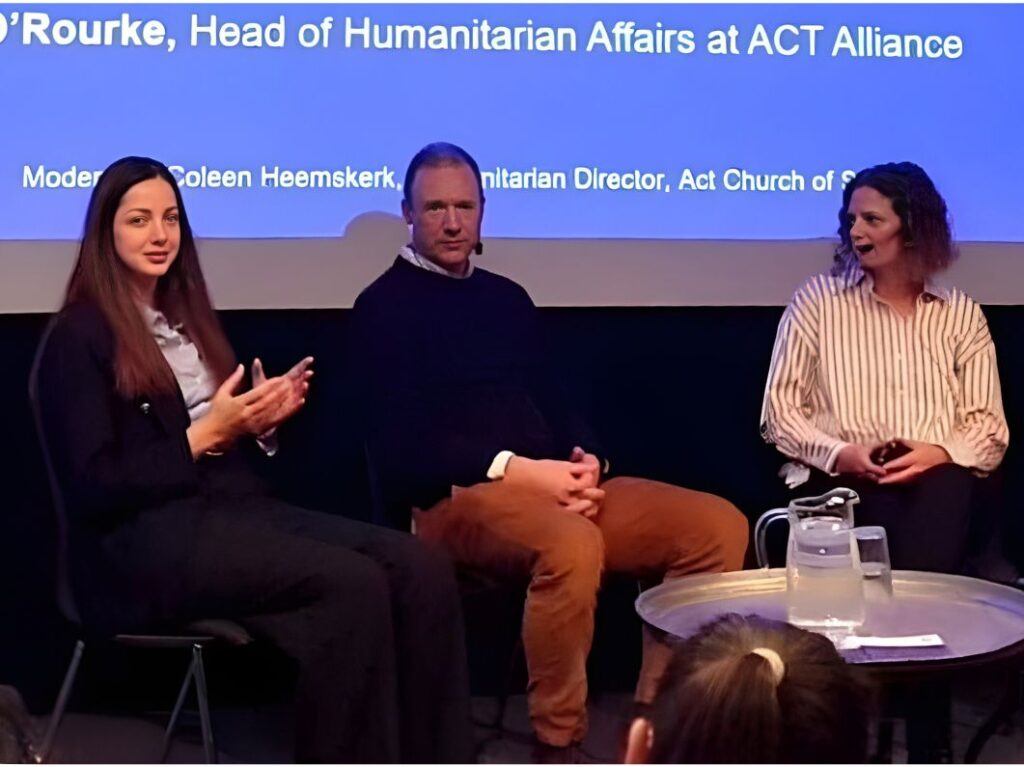
Savva grew up in Greece and Cyprus, though her family roots extend back to the Middle East. She arrived in Damascus in 2016 and started working for GOPA-DERD, the Greek Orthodox Church’s humanitarian branch, part of the ACT Alliance, a global coalition of over 145 Protestant and Orthodox humanitarian organisations. GOPA-DERD is currently the largest faith-based organisation operating in Syria, with more than 1,100 staff and 58 social centres across the country.
‘Between 2016 and 2018, there was a lot of bombing and shelling all over the country, including in Damascus,’ she says. ‘I come from a religious family, and I really wanted to join GOPA-DERD and serve the Church, because I am a devoted humanitarian at heart.’
The fall of the Assad regime brought what she calls ‘a new breath of freedom’. But it did not bring stability. ‘After 60 years of authoritarian rule, moving into a new Syria is not a click of a button,’ she says.
‘I would open my phone, and I thought, my God, I wish I hadn’t seen all that.’
Violence Going Unreported
Much of what followed the liberation has remained hidden from the international community. Armed factions used to be connected to groups like Al-Nusra that entered the coastal region, targeting minority communities under the guise of ties to the former regime.
Savva states that the violence then spread south to Al-Suwayda, where clashes between government forces, Druze communities, and Bedouin tribes caused widespread displacement, destroyed homes, and led to the bombing of wells. Hospitals exhausted their supplies. Supermarkets were emptied.
She learned most of this through footage circulating on social media. ‘People started talking about it at work. I would open my phone, and I thought, my God, I wish I hadn’t seen all that.’
She is alarmed that these events are not being documented. ‘I see targeted killings, kidnappings, assassinations, and revenge crimes. It is either not being reported or, at best, barely reported with a delay, even within the humanitarian scene. And if it reaches the West at all, it is through the private accounts of individual activists. A lot of people in the Middle East suffer in silence.’
Fifteen Million People in Need
GOPA-DERD’s latest project with Cordaid focused on As-Suwayda, where they distributed food and hygiene kits. A new initiative is now underway in Dweil’a, a neighbourhood of Damascus that has long accommodated internally displaced people from across Syria, partly because rents there are lower than in the city centre.
The scale of need across the country remains immense. ‘This year, there are approximately 15.5 million people in need,’ Savva says. ‘Last year it was 16.5 million.’ More than 95 per cent of the Syrian population lives below the poverty line. Electricity is available for as little as half an hour every five or six hours. Electricity bills increased by around 600 per cent in early 2026.
‘A country that has emerged from not only 14 years of war but also 60 years of strict authoritarianism cannot quickly become the next Switzerland of the Middle East.’
‘Imagine having to queue for a loaf of bread because you cannot afford supermarket prices,’ she says. ‘Imagine having four or five children and no job. Imagine waking up to find your electricity bill has increased by 600 per cent.’ More and more Syrians, she says, simply want to leave. ‘When Syria was liberated, people had their hopes up. They thought the country would get better in a few months. Of course, that was a dream.’

What the West Doesn’t Get
‘For the international community, simply installing a new president and removing the old regime was enough. Taking a few photos, shaking hands with neighbouring leaders: that was the easy part. However, a country that has emerged from not only 14 years of war but also 60 years of strict authoritarianism cannot quickly become the next Switzerland of the Middle East.’
Syria needs support. It has no functioning judiciary. When disputes arise, she explains, a sheikh is called in to decide the outcome. There is also no proper security force. The armed factions that joined the new leadership have effectively become general security forces, although some have since clashed with the government. ‘If something happens, there is a phone number you can call. Otherwise, you protect yourself. We do not walk outside after sunset.’
GOPA-DERD’s position is unusual in one respect: because it operates under the legal umbrella of the church, it continues to carry out its humanitarian mission without the need to register. In July 2025, the new government issued an official decree confirming this. Operations have continued without interruption since the day of liberation.
Savva’s message to the outside world is clear. ‘If you want refugees to return to Syria, or to help displaced people inside the country, start recognising Syria as it truly is. The Syrian government currently needs support to lead the country, and has other priorities than addressing the soaring immediate humanitarian needs. The humanitarian sector can act more swiftly and save lives. Syria may require another ten years to be rebuilt and recover fully, if I am being optimistic.’