As Israeli strikes intensify and displacement reaches catastrophic levels, our Lebanese partners describe working under relentless bombardment and explain why stopping is simply not an option. Cordaid supports the humanitarian efforts of Caritas Lebanon for the victims of this new wave of violence.
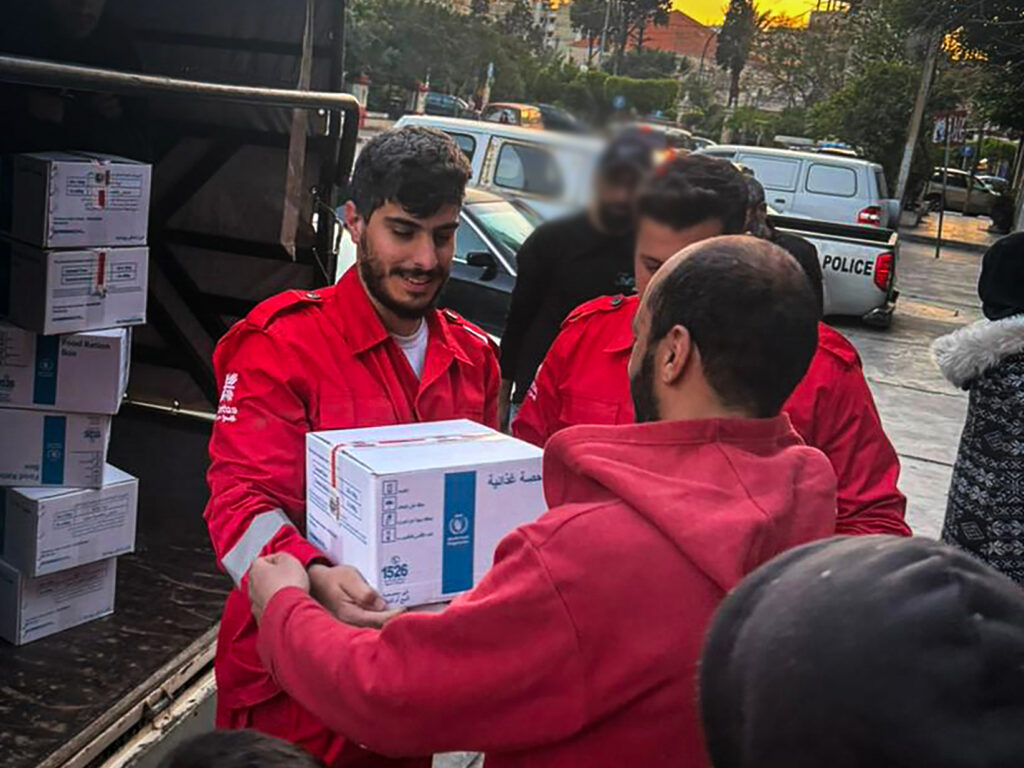
The warnings appear on social media first. Residents are told to leave their neighbourhoods immediately. Minutes later, the missiles follow. This is daily life across much of Lebanon.
Micheline Sarkis of Caritas Lebanon, Cordaid’s longstanding Lebanese partner, describes how Israeli strikes have now spread beyond the southern suburbs into the heart of Beirut, including her own neighbourhood.
‘The sounds are terrifying,’ she says. ‘It’s not just the missiles. Fighter jets are flying over the city at a low altitude, which is very frightening.’
More than 800,000 people have been displaced. Most are sheltering in public schools or one of the few centres made available by the Lebanese government.
Crisis Upon Crisis
Mazen Moussawer, communications manager at Caritas Lebanon, joins the conversation to describe a country that has been struck by overlapping disasters for years. A financial collapse in 2019 wiped out savings and wages. Then came the Covid-19 pandemic, followed by the devastating explosion at the port of Beirut in August 2020, which killed more than 200 people and levelled entire neighbourhoods. In 2024, Israel began striking targets across Lebanon.
‘The pressure on organisations like Caritas to provide what is needed is enormous, yet we have fewer and fewer resources at our disposal.’
All of this is compounded by a refugee crisis that places enormous pressure on Lebanon’s infrastructure and public services. The country hosts an estimated two million Syrian refugees, while around 60 per cent of the Lebanese population live at or below the poverty line.
‘People who used to earn $2,000 a month are now earning $100 or $200,’ says Mazen. ‘But they still have the same number of children to feed. And then all these displaced families arrive needing help. Our country is in a very bad situation.’
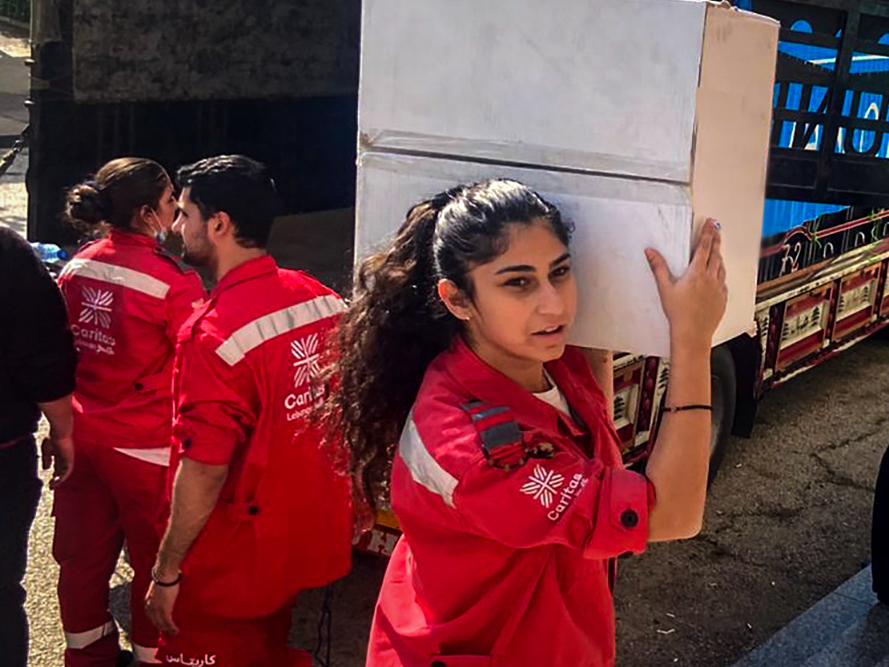
He also notes that the international support which followed earlier crises has largely dried up. ‘In 2024, many countries were still sending supplies and funds. We are not seeing that now. The pressure on organisations like Caritas to provide what is needed is enormous, yet we have fewer and fewer resources at our disposal.’
‘It Is Very Painful to Watch’
Susanne Heukensfeldt Jansen, humanitarian programme manager at Cordaid’s headquarters in The Hague, lived in Beirut for several years and is closely involved in coordinating the current relief effort with Caritas Lebanon. She struggles to find words for what she is witnessing.
‘I cannot believe this is happening,’ she says. ‘Friends are sending me frightening messages. They don’t know whether to stay or go. It is very painful to watch.’
She pushes back gently on the tendency to frame Lebanese people as inherently resilient; a framing that, however well-intentioned, can obscure the human cost of recurring catastrophe. ‘They are exhausted from constantly finding themselves in this situation. Constantly having to flee. It is not their choice. We are talking about hundreds of thousands of people who need emergency assistance right now. This could go on for a long time. And given the intensity of the bombardments, many people may never be able to return to their homes at all. Those people are entirely dependent on humanitarian assistance.’
On the Ground
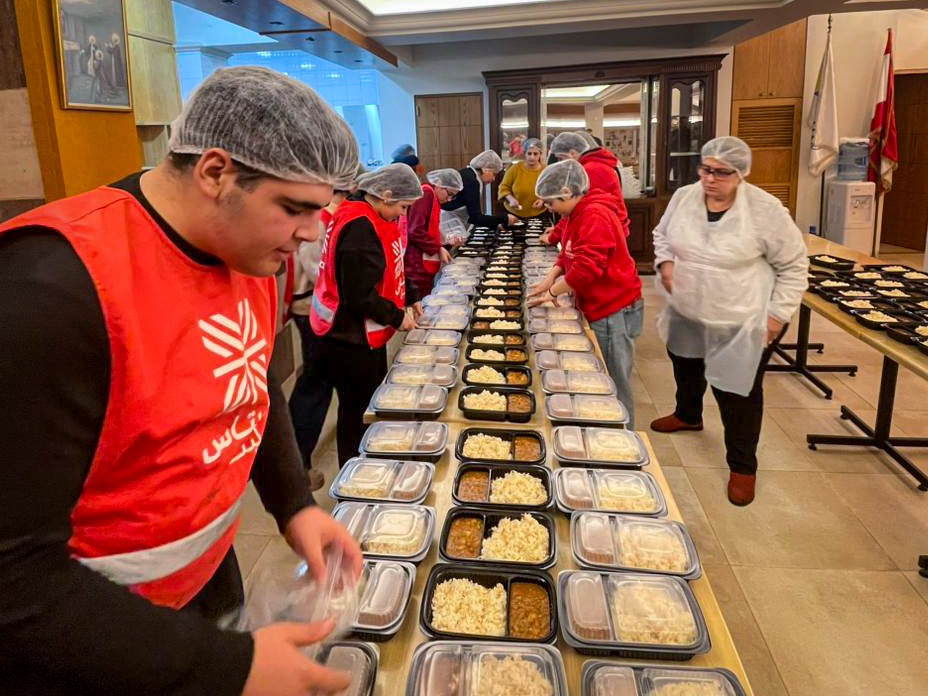
Despite the danger, Caritas Lebanon’s staff and volunteers mobilised within hours of the latest strikes. People gathered to cook hot meals for those stranded in the streets. Families who had lost their homes said their most pressing needs were warm food, nappies, and baby formula.
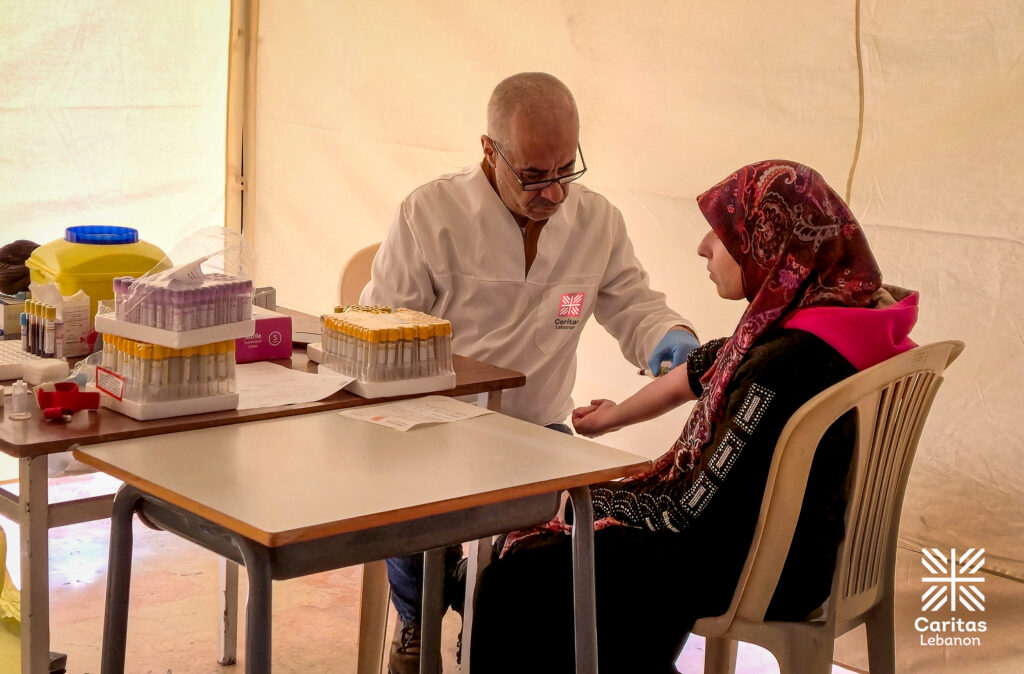
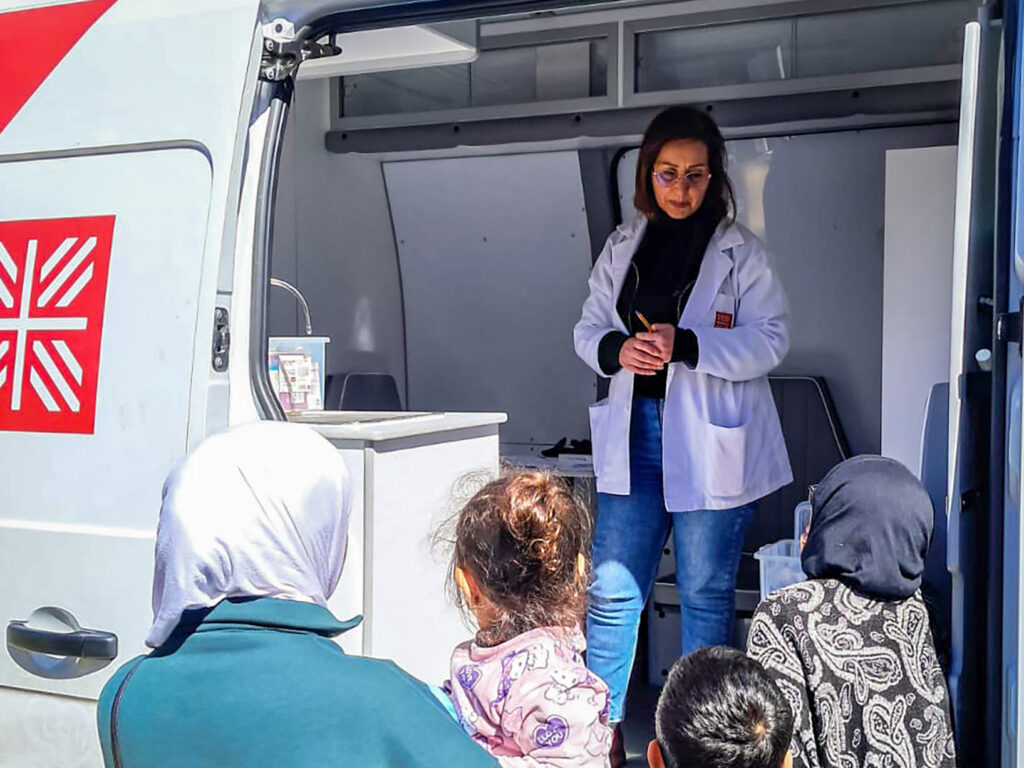
The organisation now manages between 35 and 40 reception sites across the country. Mobile medical teams are travelling to border towns in the south to reach residents who refuse to leave their homes, fearing, with reason rooted in experience of previous wars, that they will never be allowed to return.
‘If we are too afraid to do our duty when things get tough, we should find another job.’
‘There are still many families in those dangerous villages,’ says Mazen. ‘Our medical teams go there with doctors, medicines, and blood tests.’
In the reception centres, people are sleeping on the floor. Blankets, mattresses, and pillows are distributed, but the scale of need far outstrips what aid organisations can supply. Mazen: ‘Aid is scarce, resources are scarce, and demand is well beyond what we can manage.’
‘Someone Has to Do This’
A recent episode has brought the risks into sharp focus. Father Pierre Al-Rahi, a prominent figure who had kept his community safe by refusing to allow any armed presence in his area, was killed in an Israeli strike on the Christian village of Qlayaa in southern Lebanon. At least five others were wounded in the same attack.
‘It is not the first time something like this has happened,’ says Micheline quietly. ‘Let us hope it is the last. But this is precisely the moment when you understand why you do this work. To help people. You look around, and you see the need. You cannot walk away from it.’
When asked how they keep going, both Micheline and Mazen return to the same point: the reason Caritas Lebanon exists. The organisation was founded during the civil war of the 1970s and has worked through every subsequent conflict.
‘If we are too afraid to do our duty when things get tough, we should find another job,’ says Mazen. ‘Someone has to do this. Our teams are on the ground, and they are working with complete dedication.’
The Joint Response
Cordaid and Caritas Lebanon have launched a joint emergency response to provide healthcare and food to affected communities over the coming months. Protection is central to their approach, with the aim of ensuring safe, dignified, and equitable access to assistance.
The response includes 4,320 health consultations, 650 diagnostic tests, medicines for 7,000 patients with acute or chronic conditions, 750 mental health sessions, 1,500 meals for 7,500 displaced people, and 2,220 food parcels distributed over three months to 740 households.
‘We need financial support to keep the reception sites running, to continue providing medical assistance, and to deliver basic necessities to a still-growing number of displaced people,’ says Micheline. ‘We have never needed our partners more. With this support, we can offer people something of their dignity.’