On Earth Day, we are reminded that the communities least responsible for climate change bear its highest costs. This is certainly true for the people living on the coastal fringes of southern Bangladesh, where the mangrove forest meets a sea that is slowly swallowing the land. In the town of Rayenda, Mohima Begum transformed a plot of salt-damaged soil into her family’s escape from poverty.
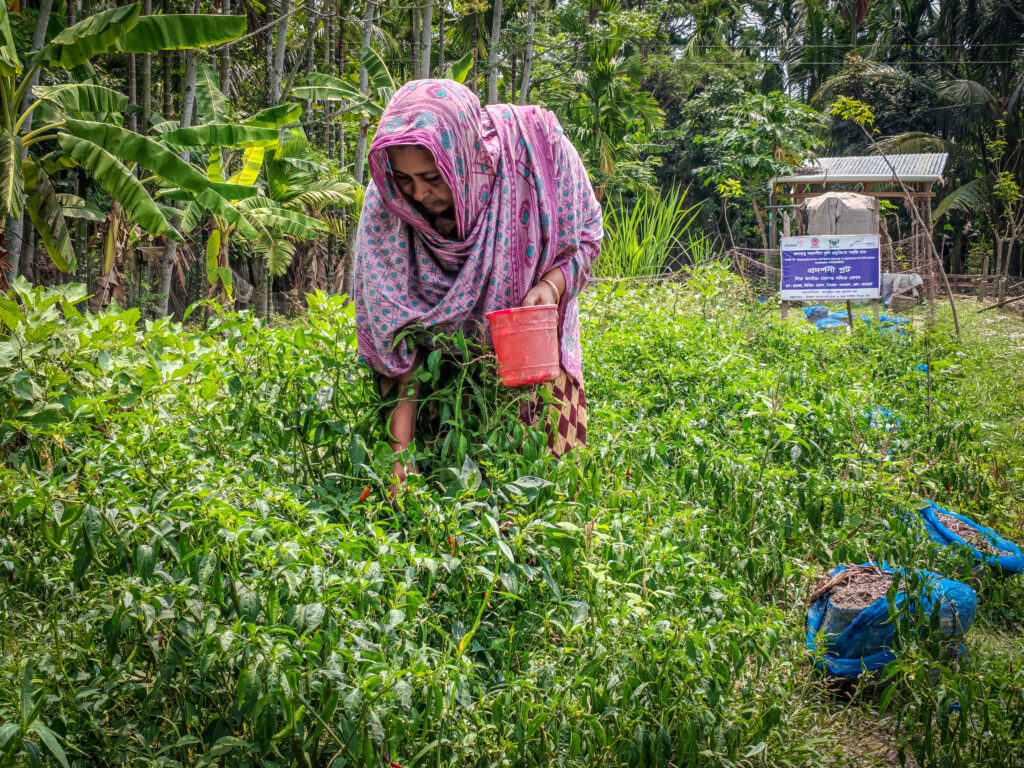
Rayenda sits at the edge of the Sundarbans, Bangladesh’s vast coastal mangrove forest and one of the most climate-vulnerable regions on earth. Here, natural disasters such as cyclones and floods occur regularly, and creeping salinity poisons farmland season after season.
Bangladesh ranks among the ten countries most affected by climate change, and the consequences fall hardest on its people living in poverty in the coastal region.
According to the National Child Labour Survey 2022, around 1.78 million children across the country are engaged in child labour. Rates in rural areas are nearly three times higher than in urban centres. In the coastal shrimp and fishing sectors, children as young as five wade into saline waters to collect fish fry, spending hours in conditions that cause skin disease, vision problems, and chronic pain.
Invisible Workforce
Mohima Begum lives in Rayenda with her two children and her husband, a daily labourer who earns just enough on good days and nothing on bad ones. It pains her to recall that her seven-year-old son used to be part of that invisible workforce.
Mohima’s son would climb aboard fishing boats, wade through the water, and collect fish fry for weeks on end. It was a necessity, as an extra pair of hands meant the family might eat. ‘I watched it happen, and I could not sleep,’ Mohima says. ‘He is a child. He should be in school, not on a boat. But I did not know what else to do.’
Addressing the Root Causes of Child Labour
Unlike many others facing the same hardship, Mohima did not accept the situation in silence. She began asking questions, seeking a way out. Then she heard about a training programme run by the RESOURCE Project (Raising Economic and Social Security in Agriculture for Child Labour Eradication), an initiative operating in the coastal region to address the root causes of child labour by strengthening family livelihoods.
‘Before, every coin was already spoken for before we even had it. Now I am saving for my children’s education. I want them to have the choices I never had.’
The training introduced Mohima to salt-tolerant vegetable cultivation: techniques for growing crops in saline, flood-prone soil that most farmers had long abandoned as useless. She also learned to harvest rainwater efficiently, collecting it to keep her plots alive through the dry season, when taps and rivers run low. Mohima: ‘At the beginning of the training, I was told that the abandoned piece of land I thought was dead could grow food. I just needed to know how. And that’s what I learned.’
The Work Pays Off
Through the programme, Mohima also received a goat. She began rearing it alongside her new vegetable plots. The first months were hard: learning, adjusting, monitoring the crops, and tracking the animals’ health. Income came slowly, but it came.
In a few months, she built a water tank with her own hands to store rainwater, allowing her to continue farming even during dry periods. Gradually, her plot expanded. ‘When I started earning from the vegetables and later from selling the goat,’ she says, ‘my husband did not have to carry everything alone. The pressure lifted for all of us.’
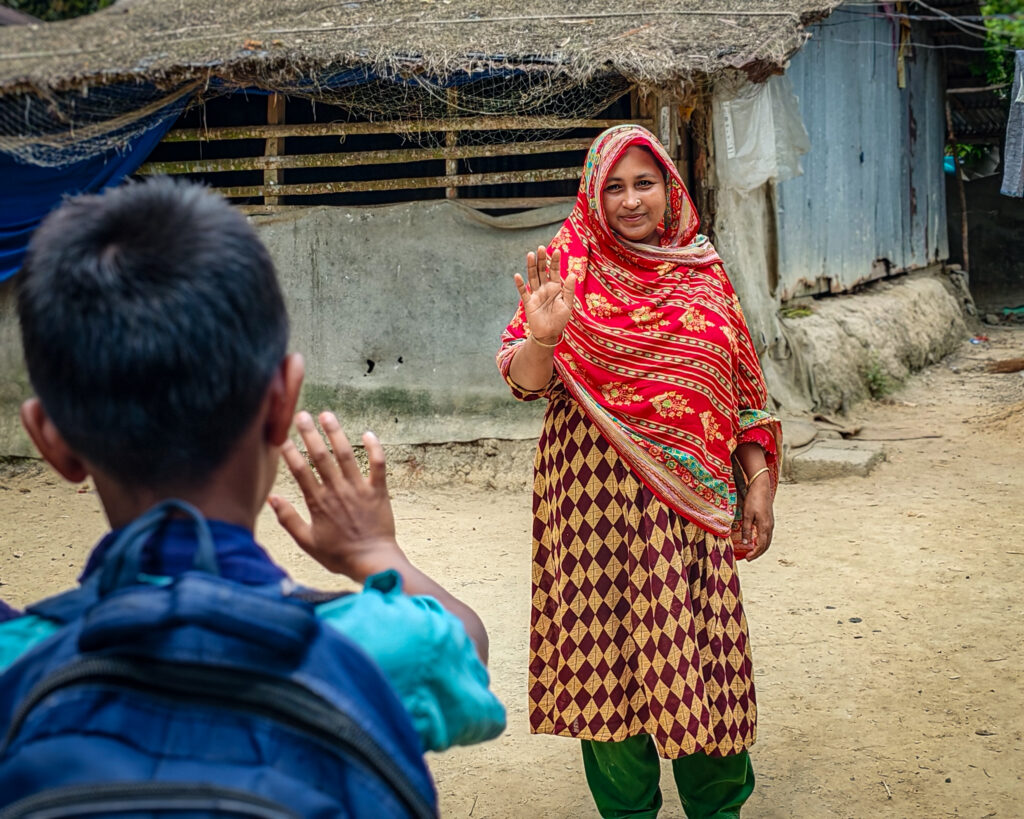
As the income steadied, Mohima was finally able to stop her son from going to the boat and send him back to school instead. ‘All my hard work paid off the first day I saw my son coming home with his school bag over his shoulder. I felt so proud.’
Saving for a Better Future
Mohima did not stop there. She began saving the surplus income, starting with small amounts and then more consistently, and reinvested it in more land. She leased additional plots and expanded her vegetable cultivation.
Today, Mohima has a savings account. She sets money aside each month for her children’s higher education, something that once seemed completely out of reach. Mohima: ‘Before, every coin was already spoken for before we even had it. Now I am saving for my children’s education. I want them to have the choices I never had.’
About the RESOURCE project
This project is funded by the Global March Against Child Labour, led by Cordaid, and implemented by Udayan Bangladesh, with support from the private-sector partner A.R. Malik Seeds Limited.
Operating across two unions (Southkhali and Rayenda) in southern Bangladesh’s coastal region, the project works with 360 households to address child labour at its root by building stable, climate-adapted livelihoods for families who have long lacked alternatives.
At the heart of the project is an integrated community-based approach that brings together two critical elements: a Child Labour Monitoring System to identify and track at-risk children in targeted communities, and direct livelihood support to tackle the economic conditions that drive families to send their children to work. Rather than addressing child labour in isolation, this model recognises that lasting change requires both visibility and economic alternatives to coexist.