In the arid plains of northern Kenya, a group of women farmers has found an unlikely ally in the fight against climate change: the cricket. Their initiative has grown into a small but thriving enterprise, one that points towards a more sustainable future for pastoralist communities.
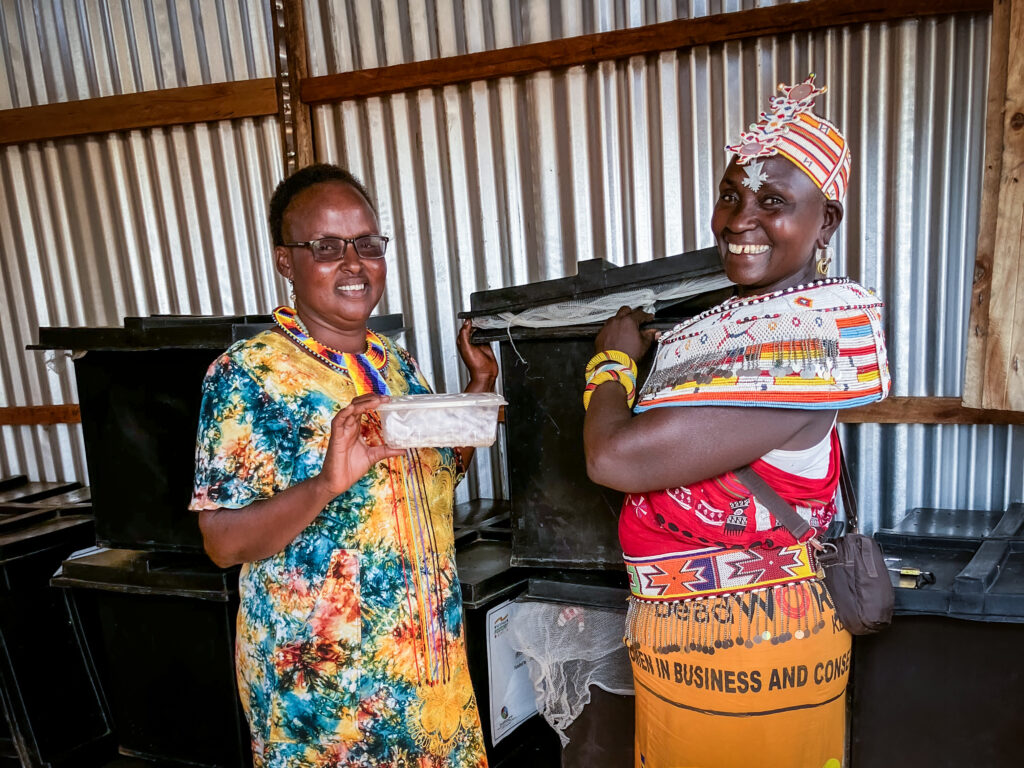
Agnes Lekomet has spent much of her adult life keeping goats in Kenya’s Samburu County. In 2019, she joined the Goat Keepers Self-Help Group, a local collective set up to improve household incomes through livestock trading. For a time, it worked. But as the years passed, the cracks began to show.
‘We came to realise that the goat business alone wasn’t enough to support us,’ Agnes recalls. ‘Sometimes we would lose animals to drought, and other times goats would wander too far and could not be traced.’
The Samburu region, like much of northern Kenya, is acutely vulnerable to climate shocks. Prolonged droughts are becoming more frequent and more severe, making pastoralism an increasingly precarious livelihood. Market prices fluctuate sharply when animals are in poor condition, and losses during dry spells can wipe out months of savings overnight.
An Unusual Idea Takes Root
The idea of cricket farming arrived through the (B)eat the Locust Project, an initiative implemented by Cordaid and IMPACT that works with pastoralist communities across four arid counties: Laikipia, Samburu, Isiolo, and Marsabit.
Funded by the Nationale Postcode Loterij, the project emerged from Kenya’s most recent desert locust invasion, which was largely controlled using synthetic chemicals at high environmental cost. Its goal is to support communities in building more sustainable livelihoods through insect-based enterprises and to promote eco-friendly pest control methods.
The initial reaction among the women was scepticism. In Samburu culture, crickets are not considered food, and the idea of farming them struck many as peculiar. But introductory sessions highlighting the nutritional value of crickets and their potential as a high-protein feed for poultry helped shift attitudes. The women did not need to eat the insects themselves; they could feed them to their chickens. ‘This way, the chickens fatten quickly, and we can sell larger birds,’ Agnes explains. ‘They also produce healthy, good-quality eggs for sale.’
‘The idea of farming insects sounded bizarre to some people. But as time went on and people saw the benefits, their attitudes started to change.’
Learning the Craft
With training support from Cordaid and IMPACT, the women began to master the basics of cricket rearing: how to distinguish males from females, collect and incubate eggs, and manage the insects through to adulthood. The biology, Agnes explains, has its own advantages. ‘Crickets don’t have a larval stage like many other insects,’ she says. ‘Within about ten days, the eggs hatch, and soon we have mature crickets ready to feed our chickens.’
The challenges have been real, however. Crickets need a consistent water supply, which is difficult to guarantee in a drought-prone region. They also require green vegetables such as spinach and kale, which the women must often purchase. And in the early days, social resistance was a significant obstacle. ‘The idea of farming insects sounded bizarre to some people,’ Agnes says with a smile. ‘But as time went on and people saw the benefits, their attitudes started to change.’
The shift in opinion has been striking. Some men from the wider community have since joined the group. They have been drawn in, Agnes notes with a laugh, not only by the economic results. ‘We have learned about other benefits too. Some people even believe crickets boost men’s vitality.’
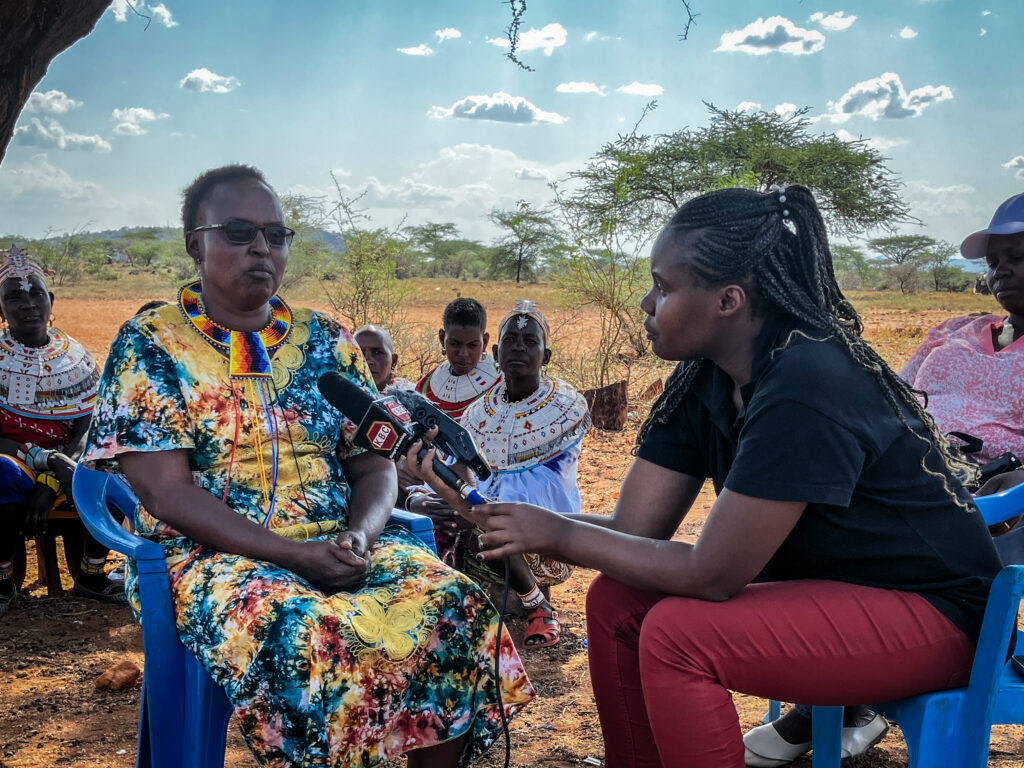
Bigger Ambitions
The Goat Keepers Self-Help Group is gradually moving away from the livestock trading that once defined it. The group now runs a poultry venture sustained by cricket farming, a combination that has proved more stable and less labour-intensive than goat rearing in an era of worsening droughts and floods.
The group hopes eventually to produce livestock feed pellets fortified with ground crickets, a nutritious, low-cost supplement that could benefit farmers well beyond their own village. ‘We are now convinced that crickets can make very good animal feed,’ Agnes says. ‘That’s something we hope to develop in the future. Forming these groups and starting small businesses not only helps us as women but also helps the entire community. We have bigger dreams, and with time, we will achieve them.’
About the (B)eat the Locust Project
The (B)eat the Locust Project was established in response to Kenya’s last major desert locust invasion, which was largely managed using conventional synthetic chemicals, with damaging environmental consequences.
The project, funded by the Postcode Lottery and implemented by Cordaid and IMPACT, aims to diversify the livelihoods of pastoralist communities in locust-prone areas by developing sustainable insect-based value chains.
Its work spans promoting environmentally friendly biopesticides as an alternative to chemical control, developing insect farming for human and animal consumption, and engaging with county and national policy processes. The project targets agro-pastoralist communities in Laikipia, Samburu, Isiolo, and Marsabit counties.
This project is supported by
