Play-Based Learning is increasingly recognised as an effective approach to enhancing cognitive, social, and emotional development. However, its adoption in rural Ugandan communities has been constrained by limited infrastructure, inadequate learning materials, and low community engagement. Through the Joyful Learning Journey project, Play-Based Learning has now been successfully promoted in schools in the Kamuli district.
For years, Kinu Primary School faced many of these challenges. The school lacked age-appropriate play materials, engaging learning spaces, and the resources needed to create an inclusive, stimulating learning environment. As a result, pupil attendance remained low, and parental participation in school activities was minimal.
‘We were lacking materials, and our classrooms were dull and uninspiring’, recalls Deputy Head Teacher Stephen Mugeni. ‘Consequently, attendance was poor, and many parents were disconnected from the school. They rarely participated in school activities.’
Without opportunities for interactive, child-centred learning, many children struggle to remain engaged in school. Children with disabilities often face additional barriers to participation and learning.
Recognising the need for change, the school began embracing an inclusive Play-Based Learning approach to make education more engaging, accessible, and enjoyable for all children. This shift strengthens children’s learning experiences and the relationship between the school, families, and the wider community.
Watch this video about the Joyful Learning Journey project:

Challenging Deep-Rooted Barriers to Education
In many communities, play was often perceived as undesirable behaviour associated with stubborn or undisciplined children rather than an important part of learning and development. At the same time, some parents viewed children living with disabilities as an additional burden, often believing they could not learn or contribute meaningfully to society. As a result, many children remained hidden at home and missed out on educational opportunities.
‘Many parents did not see the value of taking children with disabilities to school because they believed they could not learn,’ says Hellen Musita, Head Teacher of Ndalike Primary School.
In Kamuli District, some of the most common disabilities among school-age children include visual impairments, hearing difficulties, physical disabilities, intellectual and learning disabilities, and albinism. For the few children with disabilities who made it to school, the experience was often difficult and accompanied by feelings of isolation.
‘Many of these learners were fearful and lacked confidence to interact with teachers and their peers. Others were simply excluded from education altogether and stayed at home,’ Hellen explains.
That’s why the schools embraced a proactive outreach approach. Teachers, supported by trained model parents, conducted home visits to identify children who were not attending school due to disability or other barriers.
‘We visited homes throughout the community to identify children who were out of school. After registering them, we invited their parents for dialogue sessions where we explained the importance of education and reassured them that every child has the potential to learn,’ Hellen says.
‘Our songs and games help children learn letters, sounds, numeracy, and other foundational skills while promoting creativity, curiosity, and interaction with their peers.’
These conversations helped challenge misconceptions and gradually build trust between schools and families. As parents witnessed teachers’ commitment to supporting their children, attitudes began to shift.
‘Once parents understood that the school was prepared to support their children, many of them changed their perceptions immediately,’ she adds. ‘We then carefully introduced the children to their classmates and encouraged learners to support one another so that every child felt welcomed, valued, and included.’
While some children with severe disabilities are referred to specialised institutions, most children have mild to moderate disabilities and can thrive when properly integrated into mainstream classrooms with appropriate support.
Bringing Learning to Life Through Play
Through the Joyful Learning Journey project, implemented by Cordaid in partnership with Youth Alive Uganda, Play-Based Learning has been promoted across 8 public schools in the region.
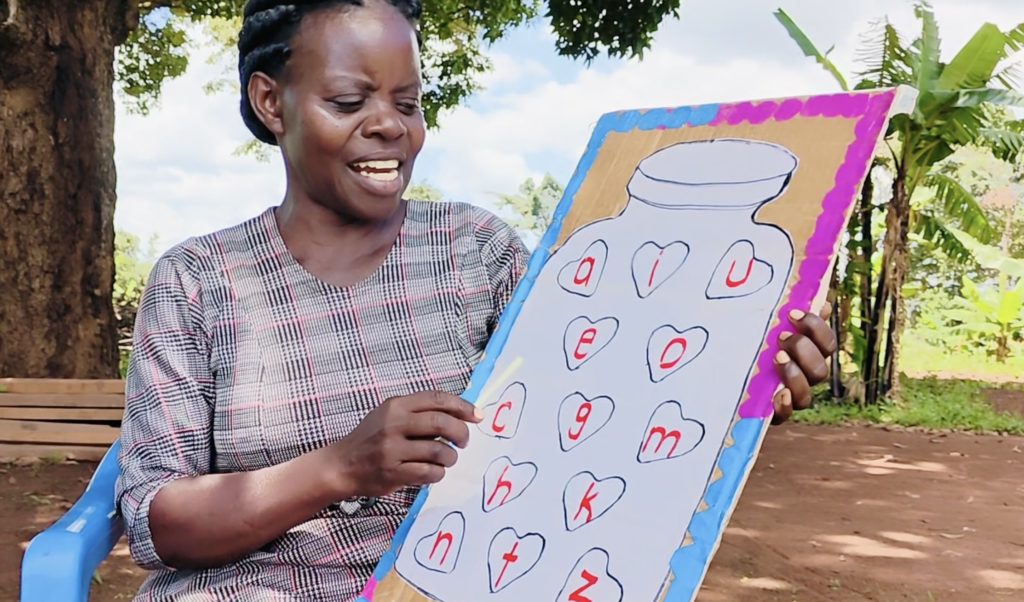
According to Jessica Mukabya Alitwala, Head Teacher of Bugulusi Primary School, Play-Based Learning creates a more engaging and meaningful learning experience for children. ‘Play-Based Learning is a holistic approach that uses interactive teaching methods, songs, games, storytelling, and learning materials developed from locally available resources such as banana fibres and bottle tops. It allows children to learn while having fun,’ she explains.
At Bugulusi Primary School, which has an enrollment of 526 pupils, including 17 children living with disabilities, the approach has fundamentally changed classroom experiences. Rather than relying solely on traditional instruction, teachers now use locally developed play materials and activities that encourage participation, creativity, and critical thinking.
At Ndalike Primary School, teachers intentionally design play activities to support children’s cognitive, physical, social, and emotional development. ‘Our songs and games help children learn letters, sounds, numeracy, and other foundational skills while promoting creativity, curiosity, and interaction with their peers,’ says teacher Namukobe Babrah.
Classrooms Where Every Child Belongs
Across all eight schools implementing the Joyful Learning Journey, teachers report significant improvements in attendance, participation, social interaction, and children’s enthusiasm for school.
‘The school community is extremely happy with the project,’ says Hellen Musita. ‘Our learners are more confident, their handwriting has improved, and they are interacting freely with one another. The approach has strengthened relationships between teachers and learners and has made school a place where children genuinely want to be.’
‘Without the support of parents, we would not have come this far.’
Perhaps one of the most profound changes has been the increased acceptance of children living with disabilities. At Bugulusi Primary School, play activities have helped bridge social divides that once existed between learners.
‘Play-Based Learning has improved relationships among all children. Learners with disabilities and their peers now learn, play, and interact together. The barriers that once separated them are gradually disappearing,’ Jessica explains.
A representative of children with disabilities now sits on the school’s leadership structure, ensuring their voices are heard in school decision-making processes. Infrastructure improvements have also enhanced accessibility. Schools have constructed ramps, established disability-friendly sanitation facilities, and improved classroom environments to support inclusive learning.
Parents and community members have played a vital role in driving these changes. ‘Without the support of parents, we would not have come this far,’ Hellen says. ‘Together, we have improved infrastructure, mobilised learning resources, and created a more welcoming environment for all learners. Even after the project ends, we remain committed to promoting Play-Based Learning. We will continue engaging local government leaders and communities to identify innovative ways to support children and strengthen inclusive education.