Joel Wambi spent years growing crops in eastern Uganda, only to watch middlemen, pests and exhausted soil eat into what little profit remained. In the final part of a series on Cordaid’s WeWork project in the Busoga subregion, one of the 500 young people trained through the project explains how fish-farming training gave him a trade of his own and a clearer view of his future.
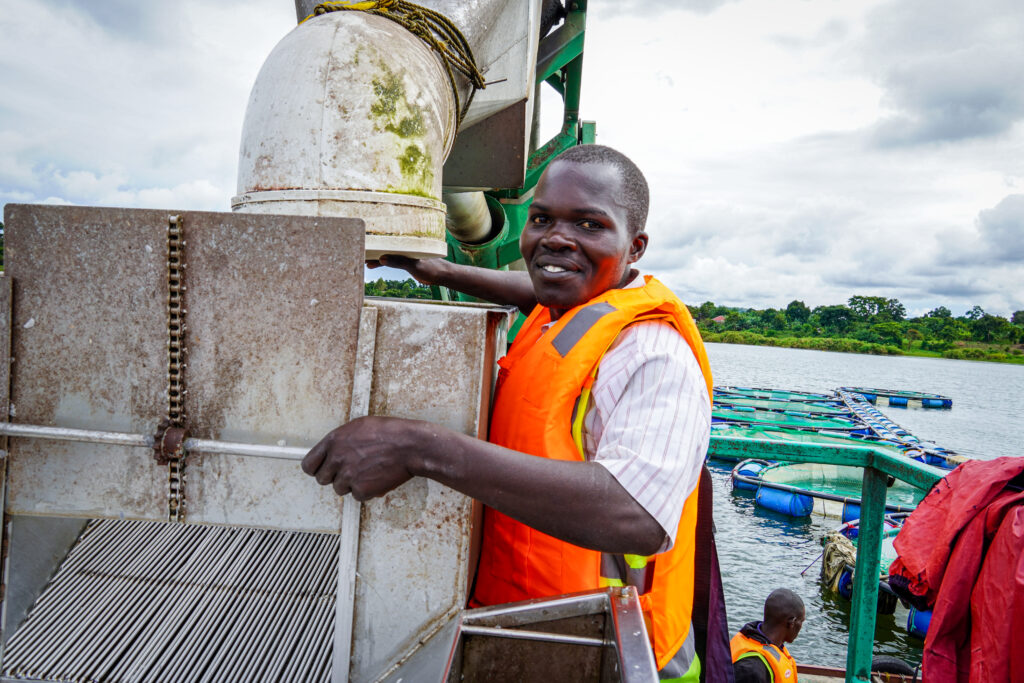
Before joining WeWork, Joel made his living from the land. In a good season, he could harvest around 500kg of rice, along with maize and beans. But the numbers rarely worked in his favour. Middlemen controlled the prices paid for his produce, and farmers like him were frequently short-changed, left with heavy losses rather than a fair return. Pests and disease regularly damaged his crops, and years of cultivation had left his land increasingly infertile.
At school, he trained in mechanics and driving, skills he hoped would open doors to steady work. In practice, jobs in either field proved scarce, and those that existed often demanded more than qualifications alone.
An Unlikely Opportunity
Fish farming had never seemed within reach for Joel. Buying fish to sell was expensive, and for a long time his village had only one pond, making aquaculture rare in the area. He recalls a fellow villager doing well after harvesting fish from his own pond, an example that stayed with him. ‘I once saw a fish farmer harvest a large catch from his pond and make good money,’ he says. ‘Seeing that in my village left me wondering where to start.’
His neighbours were more familiar with poultry and piggery, so he sensed that aquaculture was an underexploited niche in a place well suited to it, with a market that could reward an early entrant. What he lacked was the technical grounding to act on it. ‘I saw an opportunity,’ he says, ‘but I did not yet have the skills and knowledge I needed to succeed.’
‘I want to tell all young people that there are so many jobs in agriculture. A single farm can employ more than a hundred. It has great potential to give youth a purpose.’
Learning by Doing
That changed when he began work-based learning at Kamos Agro Fish Farm, one of the training sites used by the WeWork project. Grading fish by size, to help them grow evenly and fetch better prices, quickly became one of his favourite skills, one he has now practised three times. ‘The trainers at Kamos Agro Fish Farm are very accommodating,’ Joel says. ‘They encourage us to keep learning and to ask questions.’
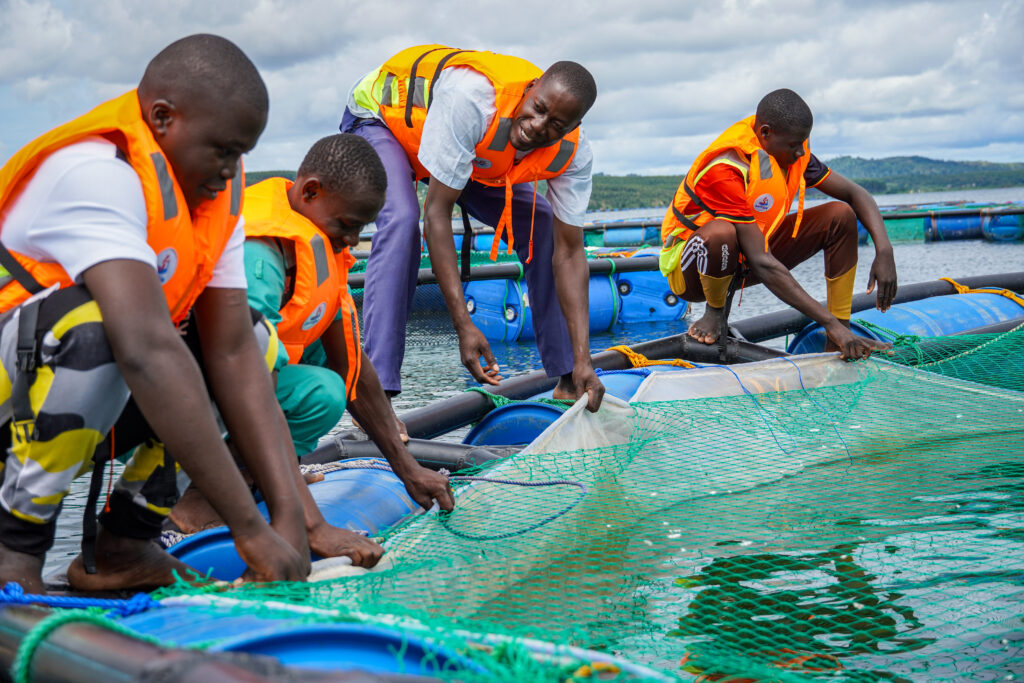
He also learned to build fish cages in different sizes, tailored to the specific conditions of the water they would sit in, and how to move fish safely between cages on the lake in a way that limits losses among both fingerlings and mature stock.
Progress has not always been smooth. On one occasion, Joel and his colleagues transferred fish between cages without first sorting them by size. ‘We did not do it right,’ he admits. ‘We mixed up the fish instead of sorting them. I learned how important it is to understand instructions clearly.’
Fishing the Sustainable Way
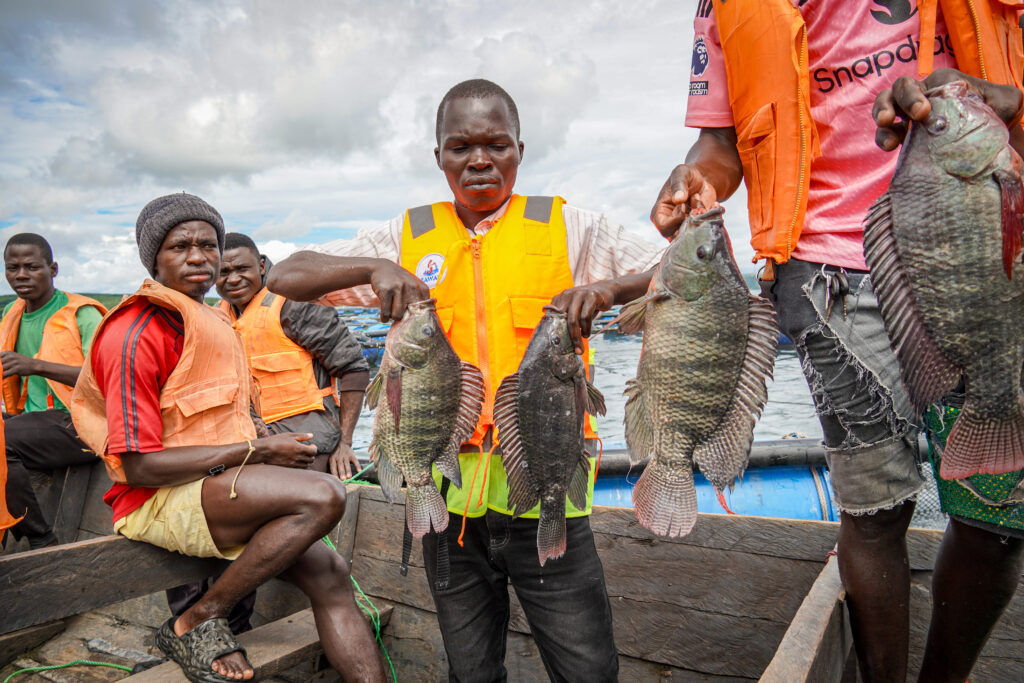
Joel draws a clear contrast between the fishing he sees outside the project and the methods practised at Kamos. Independent fishermen in the area, he explains, tend to catch fish of every size without distinction. At Kamos, the approach is different. ‘We harvest sustainably. We leave some fish to breed, and we only catch the medium-sized ones for sale.’
That approach extends to the technology used on the farm, much of which was entirely new to him before he joined the project. ‘I had never seen a grading machine before, but now I understand exactly what it does. Simple technology makes the work far more manageable, for example, using small motorised boats to transport fish from the mainland instead of canoes. The machine also helps us sort the fish by size.’
Looking Ahead
Joel now has concrete plans for his future in aquaculture and wants to encourage other young people to follow the same path. ‘In the near future, I hope to start my own business, and possibly set up cages on the lake as well. I want to tell all young people that there are so many jobs in agriculture. A single farm can employ more than a hundred. It has great potential to give youth a purpose. Fish is just one option; we can do much more, including poultry and piggery.’
WeWork – Green and Decent Jobs for Youth is funded by the European Union and the Government of Belgium, and implemented in Uganda by Cordaid in partnership with CEAVA, Rikolto and Enabel. The project equips 500 vulnerable young people in the Jinja and Kamuli districts with market-relevant skills in fish, poultry and piggery enterprises, supporting their transition into sustainable livelihoods.