Christopher Musambi used to work himself into exhaustion, without the reward of a stable income and the promise of a better future. Now he is planning to launch his own fish-farming business. As a participant in Cordaid Uganda’s WeWork project, his story shows what skills training can actually deliver.
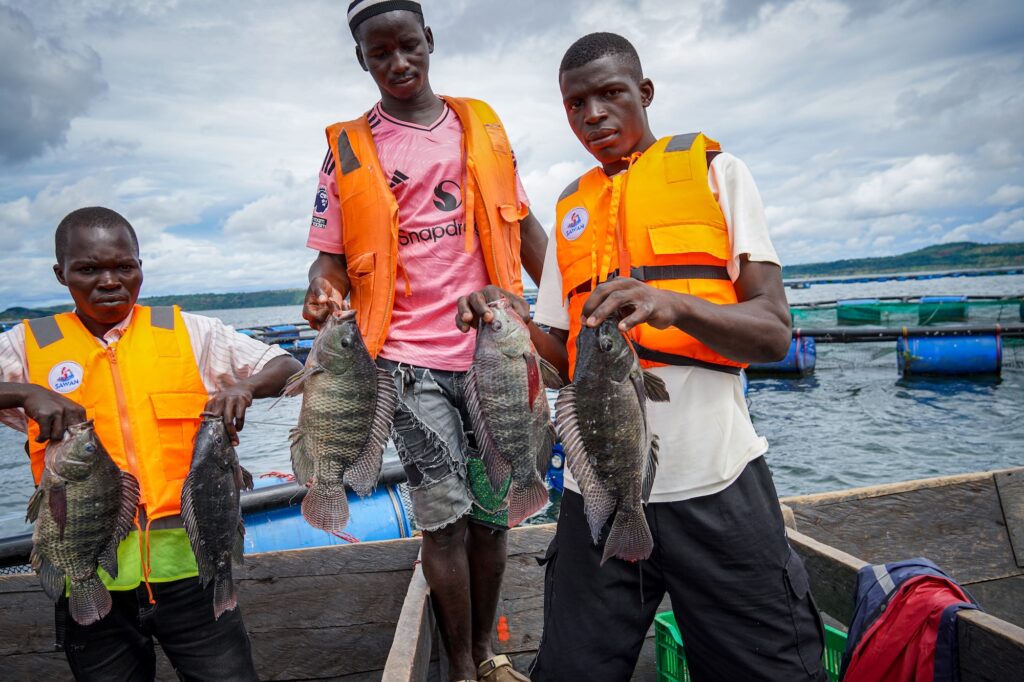
At 22, Christopher Musambi’s working life consisted of construction work for a daily wage of 15,000 Ugandan shillings, roughly three and a half euros. Beyond the meagre pay, the job offered little else. Payments were inconsistent, safety standards were poor, and the workplace culture left much to be desired.
‘Finding decent employment was really difficult,’ he says. ‘The construction industry often lacked any professional structure, which left workers exposed to harassment and unreliable wages.’
Eager and Ambitious
Christopher, however, remained eager and ambitious and found an opening through the WeWork Project, a programme aimed at improving access to decent work for young people in the Busoga subregion of eastern Uganda.
Despite having no background in aquaculture, Christopher enrolled in the project’s training and entrepreneurship modules and quickly discovered the sector’s potential.
After he enlisted, he got a work-based learning placement at Kamos Agro Fish Farm in Buikwe District, around 80 kilometres southwest of Kampala. There, Christopher moved from manual labourer to skilled apprentice, learning the practicalities of cage construction, welding and precision fish grading.
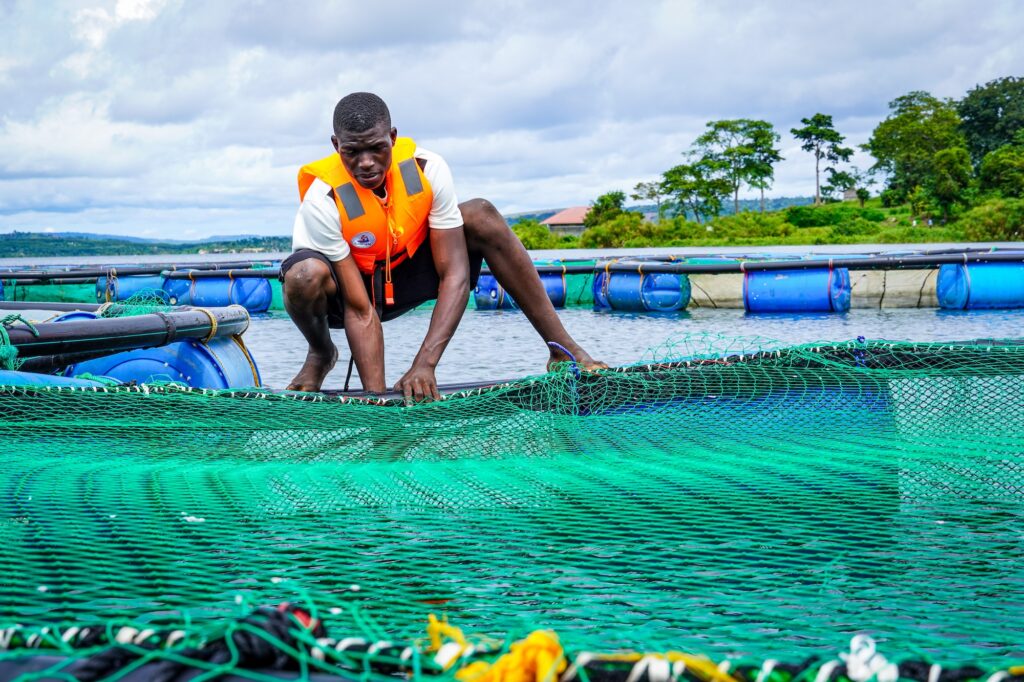
Learning the Value Chain
The placement gave Christopher a thorough grounding in how fish farming actually works. One of the most critical skills was grading: sorting fish by size to ensure uniform growth and prevent larger fish from outcompeting smaller ones for food.
‘I now understand that grading fish into different weight categories is essential for optimising harvest yields and increasing farmer income,’ he explains.
He also picked up engineering skills: ‘I’ve learned to construct and weld the cages, and to join the piping needed for lake-based installations.’
He came away with a better grasp of infrastructure choices, too, noting that cement-lined ponds can significantly reduce stock losses compared to traditional mud ponds, a practical consideration for anyone trying to build a viable agribusiness.
‘Opportunities are there, if we are willing to shift our thinking.’
Mistakes as a Method
Progress, he says, came through a mentorship environment that treated errors as part of the process. When his trainer corrected his cage-knitting technique to ensure the equipment’s structural integrity, Christopher took it in stride.
‘Every day is an opportunity to learn,’ he says. ‘I was surprised to discover that lake-based cages rely more on the natural aquatic environment than traditional pond systems, which changes how you think about the whole operation.’
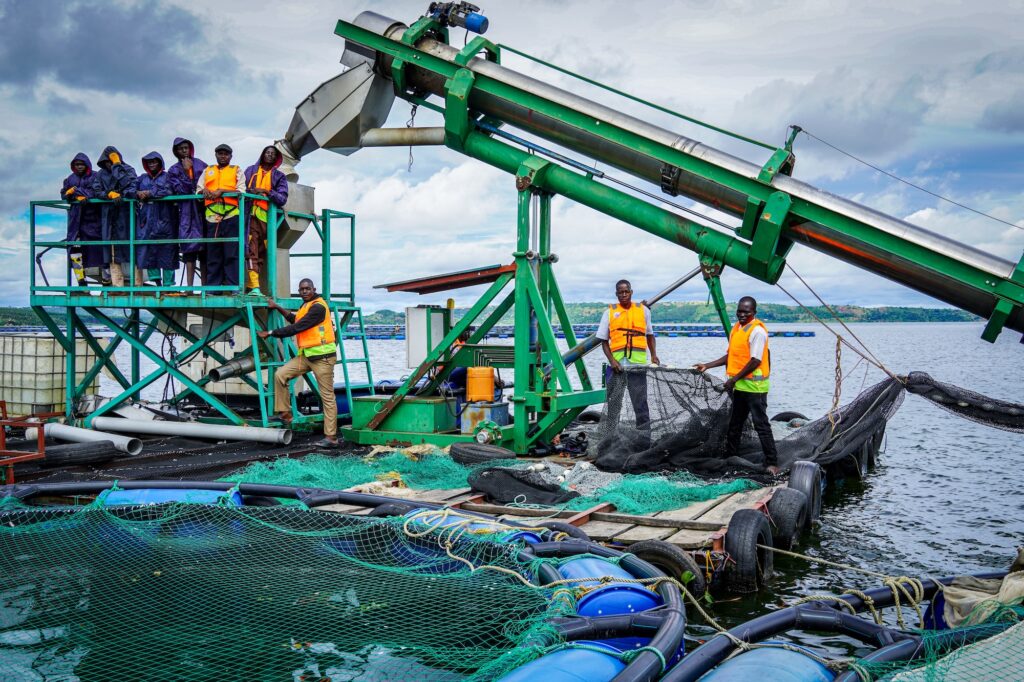
More Than a Job
The most significant shift for Christopher has been in the nature of his work environment. He credits the programme with demonstrating what decent work actually looks like in practice: mutual respect, clear task allocation and freedom from the harassment that had defined his previous employment.
‘With these skills, I’m hoping to collaborate with other young entrepreneurs to launch a collective aquaculture business,’ he says. ‘By pooling our different experiences, I think we can build something that generates a reliable income for all of us.’
A Word to Other Young People
For those who have written off agricultural or vocational work, Christopher has a direct message.
‘Opportunities are there, if we are willing to shift our thinking,’ he says. ‘Aquaculture can be demanding, but it offers dignified, decent work. We have to be willing to put in the time to learn now if we want to secure our future.’
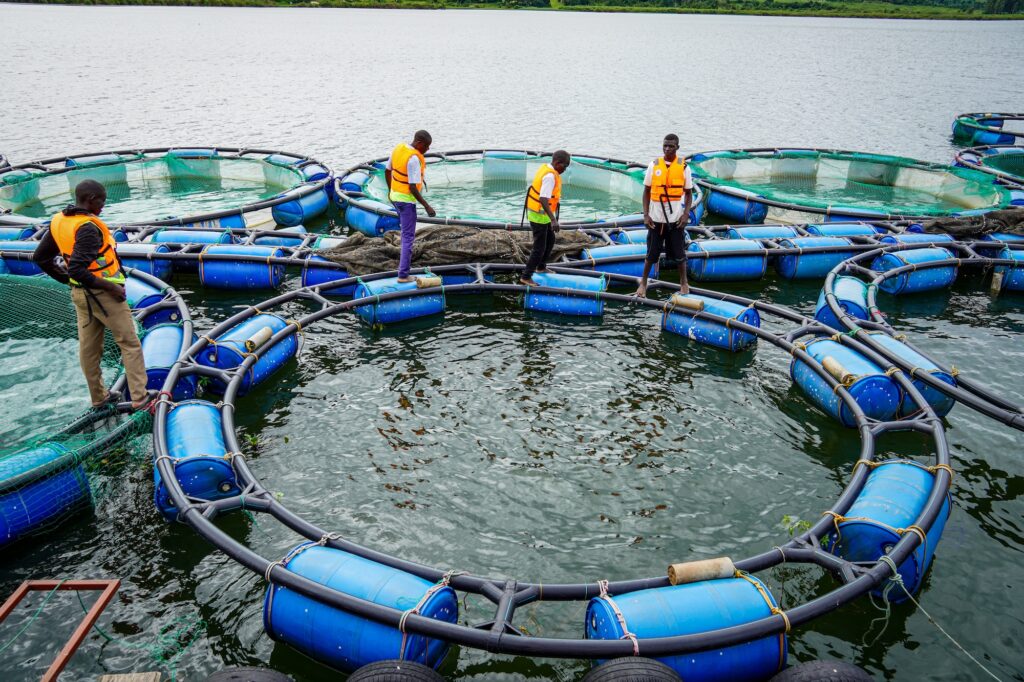
About WeWork
WeWork – Green and Decent Jobs for Youth, funded by the European Union and the Government of Belgium, is implemented in Uganda through a partnership of Cordaid, CEAVA, Rikolto, and Enabel. The initiative equips 500 vulnerable youth in Jinja and Kamuli with market-relevant skills in fish, poultry, and piggery enterprises. By linking participants to work-based learning, financial readiness, and organised markets, the project supports their transition into sustainable livelihoods.