In Kamuli District in eastern Uganda, women who once struggled to make ends meet have found stability and purpose through aquaculture, gaining skills that are reshaping how their community views who can succeed in fish farming.
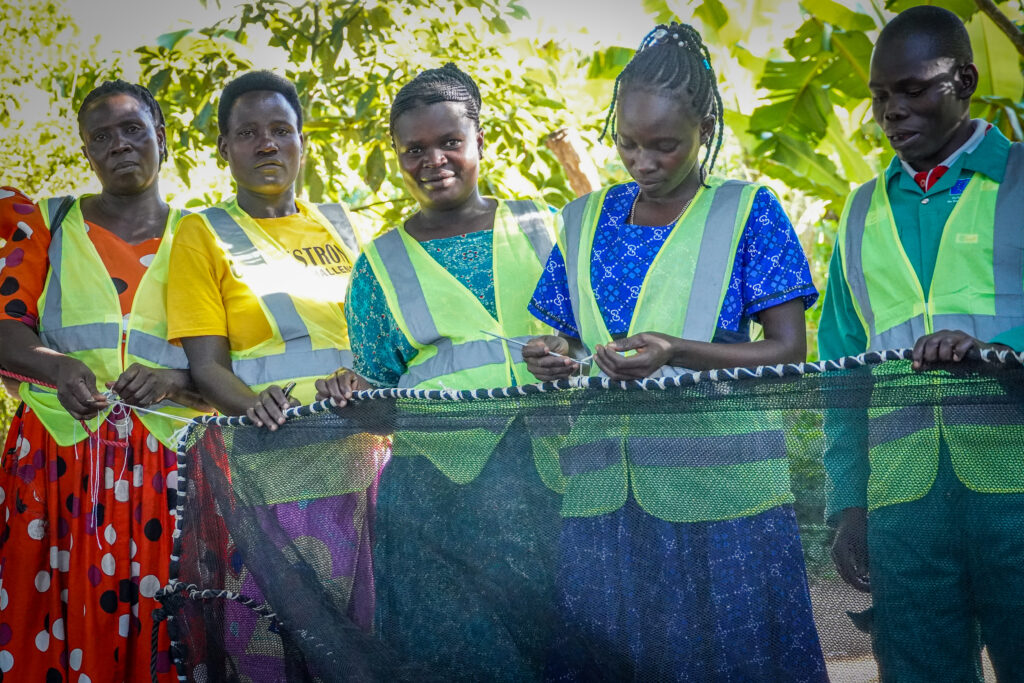
Kamuyat Tugane, 26, and Esther Nawandije, 30, both know what it means to fight for a living. Kamuyat, a mother of two and a trained tailor, found that her small-village clientele could not support her family. ‘There were few customers,’ she says. ‘I earned just 5,000 Ugandan shillings (EUR 1.8) a month, yet I had to support my children and supplement my husband’s income.’
The financial pressure left her vulnerable to exploitation. ‘I was heavily in debt. Even simple costs, like transport, were a hurdle, and male motortaxi drivers would sometimes exploit our vulnerability to lure girls into unsafe relationships.’
For Esther, the burden came from providing for a large family. Relying on subsistence farming of maize and tomatoes, with only a limited local market, she found it difficult to support her six children. ‘Most jobs I found were far from home, which I couldn’t manage with a young family,’ she recalls. ‘My husband even resented the idea of me working far away. He told me that if I wanted to work, I should take all the children with me.’
A New Possibility
For both women, aquaculture once seemed entirely out of reach. Kamuyat explains that fish farming was regarded in her community as men’s work. ‘I never thought it would be possible for a woman to succeed. In my village, I had never even seen a woman selling fish. We couldn’t imagine digging ponds; it felt beyond our reach.’
For Esther, the training marked a turning point. ‘I never imagined fish could be farmed. I thought they only came from the lake, and I grew up seeing only men fishing. This training changed my entire perspective on the fish value chain.’
‘Let’s embrace learning. There is so much we can achieve.’
Learning the Trade
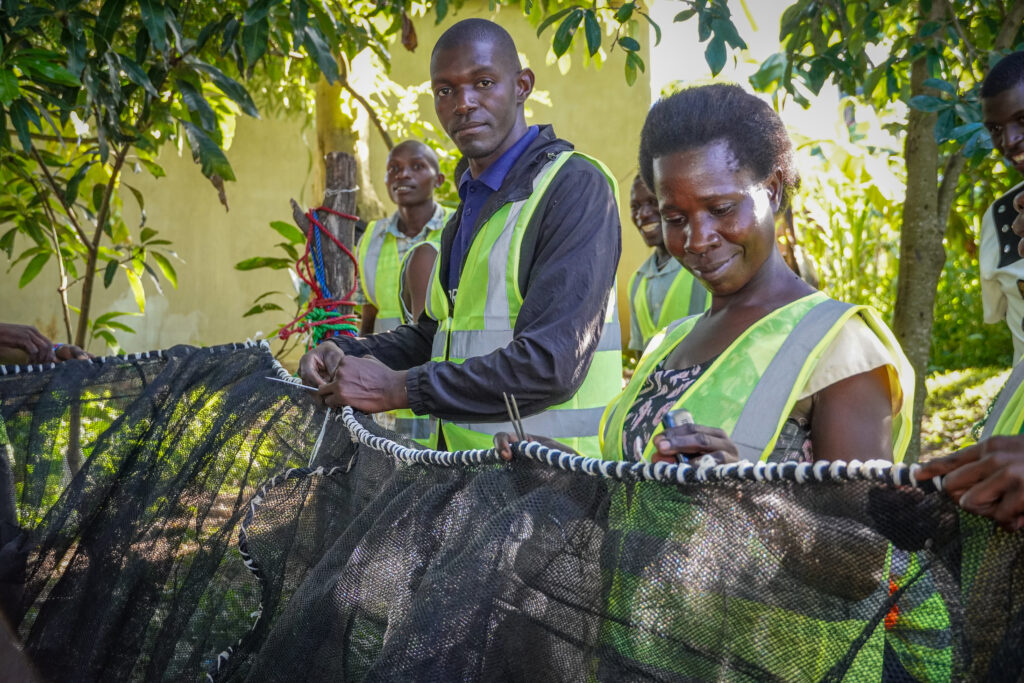
Through work-based learning at Kamos Agro Fish Farm, both women have mastered practical skills, including grading fish using baskets and scoop nets. These techniques help them assess fish sizes and variations, which in turn supports better market planning. They have also learned the detailed work of making cages designed specifically for aquaculture.
The process demanded precision and patience. ‘Initially, we thought all nets were stitched the same way,’ Kamuyat notes. ‘We soon realised that different nets require specific techniques. The skills required here are diverse, and I am glad this has made me more competent.’
Building Sustainable Livelihoods
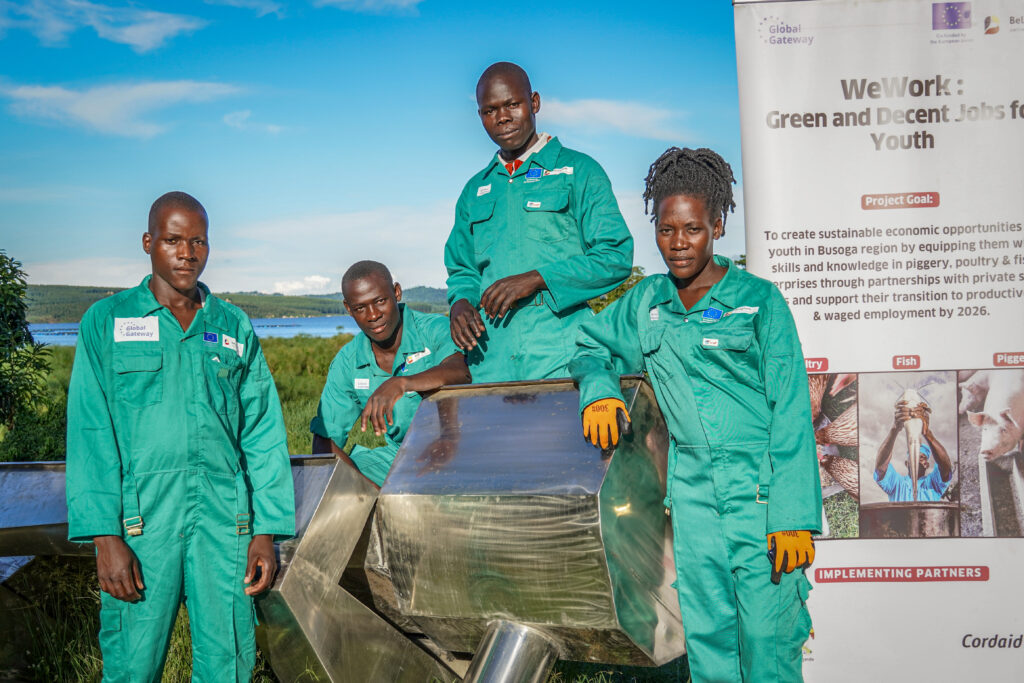
At Kamos, the women have also embraced the principles of green and decent work, learning to manage the messier side of the job by finding creative ways to handle waste. They have identified methods to repurpose off-cuts from the plastic pipes, ropes, and nets used in cage-making, helping to keep production sustainable and environmentally conscious.
That early promise is now becoming a reality. Esther, who first imagined entering the fish-farming business in 2007, has already dug two ponds stocked with 300 fingerlings. ‘This work-based learning could not have come at a better time,’ she says.
Kamuyat has established two ponds of her own, one for tilapia and another for catfish, after identifying strong market potential in Kamuli.
A Message for Others
Esther hopes other young people will view agriculture as a realistic option. ‘Let’s embrace learning. There is so much we can achieve. My dream is to excel in fish farming to inspire many more young people to join agribusiness.’
Kamuyat has a message for other women considering a similar path. ‘Let’s acquire skills that generate income. It will make life much easier. Start by volunteering with someone already in the field; you will not regret it!’