When Ebola returned to eastern Democratic Republic of the Congo earlier this year, it struck communities already living through conflict and displacement. The outbreak, caused by the rare Bundibugyo virus, spread from Ituri into neighbouring provinces and Uganda. The DRC has recorded 7,773 confirmed cases and 3,759 deaths, according to government figures reported at the end of September.
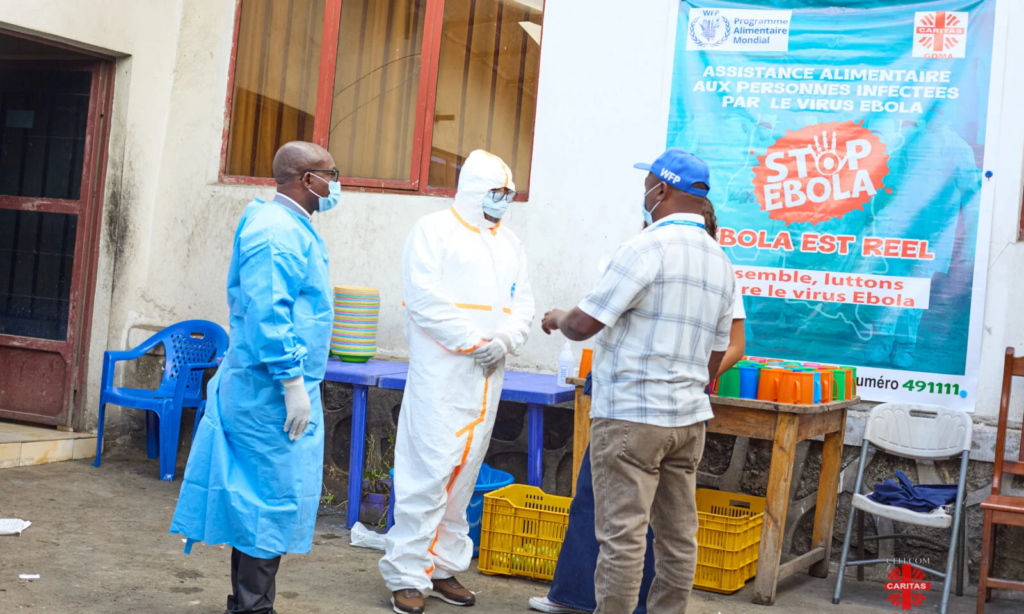
Health workers and aid organisations mobilised to train staff, distribute protective equipment and help families protect themselves.
“This kind of investment does more than help us respond now. It also leaves us better prepared for future health emergencies.”
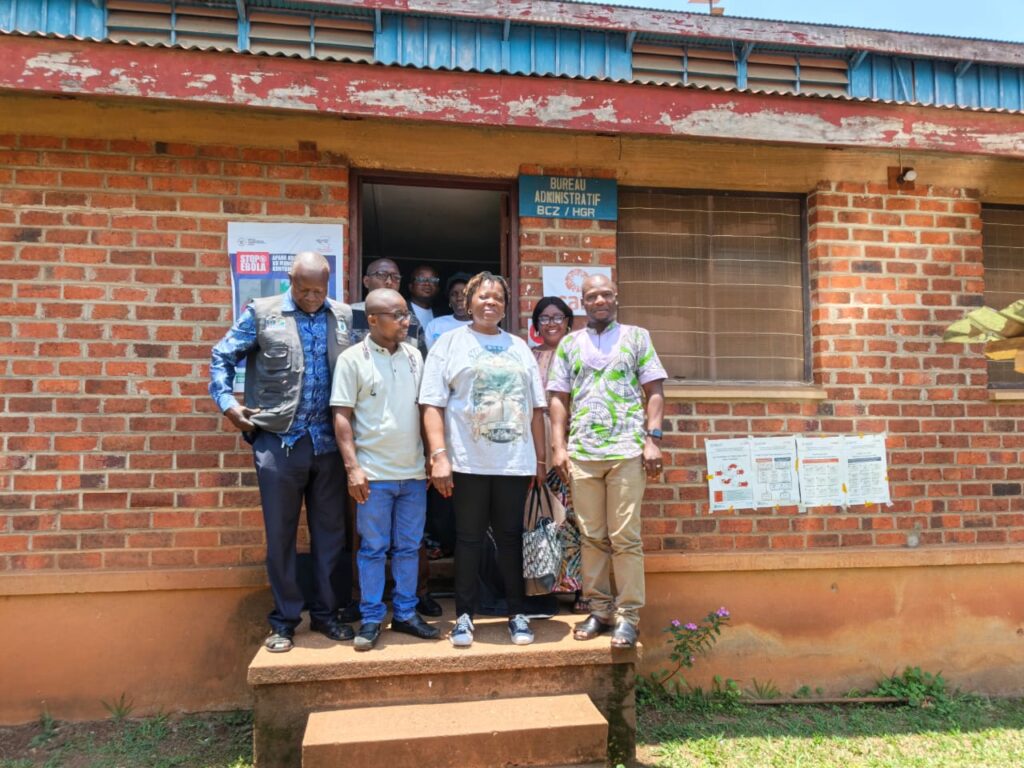
Now, local health authorities in Komanda and Nyakunde health zones, in Ituri province, highlight encouraging developments in the response. Two months into Cordaid and local partner EUP-FASS’s emergency response, they have asked the organisations to extend their work to other health areas where infections remain high.
Ebola response that strengthens healthcare for the future
“Since Cordaid, with EUP-FASS, began implementing Ebola activities in our health zone, we have seen concrete change on the ground,” said Faustin Singo, Chief Medical Officer of Komanda Health Zone, during a field visit.
Désiré Duabo Musubi, Chief Medical Officer of Nyakunde Health Zone, also pointed to a triage area built by Cordaid in less than two months, where patients can be assessed as soon as they arrive.
“I had never seen an organisation use durable building materials like this for an emergency project,” Musubi said. “This kind of investment does more than help us respond now. It also leaves us better prepared for future health emergencies.”
Scaling up through the Dutch Relief Alliance
Cordaid is already responding to this call. In August 2026, a new Dutch Relief Alliance (DRA) Ebola project was launched to extend emergency response activities to additional high-risk health areas in Ituri. In Komanda and Nyakunde health zones, the project’s coverage has been adjusted as the outbreak evolves, directing resources toward the areas where infection rates and community needs are currently highest.
A community-centered response
The Ebola response in Ituri combines several complementary components:
- Risk Communication and Community Engagement: reaching tens of thousands of people with accurate, locally adapted information to counter misinformation and explain how people can protect themselves and others
- Infection Prevention and Control: strengthening the capacity of health facilities and community health workers to prevent transmission
- Psychosocial support: supporting people affected by the outbreak, including survivors and bereaved families
- Community-based surveillance: supporting early detection of suspected cases and rapid follow-up of community alerts and rumors
- Water, sanitation and hygiene interventions: improving access to safe water and handwashing facilities at health centers and community gathering points
Local teams lead the work
True to Cordaid’s localisation and partnership approach, the response is led on the ground by local organisations EUP-FASS, CBCA and PAP RDC. Their teams visit households, organise awareness campaigns, surveillance activities, and psychosocial support sessions within their own communities. Cordaid coordinates the programme, provides technical support, oversees finance and safeguarding, and works with health authorities and coordination platforms involved in the response.
Looking ahead
Infections continue in parts of Ituri, and population movement and limited access to water and hygiene facilities make prevention difficult. With support from the Dutch Relief Alliance, Cordaid and its partners are extending the response to more communities, working alongside local health authorities and the Ministry of Health.