In Arua, northern Uganda, a poultry farmers’ savings and loans association brings together 62 young entrepreneurs who are pooling knowledge, markets, and resources to build more resilient, growth-oriented businesses.
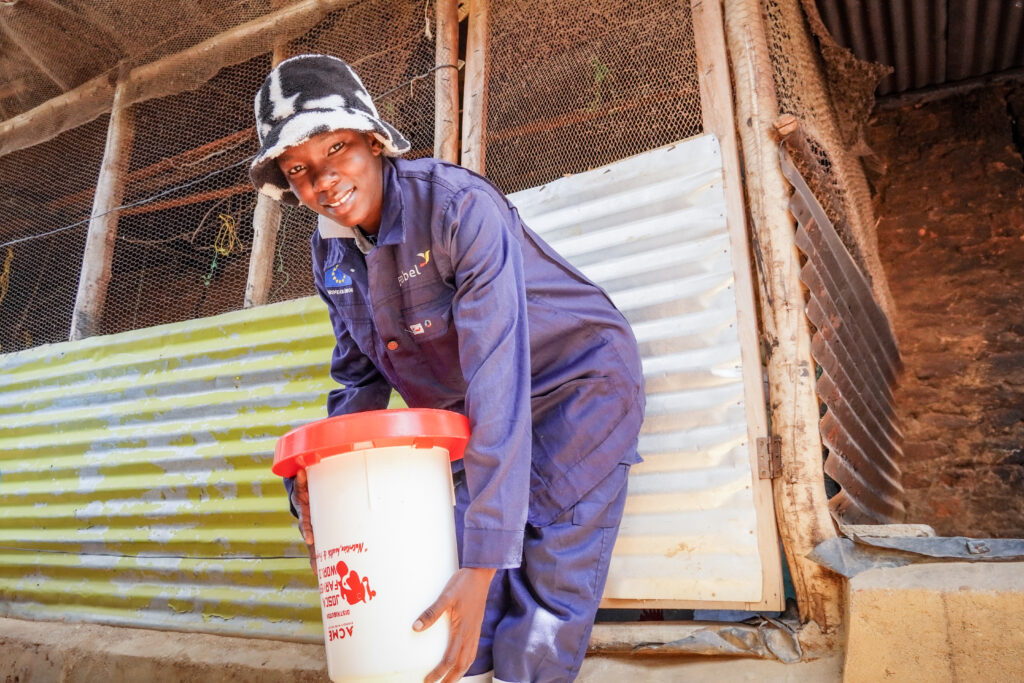
When the group started in 2025, members faced challenges common among emerging agribusinesses: weak record-keeping, limited market access, and gaps in poultry management, particularly disease prevention and flock health. The group now consists of 39 men and 23 women and has grown to include 20 members of the refugee community in Arua City, as the region hosts many people who have fled the conflict-affected neighbouring country of South Sudan.
Most members were already practising poultry farming in some form, but they needed stronger business systems, better technical skills, and reliable support to move from survival-level production to more profitable and sustainable poultry enterprises.
WeWork Project
Through the WeWork – Green & Decent Jobs for Youth Project, the poultry farmers received practical support to strengthen these areas, including training in financial management, market research, digital marketing, and poultry production.
This support was deliberately designed as upskilling: it boosted the knowledge and skills that the youth already had, improved how they record costs and sales, and strengthened their ability to plan, manage and market poultry as a business. The upskilling package was further supplemented with start-up grant support, enabling the farmers to translate training into practical investments for business growth.
‘We support each other to meet customer demand and link one another to new business opportunities.’
This combination of upskilling and start-up grant support helped the farmers move from individual effort to collective business action. Training built confidence and improved business practices, while the grant component provided the extra push the group needed to invest, organise, and respond better to market demand.
Stronger Together
The change has gone beyond individual farms. Farmers who once operated independently are now using their collective to respond to market opportunities and serve customers more reliably.
‘We used to sell individually without thinking about how we could work together’, says Kevin Akech, chair of the association. ‘Now, if one farmer receives more orders than they can supply, they reach out to another member. We support each other to meet customer demand and link one another to new business opportunities.’
Ezaruku Damian, another member, says learning from fellow farmers has been a crucial step forward in how he runs his business. ‘Through the training and peer learning, we have improved the way we manage diseases. By collaborating instead of competing, I have also diversified into piggery, which has increased my income and allowed me to invest more in my poultry business.’
For some members, being part of the collective has encouraged them to look beyond conventional poultry production and identify emerging opportunities.
Pariyo Patrick, for example, has identified duck farming as an increasingly promising enterprise in Arua City, driven by growing demand for poultry meat. ‘Ducks grow quickly and reproduce well,’ Patrick says. ‘Yet many people are hesitant to rear them because they think they are difficult to manage. With the right knowledge and proper husbandry, this can become a profitable business.’
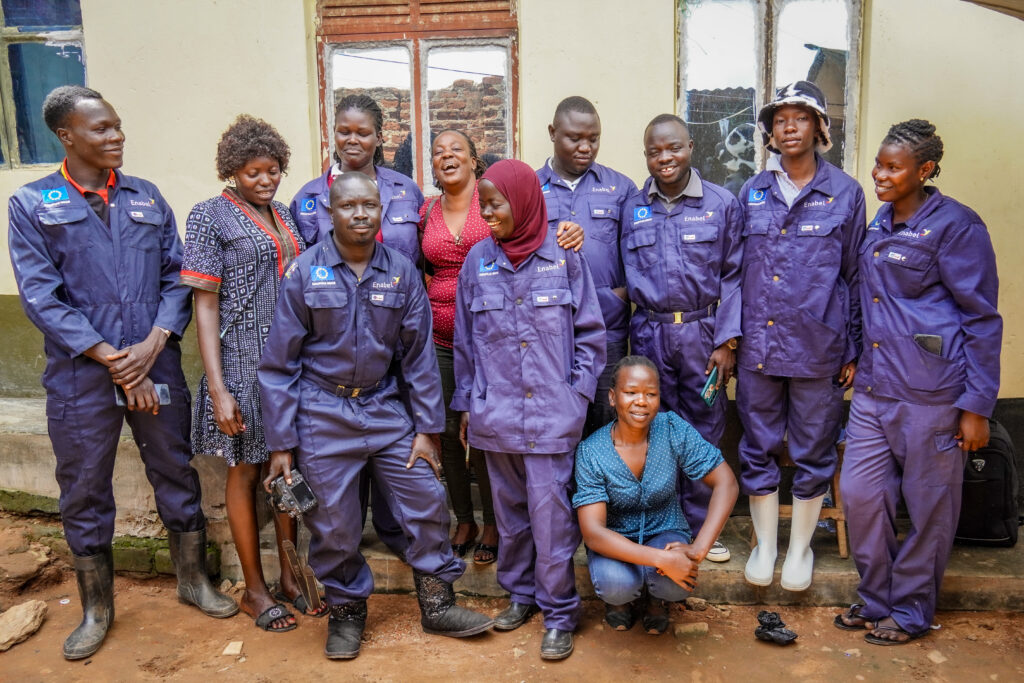
Collective Investments
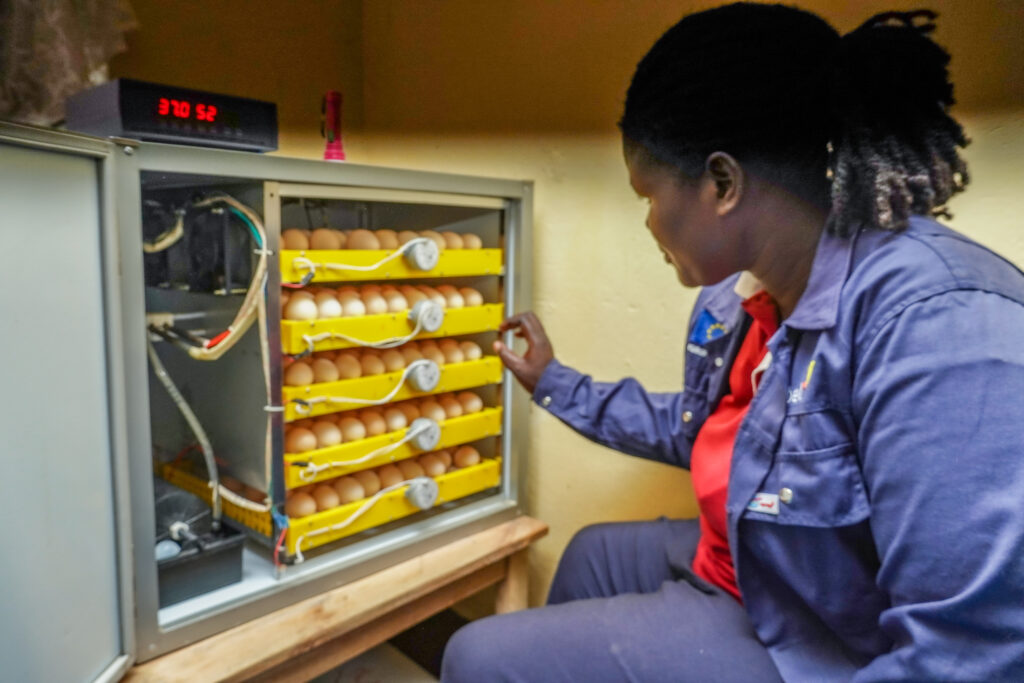
One of the group’s most significant collective investments has been buying an incubator with a capacity of 500 eggs. Previously, farmers depended on external suppliers for day-old chicks, with deliveries sometimes taking two to three weeks.
The investment shows how the WeWork start-up grant complemented members’ initiative and enabled the group to apply new business planning and poultry management skills to address a practical supply-chain constraint.
The group’s dual-power incubator, which runs on both solar energy and electricity, is helping members hatch their own chicks and reduce reliance on external suppliers. It also shows the value of pairing capacity building with targeted start-up grants: farmers not only learn what to do; they receive support to act on it.
The group estimates that producing chicks through their own incubator has helped them save about 25.2 million Ugandan shillings (5,662 euros) on purchasing day-old chicks. This saving is an early result of improved skills, collective decision-making and grant-supported investment, and it gives the group more working capital to reinvest in flock expansion, feed, vaccination and market supply.
‘This has expanded my network, increased my income and given me experience in managing larger-scale poultry operations.’
For the members, the incubator is more than a piece of equipment. It represents a shift towards greater business control, self-reliance and collective investment. It also shows that youth entrepreneurs can use modest start-up support responsibly when it is linked to skills, coaching, peer learning, and a clear market opportunity.
Ezaruku Damian: ‘Our orders for day-old chicks could take two to three weeks to arrive. Having our own incubator has helped us close that gap and ensure that our farms are not disrupted by supply delays. Our plan is to acquire land as a group and establish an office where we can sell our birds and chicks. We also hope to increase our incubation capacity. Our ambition is to become a leading association that supports poultry farmers beyond our own membership.’
Creating Additional Value
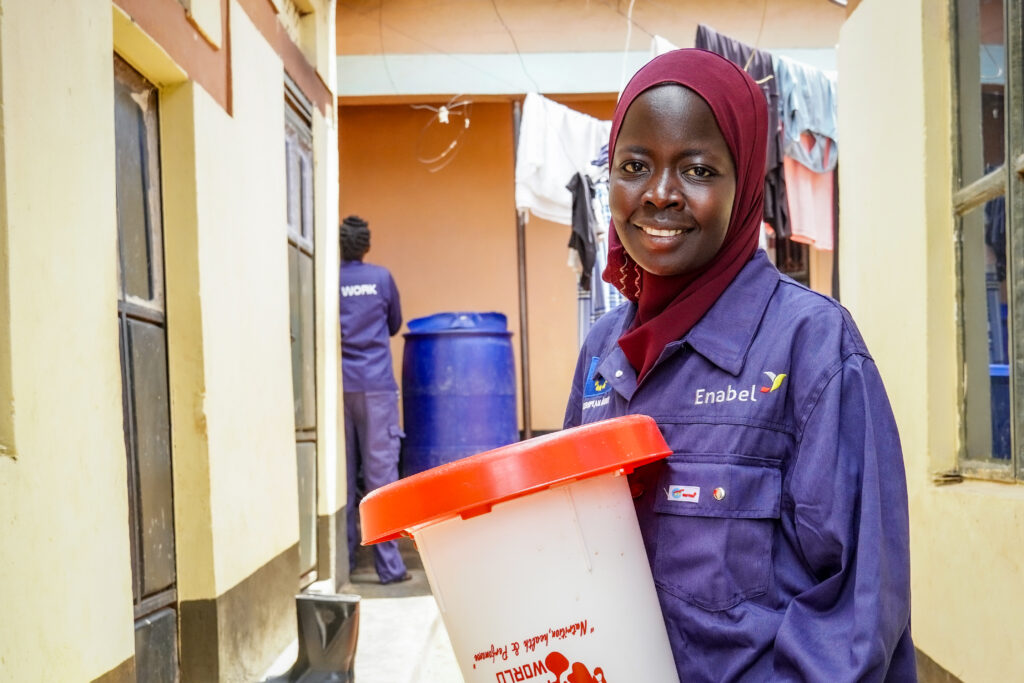
Members are also experimenting with ways to reduce waste, improve farm hygiene, and add value to their poultry businesses. ‘When waste is generated on my farm,’ says association member Asante Hope Nicholas, ‘I process it into an organic input that can be used on horticultural crops. I have also started offering brooding services to larger poultry farms. This has expanded my network, increased my income and given me experience in managing larger-scale poultry operations.’
The group has further benefited from research and knowledge exchange with a university team studying indigenous microorganisms (IMO). Through this interaction, members learned how to produce IMO to manage farm odour, improve hygiene, and build better relationships with neighbouring households.
Building Collective Businesses
For the Arua City Youth Poultry Farmers Association, the journey is increasingly about building a collective business rather than simply running individual farms. Members want to expand incubation services, acquire land, establish a central office and eventually supply chicks and poultry products to other farmers across the region.
When young entrepreneurs have access to practical skills and organise around shared challenges, they can move beyond subsistence-level production to stronger businesses, new income opportunities, and greater control over their livelihoods.
Upskilling becomes more powerful when linked to targeted start-up grant support, because it turns knowledge into equipment, better management, fewer supply delays, stronger market response, and higher household income.
The WeWork – Green & Decent Jobs for Youth project in West Nile is funded by the European Union and the Government of Belgium and implemented by Cordaid, the Caritas Arua Diocese and Enabel.