Following her recent visit to Afghanistan, Cordaid CEO Heleen van den Berg is urging the international community not to abandon the Afghan people. ‘We can do far more for Afghan women, men and children. So make better use of independent organisations like Cordaid.’
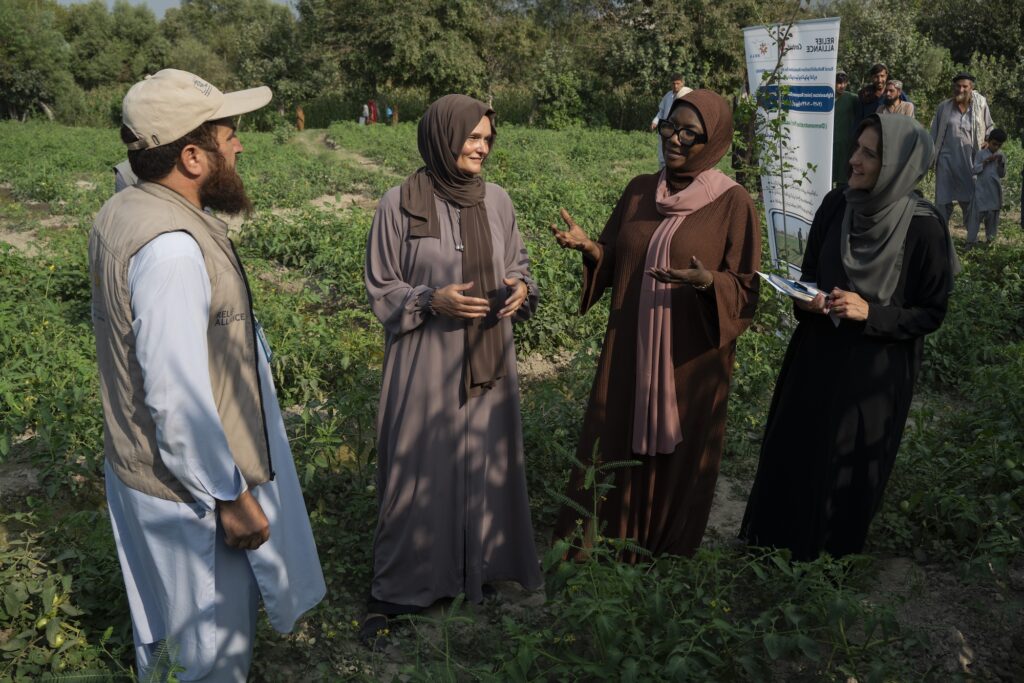
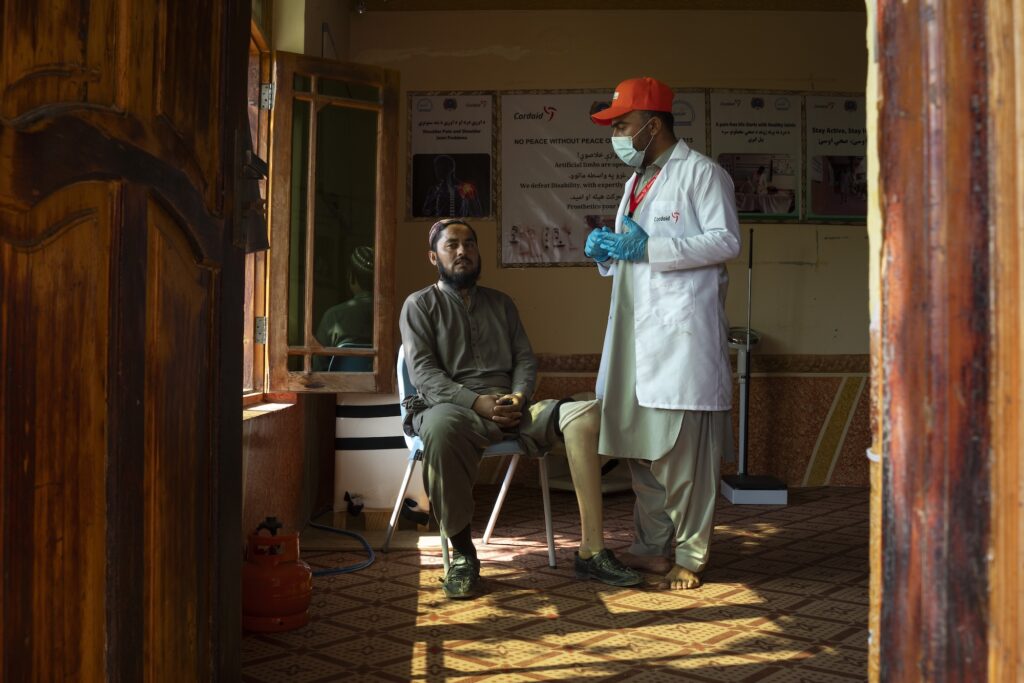
With funding from the Dutch government, Cordaid coordinates the Dutch Relief Alliance (DRA) emergency response programme in Afghanistan, as well as programmes providing mental health and psychosocial support and physical rehabilitation for people with disabilities.
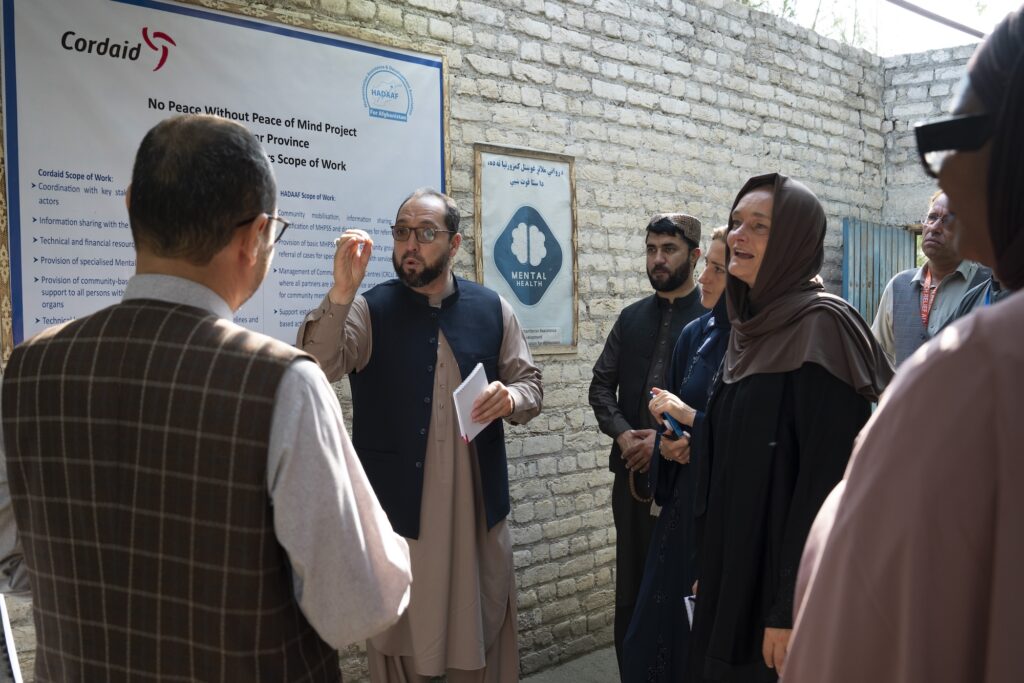
Van den Berg visited projects in Nangarhar province in September and spoke with residents, aid workers, colleagues, local partners and authorities.
Watch this video of Cordaid CEO Heleen van den Berg’s visit to Afghanistan:

‘What stays with me most is how quiet the streets are. The war is over, and security seems to have improved. But a strange feeling hangs over everything: you see almost only men. And you hear no music anywhere. You constantly find yourself thinking: where have all the women gone?’ says Van den Berg.
‘And beneath the relative calm, I saw above all a society under enormous strain, caused by extreme drought, climate change, repression and poverty.’
Crises Piling Up
Almost half the population, 23 million Afghans, needs humanitarian assistance. Only a fraction of the necessary funding is available.
Meanwhile, extreme drought and climate change are undermining agriculture and water supplies even further. Floods and earthquakes are devastating communities and farmland. On top of this, more than six million Afghans have been forced to return from Iran and Pakistan since 2023.
No Space Left for Women
Then there is the Taliban regime, which affects everyone, and women and girls in particular. A female Cordaid colleague told Van den Berg that her six-year-old son constantly mimics shooting and shouts: ‘I’m going to kill, I’m going to kill, I’m going to be a Talib.’ She finds it increasingly hard to guide her son, now that education has become more fundamentalist even for children of that age.
A nurse Van den Berg met was one of the last women to obtain a qualification. She spoke about the past: playing sport, kicking a football about with her father, going outdoors and studying. All those freedoms: gone.
Female nurses can still work with female patients, but they must reckon with the morality police whenever they travel, and they cannot leave the house without a mahram, a male escort.
The consequences are also visible in healthcare. ‘Because women are not allowed to train, not even as midwives, even more women are giving birth at home in appalling conditions. Maternal mortality is therefore soaring.’
Van den Berg believes it is essential that Afghan female aid workers and nurses can continue working and that girls can continue their education. ‘If you don’t allow that, you simply cannot reach the most vulnerable group in Afghanistan. You are leaving them behind.’
The World is Pulling Back
While crises pile up and needs grow, international support for Afghanistan has fallen drastically since 2021. Broad development aid has been all but suspended, and humanitarian funding is also coming under growing pressure.
This is part of a wider global decline. In 2025, official development assistance from donor countries fell by 23.1 per cent and humanitarian aid by 35.8 per cent. Budgetary pressures, geopolitical tensions, higher spending on defence and security, and a shift towards domestic priorities all play a part.
Van den Berg sees a dangerous paradox: as the world becomes less safe, the willingness to invest in countries where fragility and instability are greatest is shrinking. ‘An Afghanistan that sinks further into poverty, where young people have no prospects and where women are entirely driven out of public life, will not become more stable by our paying it less attention.’
Stability in Afghanistan and other fragile countries is also in the interests of the Netherlands and Europe, Van den Berg believes. ‘By offering people prospects and preventing crises from escalating further, you reduce the likelihood of instability spreading.’
Emergency Relief and Offering Perspective
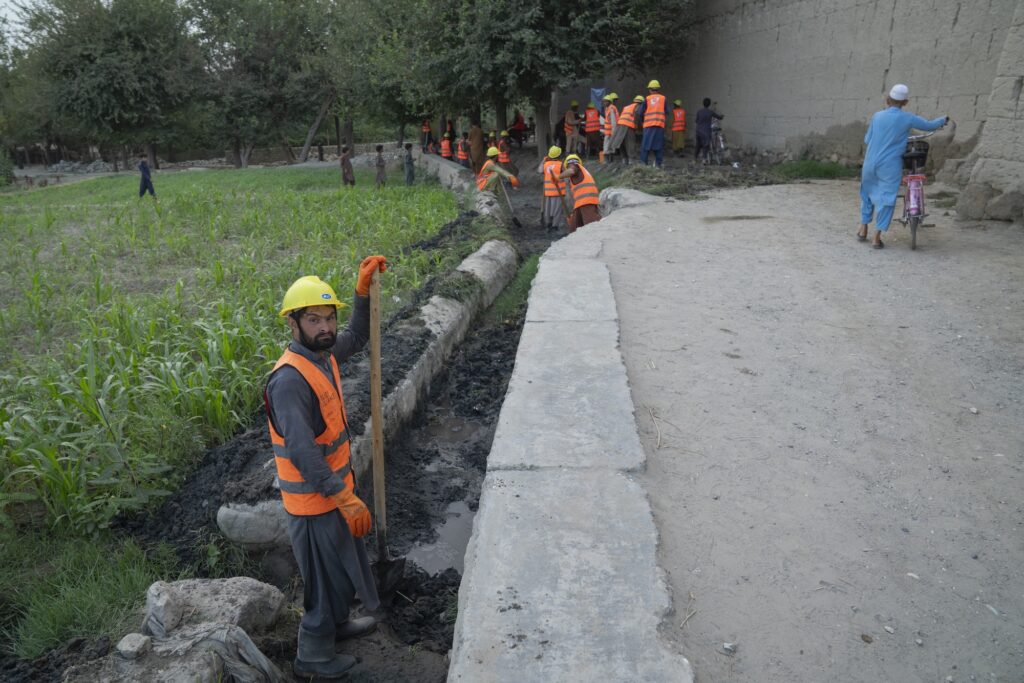
During her visit, Van den Berg saw what cooperation between Dutch and Afghan aid organisations can achieve. Floods and extreme drought had turned farmland into barren expanses of stone and sand. With DRA support, water distribution systems have been built, and these are now used by dozens of communities.
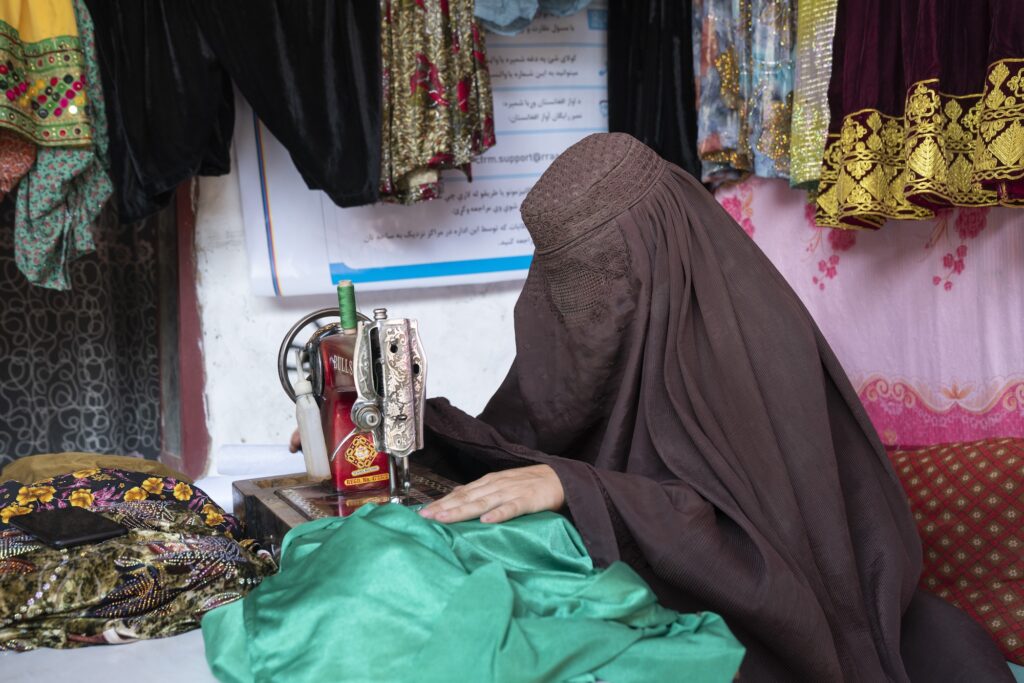
Hundreds of young people have received vocational training. Small entrepreneurs are receiving support, and farmers are learning how to protect themselves against climate change. In remote areas, small clinics provide basic healthcare and mental health care.
This is emergency aid that goes beyond immediate need: aid that gives people the prospects to rebuild their lives. ‘It is about helping people to do more than merely survive. To widen their prospects,’ says Van den Berg.
But it is precisely this broader support that is becoming harder to provide as international funding for Afghanistan declines. As a result, Cordaid too has had to scale down its Afghanistan office substantially.
‘That is the painful dilemma: so much more needs to be done, and at the same time political will, attention and financial support for Afghanistan are evaporating.’
Working Within the Remaining Space
Working in Afghanistan means operating in difficult conditions. The Taliban want to check in advance how, where and with whom organisations work. Permission is required to access certain areas.
‘The tension is enormous. But Cordaid is sticking to its own course. We work according to humanitarian principles, we determine our programming with our partners, and we do not adjust it. We work with local Afghan partners and international organisations, not with or for the Afghan authorities,’ stresses the Cordaid CEO.
Holding on to its own principles makes the work more complicated and sometimes more expensive. For example, Cordaid continues to employ Afghan women, even if this means compensating for the lost income of a man who is obliged to accompany his wife.
‘Working in Afghanistan is a tightrope walk,’ says Van den Berg. ‘And we are managing to stay upright.’
It is precisely this independent position that makes civil society organisations so valuable, according to Van den Berg. ‘Cordaid is not a government. We do not engage in politics or diplomacy, but work directly with Afghan communities and local organisations. We can work for the Afghan people without recognising the regime.’
‘Make Better Use of Us’
Van den Berg therefore has a clear message for the Netherlands and other international donors: make use of the space that still exists in Afghanistan, and give civil society organisations the resources to operate within it.
‘Do not turn your back on Afghanistan. And understand that supporting the Afghan people is not the same as recognising the Afghan regime.’
According to her, this means not only more emergency aid, but also investing in healthcare, mental health care, support for people with disabilities, education, entrepreneurship and resilience to climate change. Above all, continuing to look for ways to reach women and girls.
‘That is not political work. It is impartial, independent humanitarian work for and with people who want nothing more than simply to be able to live.’
Cordaid has a decades-long history in Afghanistan, with local networks, knowledge and trust. ‘And Cordaid has never left Afghanistan, not even in the most difficult moments,’ stresses Van den Berg.
That position makes it possible to make a difference even under the Taliban. ‘We do more than provide aid. Together with our local partners, we are keeping that Afghan civil society space open.’
And this is ultimately what Van den Berg’s appeal to the Dutch government and international donor organisations comes down to: ‘Make better use of organisations like Cordaid to fill the limited space that exists to reach out to Afghan women, men and children. We have everything we need to do more, much more.’