In Nangarhar province, community rehabilitation centres are repairing prosthetic limbs and offering counselling to people with nowhere else to go, as hundreds of health facilities across the country have closed.
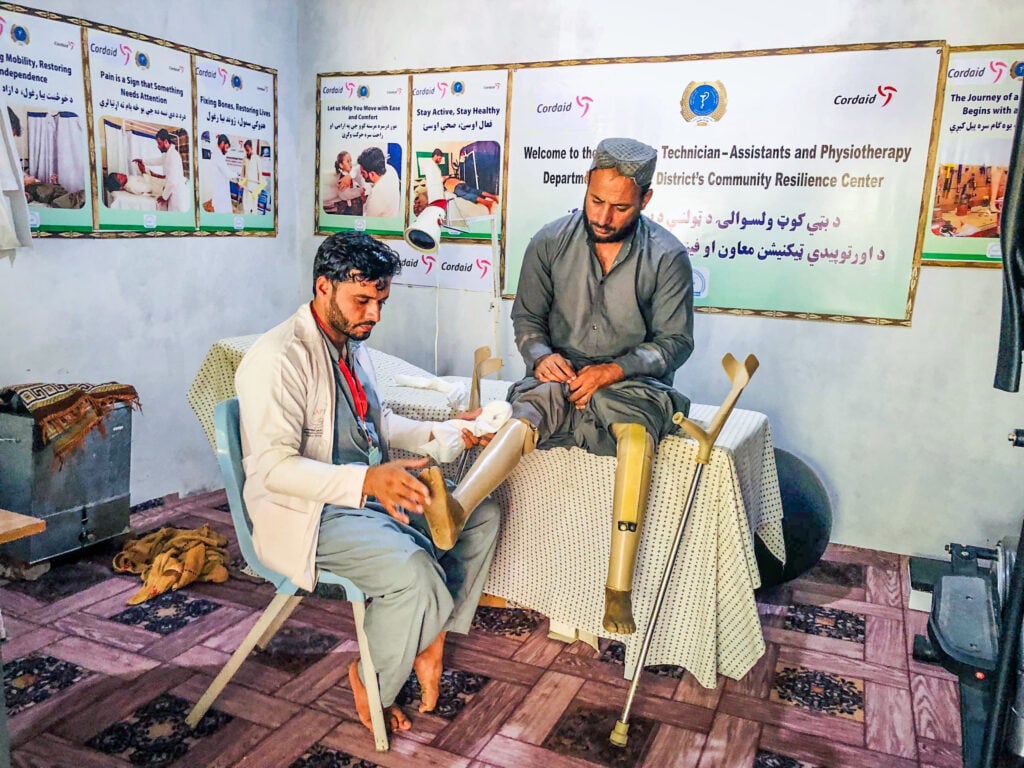
Fayaz Mohammad was two years old when a severe burn damaged the bones in his right leg. His family took him to Pakistan, where surgeons operated, but the injury was so serious that the leg had to be amputated below the knee. He then spent about 18 years on crutches, until a humanitarian organisation in Pakistan gave him a prosthetic leg. He could walk, work and provide for his family again.
Now 41 and living in Shahidano Mina village in Nangarhar province, eastern Afghanistan, Fayaz found that the prosthesis had worn out and was damaged after years of use. ‘Simple daily activities had become major challenges for me,’ he says. ‘I was worried about how I would continue supporting myself and my family. To be honest, it had become very difficult for me to move comfortably.’
‘The unbearable pain is gone. Now I can walk much more comfortably.’
A Health System Stretched to Breaking Point
Bruno Lemarquis, the UN Deputy Special Representative of the Secretary-General and resident and humanitarian coordinator for Afghanistan, said in November 2026 that about 700 of the country’s 1,900 primary health care facilities, roughly 40 per cent, are expected to close or have already shut between 2025 and 2026. More than 3 million people are being left without critical, lifesaving care.
In April 2026, the United Nations appealed for funding to clear Afghanistan of the remnants of war, reporting that the country has the third-highest rate of explosive ordnance casualties in the world. Around 50 people are killed or injured every month, almost 80 per cent of them children. That amounts to at least one casualty a day, and that casualty is most likely to be a child. About 90 per cent of these cases are caused by unexploded ordnance and abandoned munitions left behind after more than 40 years of conflict.
The UN and the Directorate of Mine Action Coordination recorded about 467 civilian casualties in 2025, including 92 deaths and 375 injuries. Children accounted for around 66 per cent of them. The eastern region, which includes Nangarhar, was the worst affected, with 67 incidents during the year. The figures point to a continuing need for mine-risk education, medical rehabilitation, prosthetic services and long-term support for survivors.
Care Close to Home
For Fayaz, help came from the Community Resilience Centre in his village. A designated doctor assessed him and concluded that his prosthesis needed repair and maintenance. An orthopaedic technician carefully mended the limb, and a physiotherapist showed him how to use and look after it properly, which should extend its life and keep him safe and comfortable.
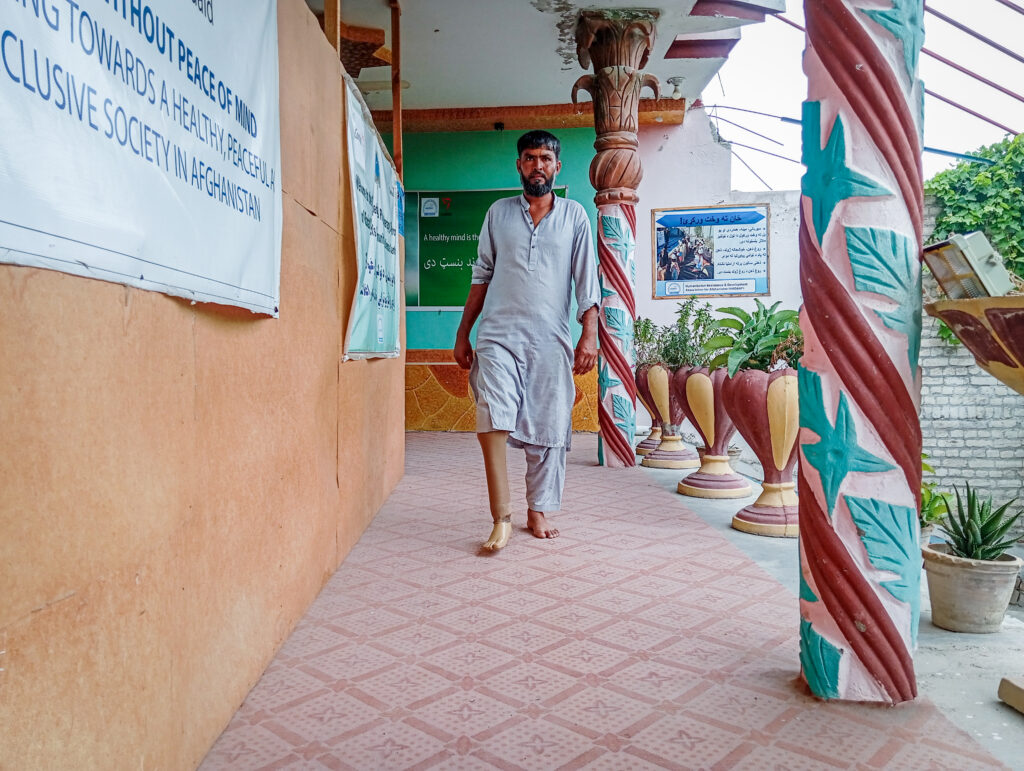
The effect was immediate. ‘The unbearable pain is gone,’ Fayaz says. ‘Repairing my prosthetic leg has made a great difference in my life. Now I can walk much more comfortably.’
Bahram, 33, from Shabdiani in Nangarhar, lost both legs above the knee to explosive remnants of war. He received rehabilitation and prosthetic support at the Community Resilience Centre in Batikot. ‘Rehabilitation services are very important for people with disabilities,’ he says. ‘But because so many people need help, the assistance does not reach most of those facing the same problem.’ He adds: ‘I am impressed with the doctors’ attitude, knowledge and professionalism in serving the people of our village.’
‘I am happy to serve my people as much as I can. But the needs are greater than expected.’
The People Behind the Benches
Much of the day-to-day work is done by bench workers, who make and maintain the braces and artificial limbs that patients depend on. Asya Saeedi, a bench worker in Batikot, says the centre serves people from neighbouring villages and surrounding communities as well as its own. ‘I personally feel responsible, and I understand how much people need my support,’ she says. ‘An ankle-foot orthosis and a fixed ankle orthosis need professional care and regular checks for cracks, stress marks, sharp edges and loose screws.’
She works in a country where women health workers face persistent obstacles. ‘I am happy to serve my people as much as I can,’ she says, ‘but the needs are greater than expected.’
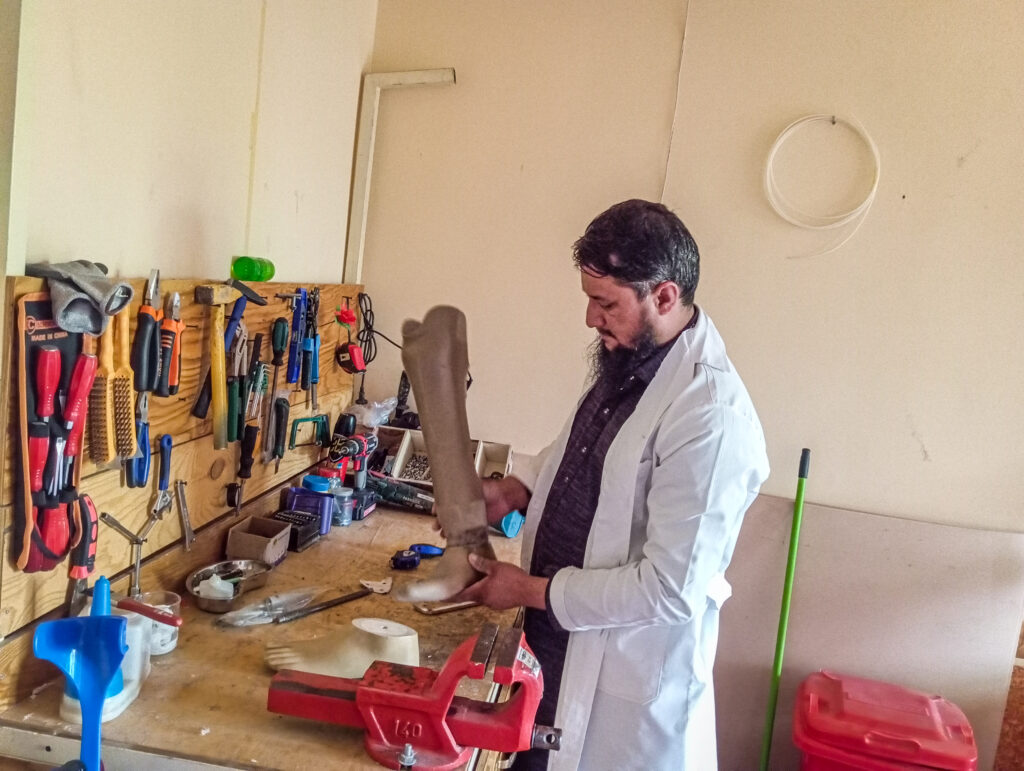
In Rodat District, bench worker Masihullah brings personal experience to his work. In 2010, he lost his leg below the knee in an incident involving an unexploded mine. ‘I can understand their pain very well because I am also a person with a disability,’ he says. ‘Having experienced this pain myself, I understand what others go through, and that is why I provide services to my peers who face similar challenges.’
Masihullah says the return of large numbers of people from Pakistan has doubled the pressure on his centre as it tries to meet the needs of vulnerable people.
Support for the Mind as Well as the Body
The centres also provide psychosocial support. ‘In our Community Resilience Centre, anyone who comes with hope is welcomed,’ says Salma Sadat, a psychosocial counsellor with the Humanitarian Assistance and Development Association for Afghanistan. ‘We empathise with them, we understand them, and we help them strive for a better life. Our integrated interventions have helped many people so far, but many others are still waiting to be served.’
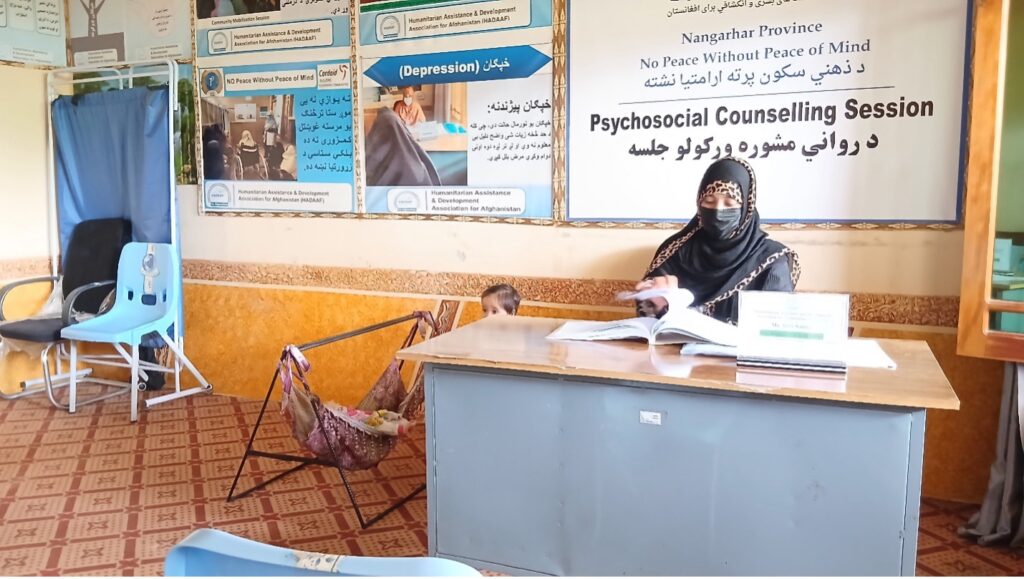
The centres are supported by Cordaid, which works in Afghanistan through a principled, locally led approach. It continues to provide mental health care, physical rehabilitation and psychosocial support to vulnerable communities. Forced returns are increasing, demand for health services is growing, and funding is limited, but Cordaid will keep delivering essential services to the people who need them most.