‘Hands off the International Criminal Court,’ the Dutch Prime Minister Rob Jetten said at the United Nations General Assembly. And rightly so. Because the foundation for world peace, the international rule of law, is at stake. This is something we must resist. And Cordaid does so by working towards a more connected world.
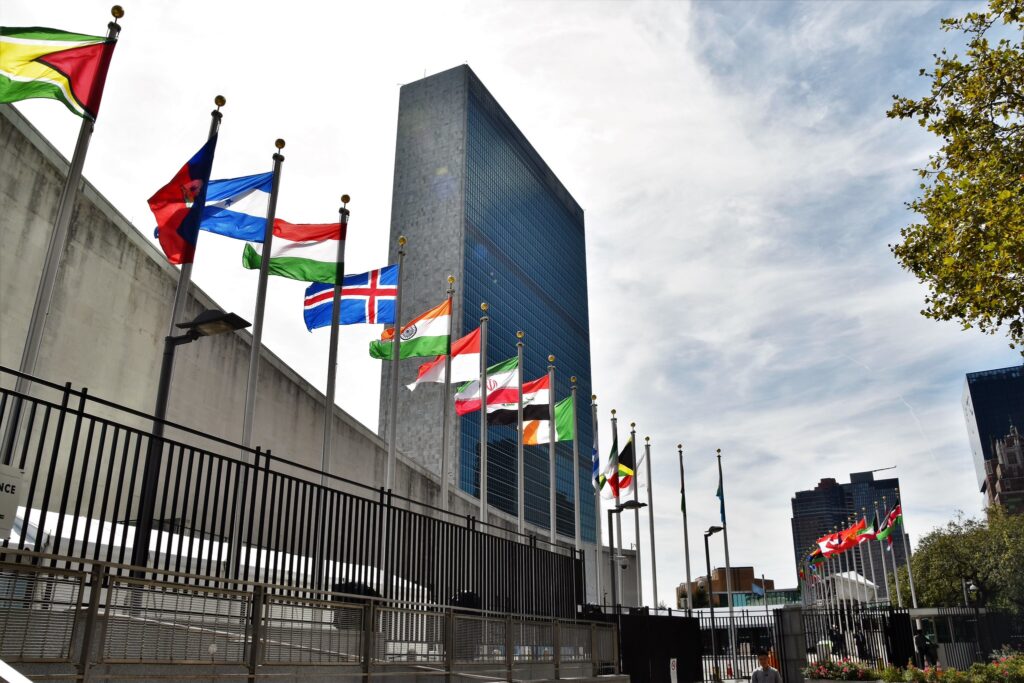
Great powers acting with impunity, trampling smaller countries underfoot. That was what we never wanted to see again after the horrors of the Second World War. Never again. Plus jamais. Nie wieder.
To prevent this, the international community established common rules such as the Geneva Conventions and institutions such as the United Nations and, more recently, the International Criminal Court. The core principle of the international rule of law is that power does not determine the law; the law constrains power. Cross-border problems are not solved bilaterally, in backroom deals between the powerful, but multilaterally, together.
A Historic Low
This post-war order is under severe threat.
Trump’s retreat from international cooperation is devastating. The US has largely halted international humanitarian and development aid. Earlier this year, the US, historically a political and financial pillar of the UN, announced its withdrawal from 31 UN entities. It had already withdrawn from the Paris Climate Agreement and stopped funding the Human Rights Council. It is now targeting the International Criminal Court in The Hague.
‘This erosion of the international rule of law is a historic low,’ says Paul van den Berg, political adviser at Cordaid and chair of the Dutch Human Rights Consultation (BMO).
Van den Berg lists the consequences of Trump’s America First power play. ‘Now that the biggest donor has turned off the taps, there is dramatically less money for humanitarian aid. The UN is receiving at most 10% of the funding needed for emergency assistance in countries such as Afghanistan and Yemen. The International Criminal Court is being criminalised, which turns the world upside down. The World Trade Organisation is almost on its knees because of the US’s erratic, aggressive trade policies. And in this chaos, Washington is supporting anti-democratic and neo-fascist forces around the world, such as the AfD in Germany and Bolsonaro in Brazil.’
Less Cooperation, More Weapons
Bad examples apparently set a precedent. Official Development Assistance from the world’s major donor countries fell 23% in 2025, the largest annual decline ever, according to the OECD. The Netherlands too is making historically deep cuts to development aid.
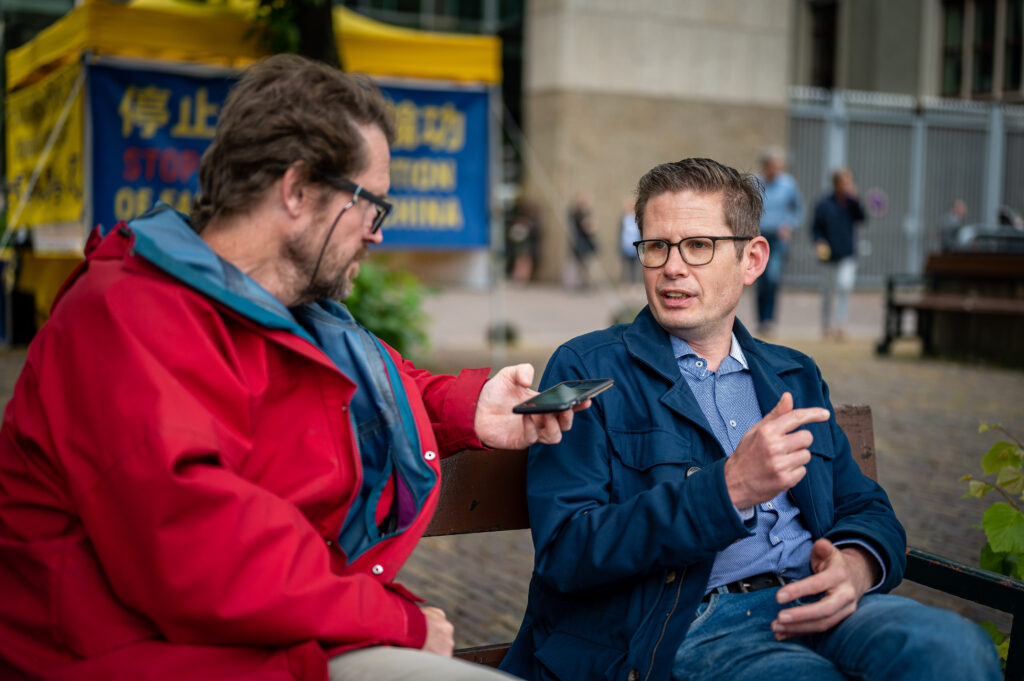
A common explanation for these cuts is that more money needs to go to defence. Peter van Sluijs, Cordaid’s expert on peacebuilding and conflict prevention and coordinator of the Civil Society Platform for Peacebuilding and Statebuilding (CSPPS), questions that logic. ‘Investing in peacebuilding and conflict prevention up front is much cheaper and delivers more than resolving conflicts with weapons afterwards. At the very least, let’s not allow one to come at the expense of the other.’
As multilateralism declines and international law erodes, civil society organisations and aid workers are increasingly under attack. ‘Never before have so many activists around the world been thrown in jail,’ says van den Berg. ‘And over the past ten years, the number of humanitarian aid workers killed has more than tripled. We all know the images of the targeted attacks on ambulance workers in Gaza.’
The Dutch Relief Alliance, of which Cordaid is a member, Médecins Sans Frontières and UNICEF, as well as the Advisory Council on International Affairs, are therefore urging the Dutch government to put the safety of aid workers and the protection of International Humanitarian Law higher on the agenda.
Civil Society under Great Pressure
Van den Berg also sees an erosion of norms in the Netherlands: ‘The right to protest is under discussion. Climate activists are being dragged from their beds without due process. A motion has been passed to put Antifa, an anti-fascist movement, on the terrorist list. Fundamental freedoms and democratic achievements are being seriously undermined.’
Van Sluijs, who has worked with human rights activists and peace networks worldwide for decades, also sees civil society organisations increasingly squeezed. ‘The pressure is enormous. As international support largely disappears, many are collapsing. Aid workers and civil society organisations, from Afghanistan to Mali, from South Sudan to European member states, constantly monitor and stand ready to de-escalate and resolve small conflicts peacefully before they flare up. But they are at breaking point. The money has run out, tensions and polarisation are increasing, and the civil space to manoeuvre is shrinking dramatically.’
An Absurd Spiral
Van den Berg does not hesitate to call the world’s most powerful state’s frontal attack on the international rule of law and multilateralism a licence for authoritarian leaders elsewhere to do the same. ‘If Trump can do as he pleases with impunity, then so can we, they reason.’
So an absurd spiral emerges: as conflicts flare up, we dismantle the institutions and networks that can resolve them. As cross-border crises and threats grow beyond our control, countries increasingly choose self-interest, protectionism, and rearmament. It is like pouring petrol on the fire.
And ‘never again’ suddenly feels very far away.
What do we do about it? Van Sluijs and van den Berg give roughly the same answer: keep pushing back and forge alliances. Do not give up.
The UN Must Return to Its Core
‘I recently attended the United Nations General Assembly in New York. With the UN facing such difficult times, we risk forgetting something. The fact that 193 countries still come together there and believe in working together gives me hope,’ says van Sluijs.
Van Sluijs also believes the United Nations must reform, or it will lose its political clout altogether. ‘The rationale of the UN, set out in Article 1 of the Charter in 1945, still stands strong. But the machinery as it has been built up is too fragmented and therefore lacks focus.’
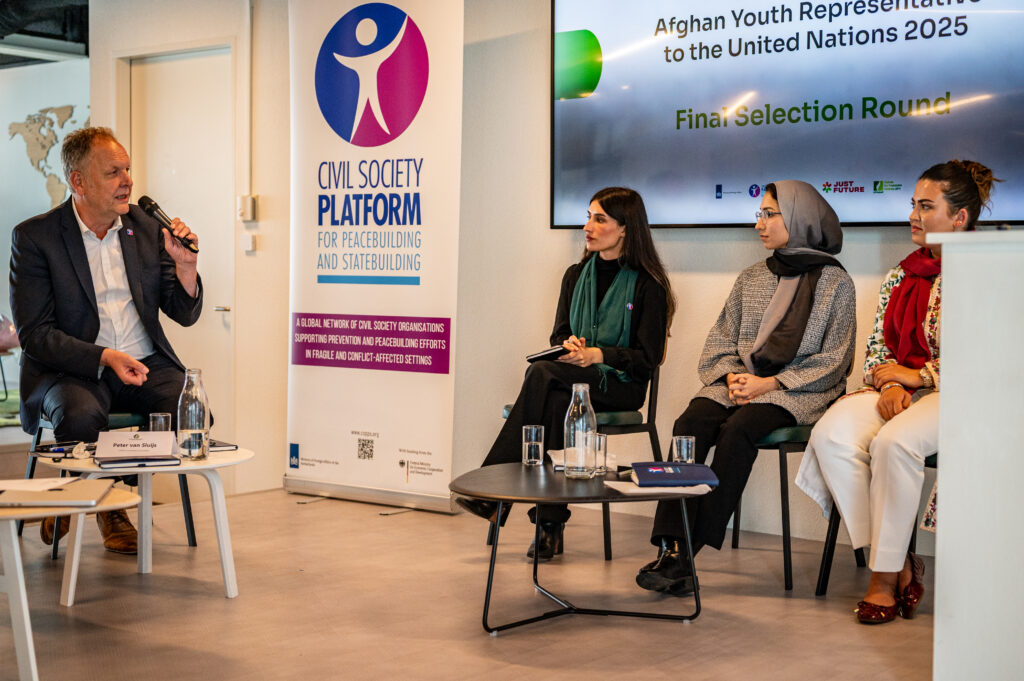
Van den Berg describes it as a ‘gigantic, over-decorated Christmas tree’. The UN now comprises hundreds of departments and bodies, all of them large institutions. This makes it expensive and difficult to manage.
‘Institutional interests too often take precedence over the UN’s core objectives. In a way, they could take a leaf out of Cordaid’s book. We too have faced, and still face, financial difficulties. With a smaller, decentralised organisation, we are cutting our cloth according to our means while keeping our mission alive. It has meant a painful reorganisation, but one that is making us more resilient for the future. We work more purposefully, with fewer resources and with partners in the field taking the lead more than ever.’
Veto Power Is Holding the World Hostage
Back to the origins, then. Focus, as van Sluijs puts it. Indeed, Article 1 of the UN Charter reads like a manifesto for our times: maintaining international peace and security; peacefully resolving disputes; developing relations based on equal rights and self-determination; and addressing economic and humanitarian issues collectively.
The biggest flaw in this Charter for world peace is the permanent members’ veto power in the Security Council. ‘Many member states believe that reforming the veto, or at least showing greater restraint in its use, is necessary for the future of the UN. So do I,’ says van Sluijs.
Van den Berg brings him back down to earth: ‘People have been calling for that for decades. But it is not going to happen.’ In fact, 2024 and 2025 were record years for vetoes. The more divided the world becomes, the more eagerly the major powers use their vetoes to widen the cracks.
How do you escape this Catch-22? Build partnerships and invest in international dialogue. Make sure the voices heard in the highest political forums are not just those of the powerful with their wrecking balls, but also those of people in conflict zones and other crises around the world who stand up against injustice, exclusion, and aggression.
A Form of Resistance
‘That is exactly what CSPPS does, in dialogue with member states, including fragile and conflict-affected countries. Continuing to do that is itself a form of resistance to the undermining of the international rule of law,’ says van Sluijs.
For van Sluijs, its impact is self-evident. ‘Otherwise I would not do this work. Every act for peace and justice has an impact. On that one human rights defender who feels better protected, on a community, a country.’
Van den Berg, who is often found lobbying in The Hague, is equally combative. ‘It is our duty as Cordaid to speak out forcefully against radical right-wing authoritarian forces. The Pope does it, as do our networks Caritas, CIDSE and ACT Alliance. Together we have weight. Especially because we stand shoulder to shoulder with communities and frontline aid workers in literally hundreds of places around the world. We speak with one voice.’
For van den Berg, the fact that Cordaid is not an activist organisation like Milieudefensie, Greenpeace or Extinction Rebellion is no reason not to resist radically. ‘We are up against massive opponents who are attacking head-on the foundations of a liveable and peaceful world. Resisting them requires all hands on deck and a diverse civil society. From groups that, within the boundaries of the law, really make life difficult for those in power, to organisations like ours that primarily pursue dialogue and cooperation, and everything in between. We will not make it otherwise.’
Don’t Give Up
Keep applying pressure, then. Build coalitions with the willing. Like Carney, the Canadian prime minister who, with Trump breathing down his neck, is calling for middle powers, countries that still believe in and fight for democracy, to join forces. Continue to believe in the EU. Draw strength from Rob Jetten’s speech in New York, in which he sent Trump a clear message without naming him: hands off the International Criminal Court and all the other institutions that protect the international rule of law.
Keep going, then, shoulder to shoulder, however few oars we have left to row with. With the Dutch Human Rights Consultation, CSPPS, Cordaid and all our allies. Keep standing alongside the thousands of aid workers, nurses, climate activists, farmers, human rights defenders, social workers and volunteers who keep the world open and liveable.
Written by Frank van Lierde, Corporate Editor at Cordaid