What can bring people back together when conflict has destroyed trust? An experience from central Mali shows that the answer can be surprisingly practical: finding shared interests among groups divided by tensions, from managing land and water to rehabilitating a vegetable production site or building one together.
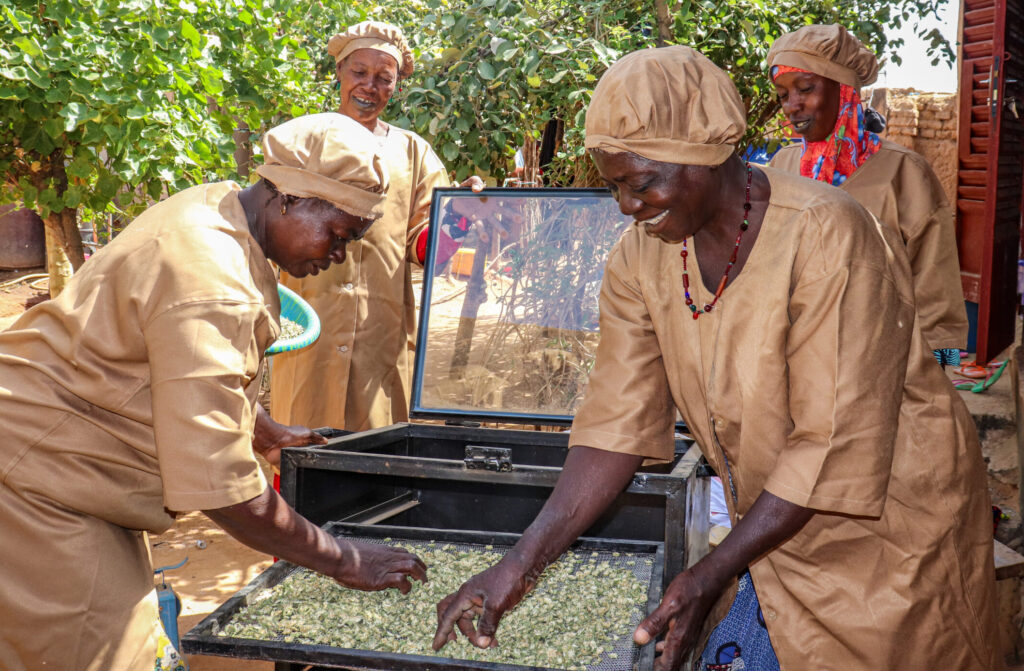
This was at the heart of ‘Suudu Baaba’, Fulani for ‘the big family’. In the conflict-affected regions of Djenné and Douentza, the project brought farmers, pastoralists and other community members together to manage the natural resources they depend on. Its premise was simple: economic opportunities and peacebuilding can reinforce each other when people have reasons to cooperate.
As Souleymane Traoré, who led the project for Cordaid, puts it: ‘Building peace cannot be separated from the interests and needs of communities. It starts by finding common interests.’
Souleymane also points to deep inequalities within traditional communities. ‘The social fabric was really torn apart,’ he recalls. ‘People saw each other but didn’t talk to each other.’ In some villages, social hierarchies left some people deeply excluded from economic and social opportunities.
‘Why did the larger conflict in Central Mali grow so much?’, Souleymane asks. ‘Poverty and inequality are part of the answer. Armed groups were able to exploit some of these grievances. These things are connected,’ he says.
Yet the responses to these interconnected problems are often kept separate. ‘I had worked on projects where it was either purely economic and not about peace, or purely about peace,’ Souleymane continues. ‘But Suudu Baaba is a project that combines the two. For me, it was really the first time.’
Implemented between 2022 and 2024 by a consortium led by Norwegian Church Aid, with Cordaid and the Malian organisations TASSAGHT and AGRICAP, Suudu Baaba was funded by the Swedish development agency Sida. It combined community dialogue and local conflict-resolution mechanisms with economic support and climate-resilient management of natural resources.
Land, Water and Trust under Pressure
People in Djenné and Douentza depend on the same natural resources, often at different times of year. For example, a field may be used for agriculture and later for grazing, with shared water points.
Such arrangements depend on rules and agreements between communities. These arrangements are becoming harder to maintain as climate change makes rainfall less predictable and shifts weather patterns. Livestock may need to return to water sources earlier, while farmers are still harvesting their crops.
‘These small conflicts and fractures between populations pit communities against each other,’ Souleymane explains. ‘Whenever the rules are not respected, we have conflicts.’
To address these tensions, Suudu Baaba created spaces for dialogue, working with local organisations that support conflict mediation and resource management. In 24 villages across five communes, farmers, livestock keepers, women, young people, displaced people and village leaders came together to discuss resource use and emerging conflicts.
But dialogue needed something concrete to build around.
‘You cannot build peace separately from the interests and needs of communities. You must put something at the centre, a common interest.’
Vegetable Production as a Reason to Talk
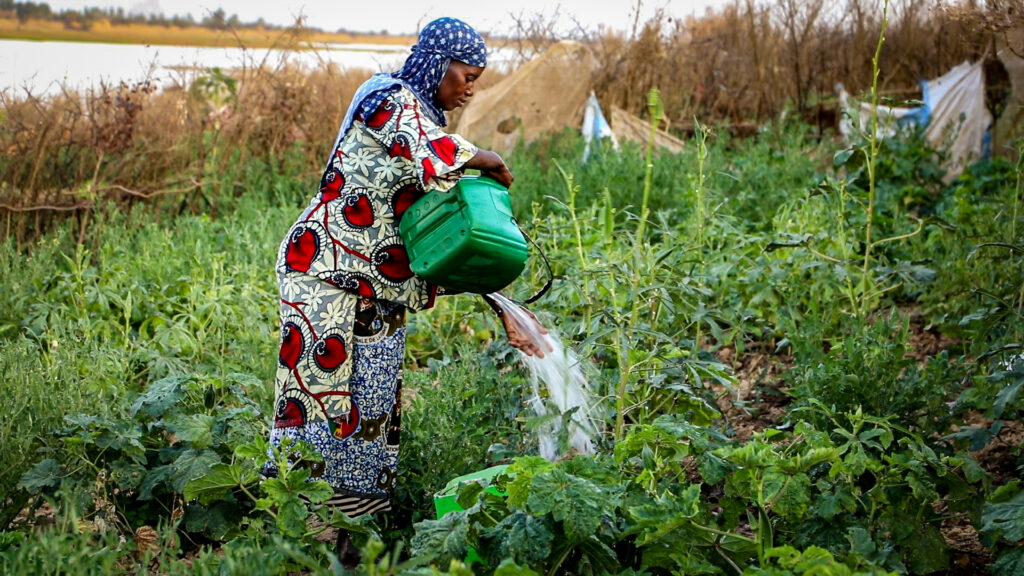
In several communities, communal vegetable sites had fallen into disrepair. Water pumps were broken; fences had disappeared and farmers lacked seeds and fertiliser. These sites were more than just land to grow vegetables. Divided into individual plots, they gave people from different households, mostly women, access to land, irrigation and other resources they needed to grow food and earn an income. Rehabilitating those sites addressed an immediate economic need. It also created a shared interest.
As Souleymane puts it: ‘Different groups have an interest in these vegetable production sites. It becomes a shared initiative. So, the dialogue involved in building them creates trust. Even among nomadic pastoralists, some family members may settle while others continue to move with the animals. Everyone benefits from these sites,’ Souleymane explains.
People who had stopped working together now had a reason to meet. ‘They talk to each other because they have common interests: to restore or rehabilitate the production sites.’
For Souleymane, this is where economic opportunities and peacebuilding meet. ‘You cannot build peace separately from the interests and needs of communities. You must put something at the centre, a common interest. Like building a road that can be used by everyone.’
Farming through a Changing Climate
The vegetable sites did more than create a shared economic interest. They also helped communities adapt to a changing climate. With rain-fed harvests becoming less predictable, dry-season vegetable production provided additional food and income. ‘By growing vegetables during the dry season, they find another source of income.’
Building climate resilience went beyond the vegetable sites. Communities mapped areas used for agriculture, grazing and forestry, while identifying areas affected by erosion, soil degradation and vegetation loss.
Farmers learned techniques such as zaï, planting pits that collect rainwater and organic matter, and demi-lunes, crescent-shaped structures that slow runoff. Both help restore degraded land and make farming more resilient.
Signs of Change
After two years, there were encouraging signs that relationships between communities were beginning to shift. Some 85% of participants reported trust within and between communities, up from 39%, while 89% said they had cooperated with others on shared initiatives. Satisfaction with local conflict-resolution decisions increased from 28% to 91%, and adoption of climate-resilient techniques increased significantly as well.
For Souleymane, however, the numbers only told part of the story. At the final workshop, women described organising themselves, learning new techniques and earning more. ‘People testified about all the benefits they have received. That really affected me,’ he says.
The atmosphere captured something larger than the individual activities: ‘It is like life gradually coming back, being rebuilt little by little.’
These signs should not be overstated. Economic opportunities and giving people a greater stake in their communities cannot end the conflict. But they can address some of the vulnerabilities armed groups exploit and create opportunities for cooperation. As Souleymane puts it, this kind of work ‘brings people together, gives them means of subsistence, and helps them move away from the conflict.’
The Vehicle Stops Halfway
There is one caveat to the project’s achievements. Suudu Baaba was designed to run for four years, but Sida’s departure from Mali and resulting funding changes meant it ended after around two years.
The project had made progress in rebuilding trust, strengthening local mechanisms and improving economic opportunities, but these processes require time to become self-sustaining.
‘A process doesn’t happen overnight,’ Souleymane says. ‘It takes time to put something in place.’
He compares ending the project early to travelling towards a destination and stopping before reaching it. ‘The vehicle stops halfway. It means that we have travelled a good part of the way, but we have not really reached the station yet.’
The experience nevertheless points to an approach worth continuing and implementing elsewhere: linking economic opportunities, natural-resource management and peacebuilding, while supporting communities to shape and sustain these processes themselves.
Peace Takes Root When Interests Are Shared
That may be Suudu Baaba’s most important lesson. In places affected by conflict, rebuilding a food system can also help rebuild the trust needed to share land and water.
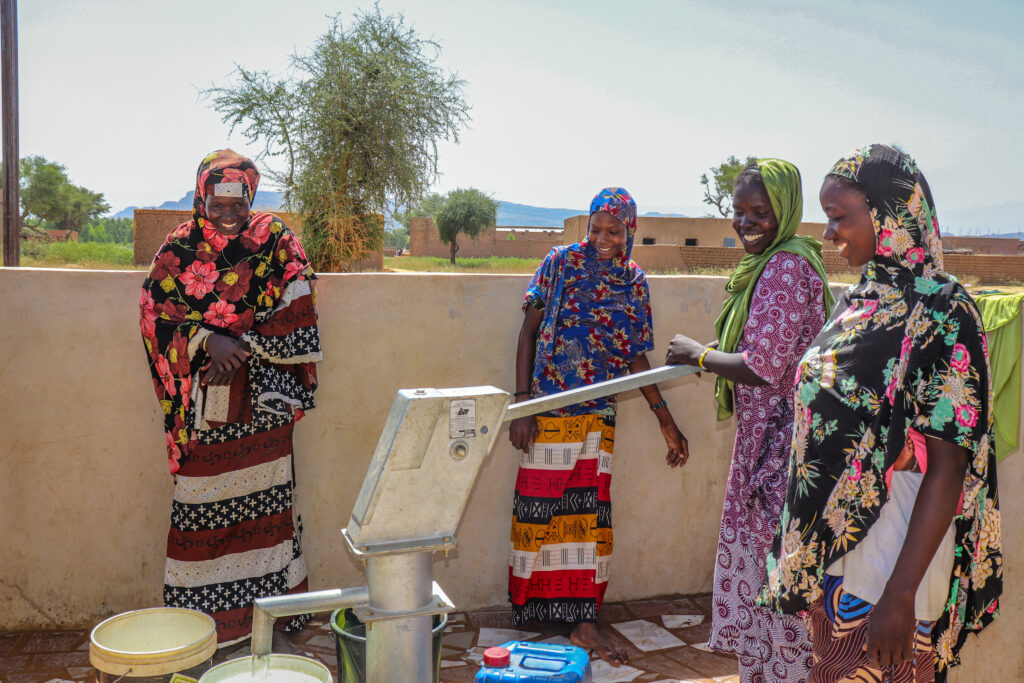
A broken pump can become a reason to cooperate. A vegetable production site can create a shared interest. A discussion about grazing land can help prevent conflict. ‘Peacebuilding is not only about dialogue and institutions. It is also about creating shared interests that make cooperation worthwhile, even when mistrust runs deep,’ Souleymane concludes.
For Cordaid, sustainable food systems and work on peace and security belong together. In fragile and conflict-affected places, expanding economic opportunities and managing natural resources more fairly can and should go hand in hand with rebuilding trust, dialogue and local mechanisms for resolving conflict. Together, they can create the conditions for communities to address shared challenges, drive change themselves and rebuild their lives.