When Josephine Okolodi left school in grade eight because her family could no longer afford the fees, she turned to farming. Today, the mother of six runs a cereals aggregation centre in Busia County, western Kenya, where she buys grain from about 1,200 farmers and sells it to some of the country’s largest buyers. Training and mentorship help rural entrepreneurs, like Josephine, access finance and build the business skills to create regional impact.
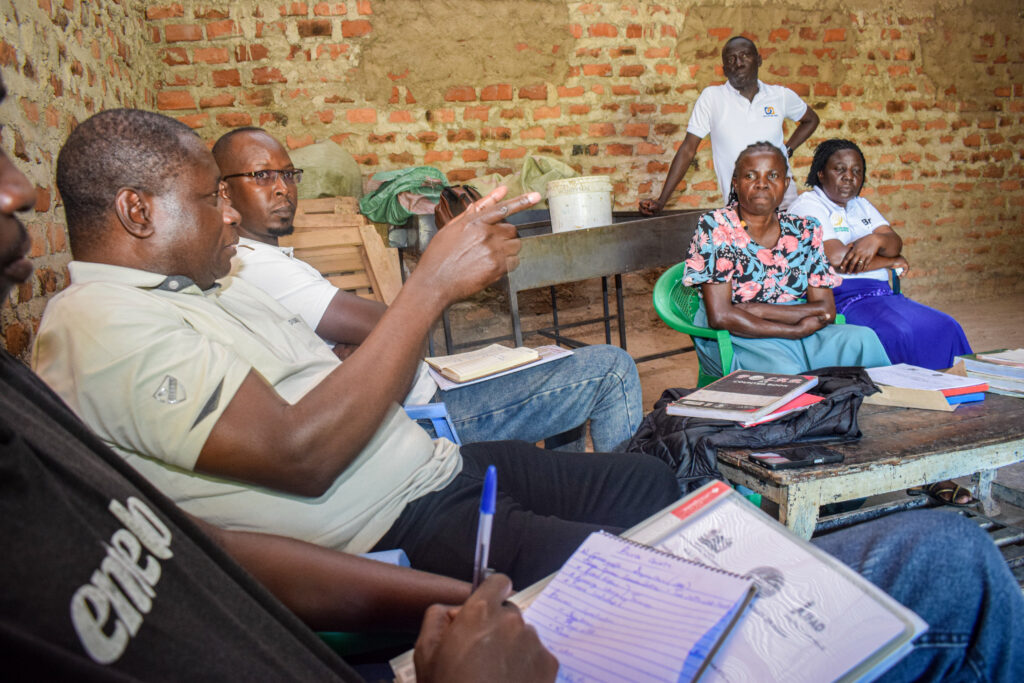
Josephine married soon after leaving school and built a livelihood for her family through agriculture. With support from agricultural associations, government bodies and non-governmental organisations, she gained knowledge and confidence, and began to see possibilities beyond subsistence farming.
A Region Rich in Harvests, Short of Markets
Communities in Busia have weathered droughts, floods and economic hardship, with agriculture as the backbone of their livelihoods. Farmers grow maize, beans, sorghum and millet, mostly on rainfed land and using techniques handed down through generations. After a day’s work, many enjoy Ajon, a traditional fermented sorghum and millet beer that is deeply rooted in local culture.
Yet many farmers struggle to access finance or reliable markets, and cannot escape middlemen who offer very low prices. Busia is a border county, and its farmers compete with cheaper imports from Uganda, further pressuring local producers and slowing the growth of local value chains.
Limited infrastructure makes matters worse. Without organised aggregation, storage or weighing facilities, farmers sell individually and have little bargaining power. Middlemen arrive by truck and offer a take-it-or-leave-it price. Farmers who need cash and fear losing their harvest have little choice but to accept. In a region where droughts and floods are becoming more frequent, those losses can be devastating.
Learning to Run a Business
Josephine understands these pressures from experience. After leaving school, she farmed with no formal business training, little capital and no meaningful collateral. Financial literacy, record-keeping and marketing were unfamiliar to her, as they are to many smallholder farmers and small agricultural businesses.
Her outlook changed in 2016, when a local non-governmental organisation selected her as a lead farmer in its cassava initiative. The training and mentorship showed her that agriculture could be a route to a sustainable business and a way to feed her family. That realisation led to the founding of Asinge Farmer Service Centre, now a leading cereal aggregation hub in the county, supplying some of Kenya’s largest buyers.
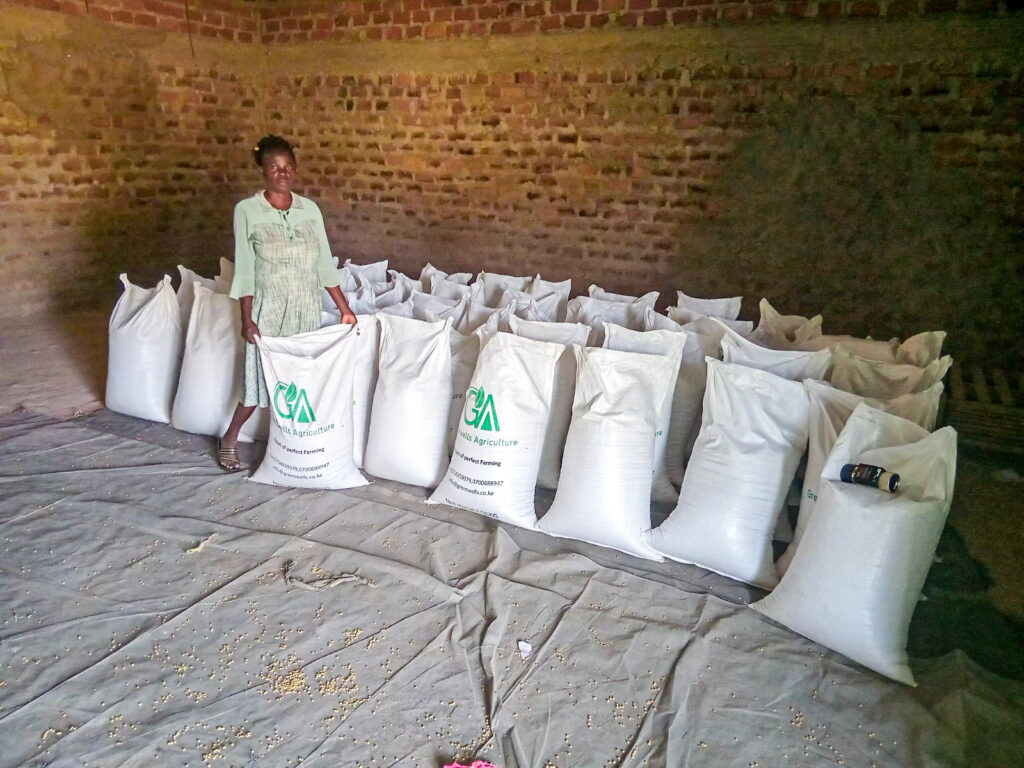
‘Before the training, I knew how to farm, but I didn’t know how to run a business,’ Josephine says. ‘We were selling our hard work for peanuts. It was heartbreaking to see farmers give their produce away cheaply just to get some cash.’
Starting the centre, she adds, changed her life and those of many farmers around her. ‘Farmers now have a more reliable place to bring and sell their produce, instead of struggling to find markets.’
The challenges did not disappear. Josephine worked with farmer groups and motorbike taxi drivers, often pre-financing them so they could buy and gather produce, which put heavy pressure on her limited working capital. With training from the National Cereal Growers Association and other non-profit organisations, she secured supply contracts with local and multinational companies, as well as other large buyers. She aggregated between 400 and 550 metric tonnes of soya beans from local farmers and now holds nearly 600 metric tonnes in market contracts.
Growth brought new difficulties. She still relied on middlemen to fulfil contracts, and some buyers preferred to pay farmers directly, leaving her without verifiable transaction records and cash flow. Financiers were not drawn to her profile, and without capital she struggled to improve her operations and serve her contracts.
‘With additional support, stronger market linkages and more working capital, I believe the Asinge Farmer Service Centre can grow into a major agricultural hub, serving even more farmers and creating greater opportunities in our community.’
Opening the Door to Finance
The turning point came when Josephine was introduced to the Rural Kenya Financial Inclusion Facility (RK-FINFA). She took part in its Business Development Services training, which combined structured teaching, mentorship and business support. She strengthened her skills in financial literacy, entrepreneurship, digital tools, green financing, leadership and governance. She also learned about Gender Action Learning Systems, a community-led, household-focused method for promoting gender equality.
She gained a clearer picture of what formal lenders require: a clean credit record, a bank account, consistent savings over at least six months, a formally registered business and accurate financial records.
‘Through the training and mentorship, I realised that farmers needed a reliable system for aggregating, marketing and selling their produce at better prices, as well as support to grow more,’ she says.
Better financial management and record-keeping gave Josephine greater credibility. With her husband’s support, she secured a working capital loan of KSh 500,000 (EUR 3,411) from Juhudi Kilimo Microfinance Bank. The loan strengthened the centre’s finances, helped her build a credit history for future borrowing and allowed her to fulfil a contract to supply 20 tonnes of sorghum to one of Kenya’s largest brewers.
The business now directly supports about 1,200 farmers, including those organised in groups, by giving them a structured and reliable channel to aggregate and sell their produce. Josephine also uses her income to pay for her children’s education, giving them opportunities she never had.
Room to Grow
Josephine has further plans. She intends to expand the centre’s storage capacity so that farmers can keep their produce safely and wait for better prices, and she is improving logistics to reach more farming communities.
‘I have come a long way, but there is still much more that can be achieved,’ she says. ‘With additional support, stronger market linkages and more working capital, I believe the Asinge Farmer Service Centre can grow into a major agricultural hub, serving even more farmers and creating greater opportunities in our community.’
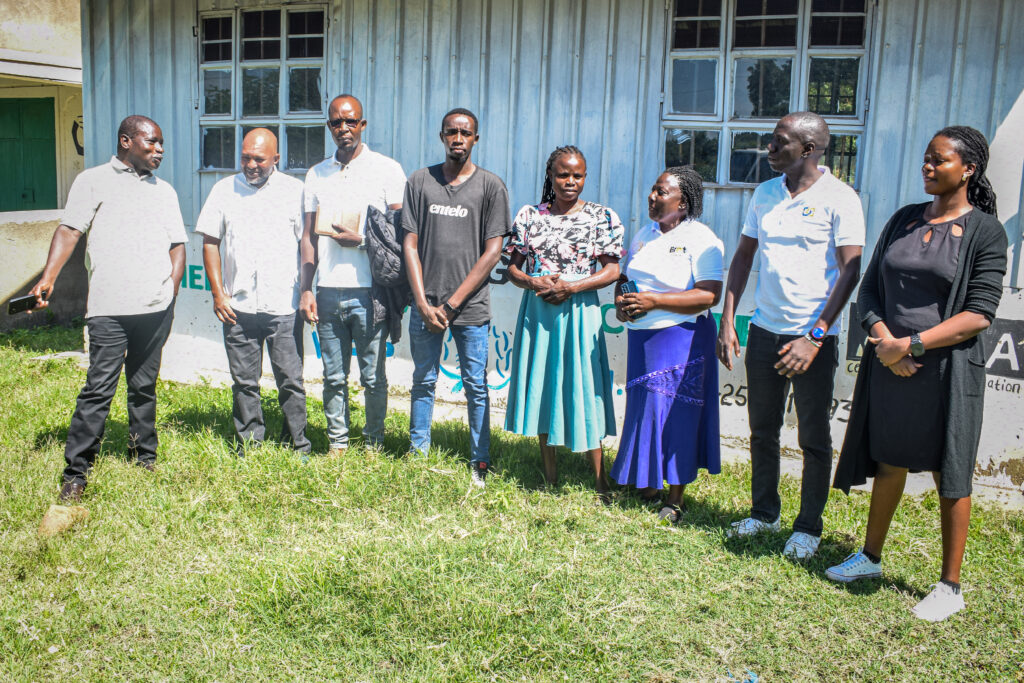
About the RK-FINFA Project
The Rural Kenya Financial Inclusion Facility is funded by the Government of Kenya and the International Fund for Agricultural Development (IFAD). It aims to reduce poverty, strengthen resilience to climate change and improve rural livelihoods by increasing financial inclusion and green investment among farmers and small agricultural businesses.
The six-year project targets 190,000 rural households in 14 counties, with a particular focus on women and young people. Of these, 66,000 are smallholder households, and 2,000 are small and medium-sized businesses that will gain access to finance and technical services.
Under the project, Cordaid provides technical support to selected microfinance institutions and business development services for smallholder farmers and their organisations in seven counties of western Kenya: Trans Nzoia, Bungoma, Busia, Kakamega, Nandi, Siaya and Kisii. Cordaid aims to contribute to higher rural investment, more jobs, higher incomes and greater gender equality in finance.