In Afghanistan’s Herat and Nangarhar provinces, many people have found a measure of relief through humanitarian programmes, implemented by local organisations and supported by Cordaid. Their stories reflect the scale of need facing hundreds of thousands of returnees and Afghans in vulnerable circumstances in a country struck by multiple crises.
No single story can do justice to the scale of suffering in a country where conflict and displacement have shaped daily life for decades, and where natural disasters continue to compound the hardship. These three testimonies, however, stand for many and offer insight into people’s daily struggles, their resilience, and their efforts to improve their situation and that of those around them.
A Father’s Struggle
Ebrahim, a father of six from Herat province, found himself crowded into a single room with his children and father-in-law, struggling to meet even the most basic needs. He spent eleven years in Iran trying to build a better life for his family. When he was forced to return to Afghanistan, he came back with nothing: no savings, no income.
The hardship quickly became acute. Unable to find work or afford food, and with no money for hygiene supplies, one of his children fell ill. Ebrahim could not pay for treatment. ‘We had nothing to eat, no work, and none of the basic things we need,’ he said.
Through a joint humanitarian response coordinated by the Dutch Relief Alliance and Cordaid Afghanistan, in partnership with the Organisation of Human Welfare, Ebrahim received cash assistance and a hygiene kit. The financial assistance allowed him to buy food and warm clothing and to pay for his child’s medical care.
Ebrahim’s story is far from unique. Thousands of families expelled from Iran are arriving in Herat province with similar levels of distress, and the humanitarian response remains under pressure to keep pace.
Finding a Way Back to Mental Health
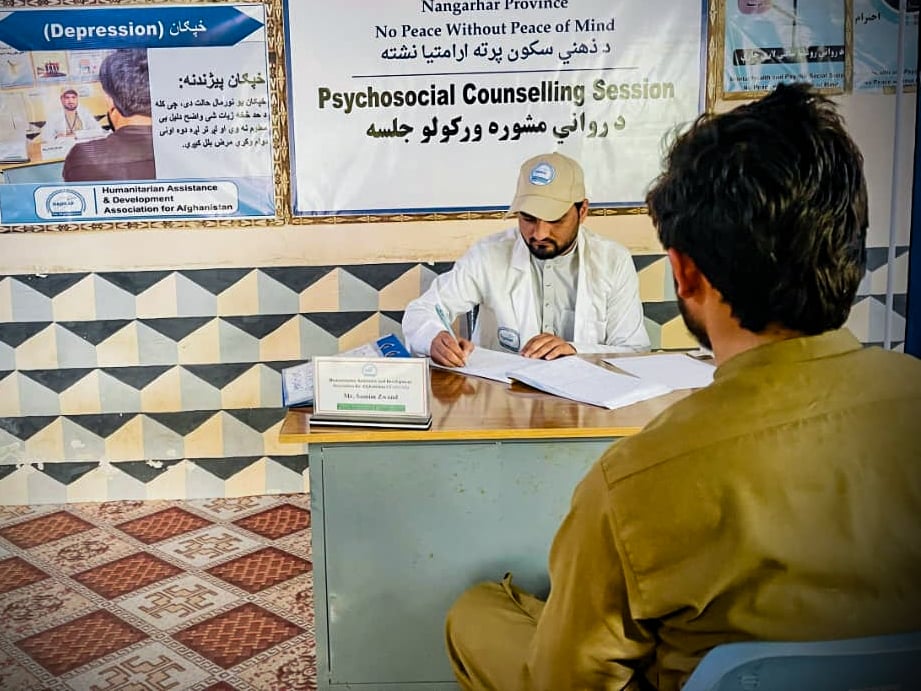
Abdul Rahman, 26, from the Goshta district of Nangarhar province, had withdrawn almost entirely from the world around him. For months, he barely left the house, avoided his family, and struggled with persistent anxiety, chest tightness, and sudden spells of anger. He had seen a psychiatrist and taken medication to calm his nerves, but the inner turbulence persisted.
His path towards recovery began at a community awareness session run by the Humanitarian Assistance and Development Association for Afghanistan, a local partner in the Cordaid-led consortium.
For the first time, Abdul Rahman heard his symptoms clearly described in a way that matched his experience: persistent anxiety, emotional distress, and social withdrawal. The session gave him a name for what he was going through and the courage to seek further help.
‘Through counselling, I learned how to manage stress and better understand my condition. Now I feel calmer, healthier and more in control of my life.’
He began attending one of the Community Resilience Centres established in Bati Kot, Rodat and Goshta districts under Cordaid’s mental health, psychosocial support and physical rehabilitation programme. There, a trained counsellor provided a safe and confidential space and worked with him through six structured sessions.
Over the course of those sessions, Abdul Rahman learned breathing exercises and stress management techniques, received education on how negative thinking patterns affect mental wellbeing, and was encouraged to develop daily routines, such as regular sleep, morning exercise and spiritual practice. He gradually reduced his reliance on medication.
By the final session, the transformation was visible. He had reconnected with his family and friends, and his anxiety and anger had substantially reduced.
‘At the beginning, I experienced severe headaches, pains, constant stress and negative thoughts. My relationships with family and friends suffered,’ he said. ‘Through counselling, I learned how to manage stress and better understand my condition. Now I feel calmer, healthier and more in control of my life.’
Abdul Rahman is one of more than 357,000 people who have accessed psychosocial counselling and physical rehabilitation through the Community Resilience Centres across four provinces, twelve districts and 120 communities.
Returning to Daily Life
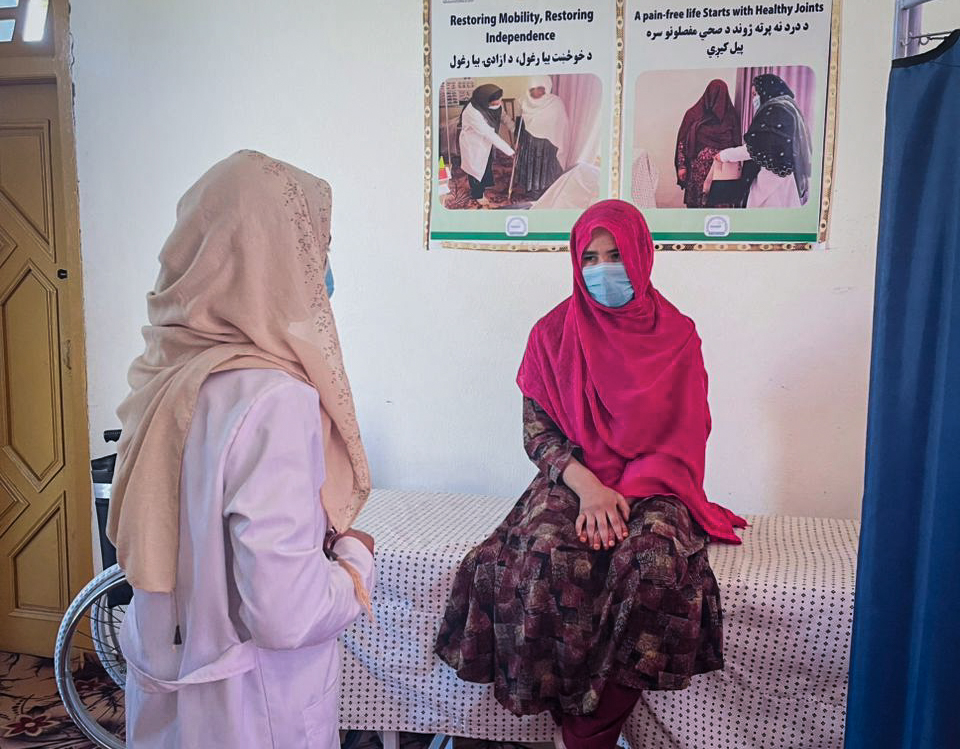
Palwasha, 23, also from the Goshta district of Nangarhar province, had been living with persistent lower back pain for some time. The pain made it difficult to sit, stand or walk comfortably, and had gradually eroded her ability to manage daily household tasks and her sense of independence.
Through a community outreach initiative, she was referred to a local Community Resilience Centre for screening and treatment. Following an assessment, she began a course of physiotherapy under the supervision of a practitioner named Reema. Her treatment included pain management, therapeutic exercises to strengthen the back muscles, posture correction and education on safe body movements, supported by regular follow-up appointments.
Palwasha’s pain reduced considerably, and she was able to return to her normal routine. ‘Before, I was unable to manage my daily life,’ she said. ‘Now I feel much better.’
A People-Centred Approach
These three examples reflect a broader commitment to locally grounded, dignified assistance. For returnees like Ebrahim, flexible cash-based assistance remains a critical tool: it restores agency and allows families to address their most urgent needs, whether food, medicine or clothing, on their own terms.
In the case of Abdul Rahman and Palwasha, recovery was made possible not only through professional clinical support but also through the programme’s emphasis on community coordination, a functioning referral system, and the availability of both male and female counsellors, all of which were important factors that made the service culturally accessible and trusted.