Just a decade ago, aquaculture in Mali relied mainly on fingerlings sourced from the Niger River. With Cordaid’s Jege Ni Jaba project, new improved strains of Tilapia and Clarias were introduced from Nigeria and Benin, in strict compliance with national sanitary regulations.
Through this film, our colleague Aïcha invites you to follow the story of aquaculture in Mali, driven by ten years of commitment, innovation, and partnerships.

Today, more than 50 hatcheries ensure the breeding and distribution of quality fingerlings, with an estimated annual capacity of 8 million fingerlings, bringing supply closer to producers and reducing transport-related losses.
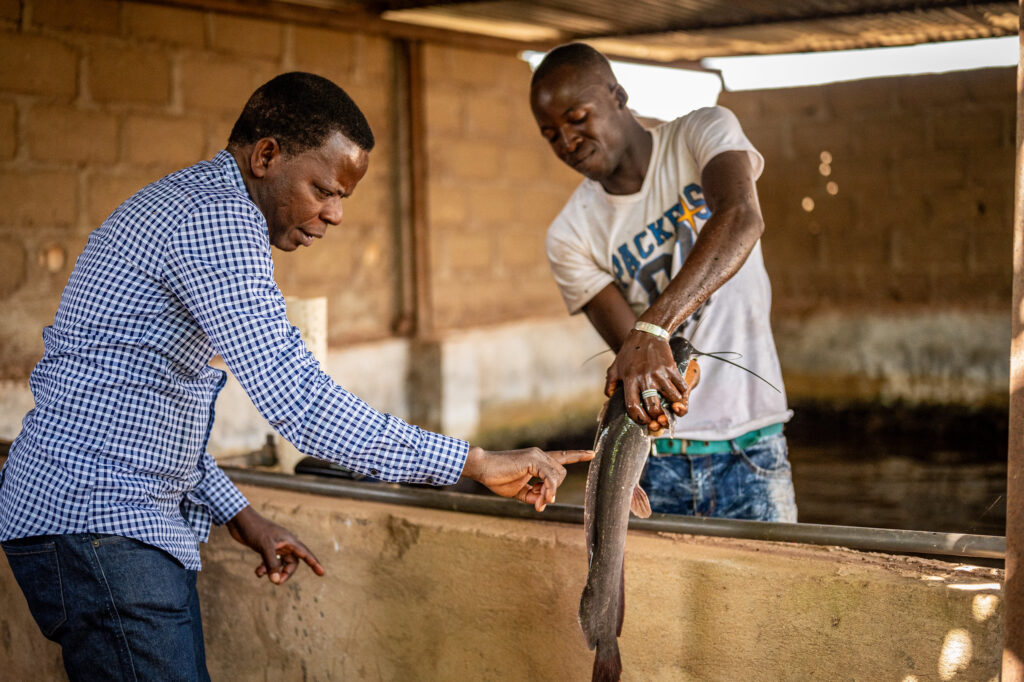
These fingerlings now feed diversified, high-performing production systems: floating cages and enclosures for Tilapia, and ponds and above-ground tanks for Clarias. Small-scale family and entrepreneurial aquaculture has become an accessible reality, particularly for young people and women, with proven yields and sustainable incomes.
A Better-Structured Value Chain
This momentum is further strengthened by the development of locally produced fish feed. Thanks to the support of around sixty feed mills, floating pelleted and extruded feeds made from local ingredients now make it possible to produce large-sized fish in a shorter time, while improving both profitability and sustainability of operations.
Beyond production, the value chain has become more structured, encompassing processing, preservation, marketing, and inter-professional governance.