WHAT WE DO IN SUDAN
In Sudan, Cordaid prioritises locally-led humanitarian action. Rather than implementing large-scale programmes directly, we support Sudanese initiatives that are deeply embedded in their communities and able to respond quickly to emerging needs.
This approach aligns with Cordaid’s commitment to locally-led work: strengthening the leadership, decision-making, and capacity of local actors closest to affected populations and best placed to determine appropriate responses.
Supporting Emergency Response Rooms
Cordaid supports Sudan’s Emergency Response Rooms (ERRs): a nationwide, community-led volunteer network established by Sudanese citizens in response to the outbreak of conflict.
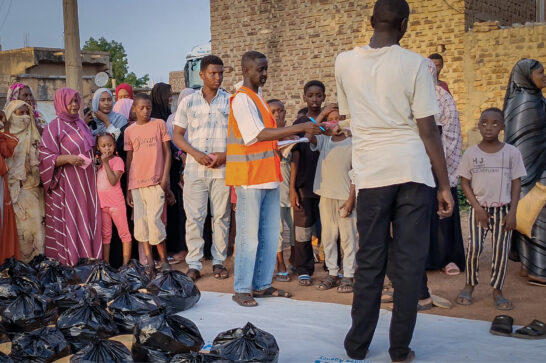
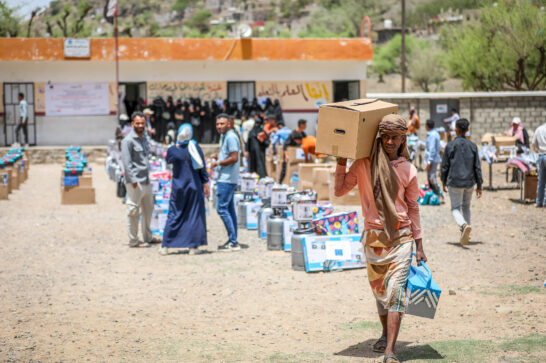
ERRs are grassroots groups, initiated mainly by young people, that organise humanitarian assistance at the neighbourhood and community level. Their activities include food distribution, communal kitchens, and other locally prioritised support for displaced people and vulnerable families.
Today, hundreds of ERRs operate across Sudan, coordinating assistance through a Sudanese-led localisation system. Together, they have reached millions of people with life-saving support.
Due to restrictions on direct international funding flows into Sudan, Cordaid channels its support through a trusted intermediary structure.
Funds are transferred via the Mutual Aid Sudan Coalition, an international non-profit organisation that exists solely to facilitate transparent financial flows to Sudanese-led humanitarian mechanisms. From there, resources are allocated through the Sudanese Localisation Coordination Council, which reviews and approves activity plans submitted by ERRs.
Each supported activity includes an activity plan, a modest budget (typically USD 5,000), a short narrative, and financial reporting. This system enables quick assistance while maintaining oversight and accountability in a highly volatile context.
In 2025, Cordaid committed funding to support community-led emergency responses across all 18 states of Sudan through the ERR system. Activities will be implemented throughout 2026 and will respond to priorities identified by local communities, including food assistance and other types of humanitarian support for internally displaced people.
In addition to its current support for community-led emergency responses, Cordaid has previously contributed to joint humanitarian appeals for Sudan through the ACT Alliance and the Caritas network.
FACTS AND FIGURES