Home » News & Stories » ‘We’re Already There’: Sudan’s Community-Led Response to the World’s Largest Humanitarian Crisis
‘We’re Already There’: Sudan’s Community-Led Response to the World’s Largest Humanitarian Crisis
Humanitarian assistance
Sudan
-
While the world looks away, Sudanese volunteers have built a nationwide grassroots aid network from the ground up. Alsanosi Adam, a journalist and filmmaker who has been involved since the start, spoke to Cordaid about the Emergency Response Rooms.
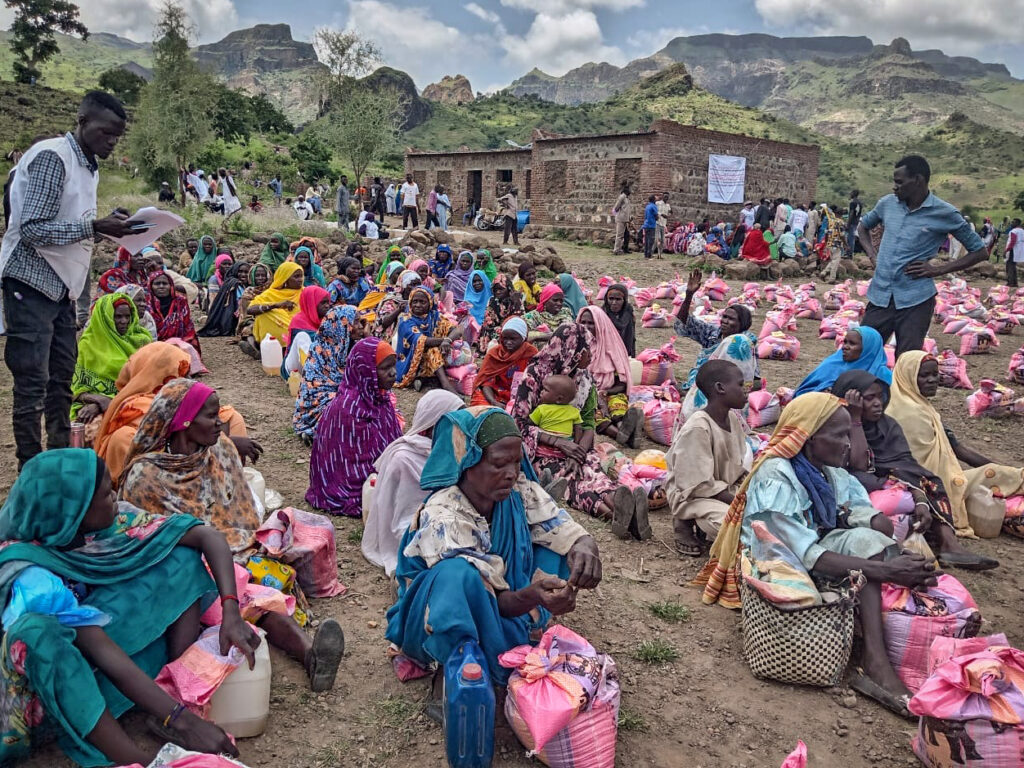
A volunteer at work at one of the 700 Emergency Response Rooms in Sudan.
Sudan is facing one of the world’s most severe humanitarian crises. Ongoing armed conflict has forced tens of millions from their homes, disrupted food systems, and severely limited access to basic services, including healthcare, water, and education. Yet the country receives a fraction of the international attention given to other conflicts of comparable or lesser scale.
Amid that void, Sudanese citizens created something remarkable. Emergency Response Rooms (ERRs) are grassroots volunteer groups, led mainly by young people, that organise humanitarian assistance at the neighbourhood level, including food distribution, communal kitchens, and locally prioritised support for displaced people and vulnerable families.
Today, hundreds of ERRs operate across Sudan, reaching millions of people with life-saving support. Cordaid supports the ERR network as part of its commitment to locally led humanitarian action.
Since the start of the war, Alsanosi Adam has become a key communicator for the ERRs. He spoke with Cordaid about what the network is, why it works, and what the international community is getting wrong.
As a journalist, how did you end up getting involved in a humanitarian response?
‘Simply because I was part of the affected community. When the crisis started, everyone wanted to help, whether you were a journalist, a doctor, or a finance professional. You put your profession aside and just showed up for your neighbourhood.
‘There was an Emergency Response Room in my neighbourhood as well. I reached out, connected with people and started helping. I also use my background in communication to help tell our story better.’
Why did this crisis give rise to this particular type of community-led initiative?
‘It is just what communities do in Sudan: when there is a problem, we come together and do something about it. During periods of peace, young people were engaged in the revolution, protesting in the streets, building civic spaces, and creating positive change. Then war breaks out, and everything changes. The youth asked themselves, “What is our role now?” If you don’t start supporting your community, there aren’t many options left: you’ll either have to join one side of the conflict or leave the country.
‘They said: “Can we come together to make sure everybody has access to food? How do we create solidarity and give everybody a role?” People aren’t just beneficiaries. They help, organise, cook, and distribute. You belong to the community and are part of the aid response, which benefits you as well.
‘Other neighbourhoods began to adopt the model. What started as one community feeding itself has, through word of mouth and mutual support, grown into a nationwide network.’
Results & Indicators
700 Emergency Response Rooms
26,000 Volunteers
12 million people reached
Can you give an example of how that community problem-solving works in practice?
‘What I love most about the process is the concept of deep listening. This means setting aside preconceptions and assumptions and truly listening to people’s problems. This often leads to the best ideas.
‘In one instance, after such a discussion, people began creating safe spaces for children. We gathered pens, pencils and paper, whatever we could find. Someone volunteered to teach, and we started a class. That grew into an alternative education programme that now runs across multiple areas of the country.
‘A traditional response, from needs assessment to intervention, can take six months. We don’t have six months in Sudan. We barely have a week.’
‘The Women’s Response Rooms are another example. What began as informal coffee gatherings became spaces where women shared their experiences. This evolved into a psychosocial support system and, eventually, into women’s cooperatives. There are now over ninety Women’s Response Rooms across the country. Some ideas start small and take on a life of their own.’
Sudan’s conflict receives relatively little attention in Western media, especially compared with other major conflicts. What do you make of that?
‘As an advocate, I think it is wrong. But as a journalist, I understand how media coverage works. Coverage follows political and public interest. That is the logic of it.
‘However, the advocate in me says this is clearly a lack of political will. Sudan, which the UN has called the world’s worst humanitarian crisis, barely features in the news. The numbers have been underreported from the outset. The displacement figures have barely moved in public discourse since the war began, even as people continue to flee every day. The death toll is in the thousands and rising. It has been deliberately underreported, and I do not fully understand why. Human suffering is human suffering. If you want to end it, you have to act collectively.’
Is the ERR model, in a sense, a response to the inaction of the international community, caused by this lack of attention?
‘Absolutely. Mutual aid is exactly that: community-led intervention, community-designed projects, and community-led implementation of projects that make sense to them, there and then.’
It’s ironic, in a way. The lack of international commitment has led to a highly effective locally led response.
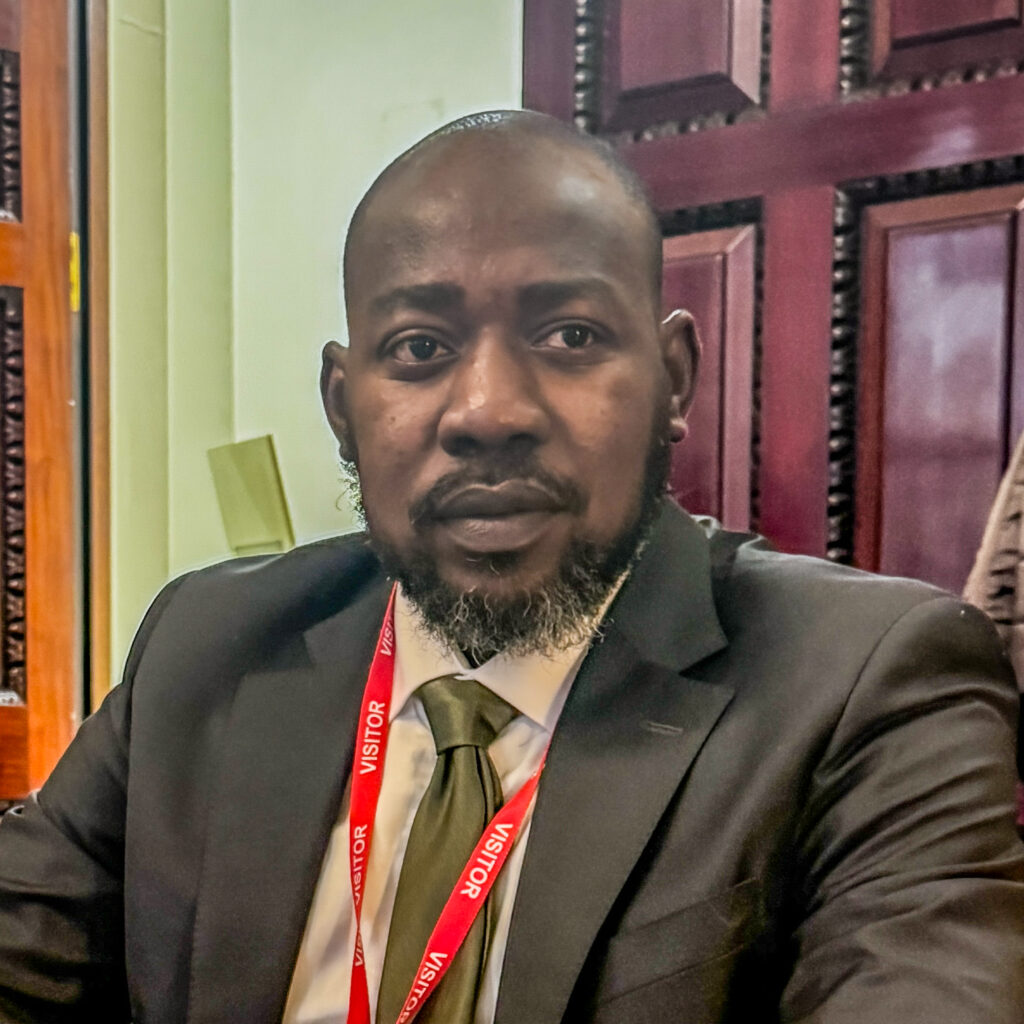
Alsanosi Adam
‘It shows that locally led is the way to go. I am not saying international organisations are replaceable. They have enormous resources and can operate at scale. But they need to reform. Aid needs to be agile, fast and adaptive.
‘A traditional response, from needs assessment to intervention, can take six months. We don’t have six months in Sudan. We barely have a week. If a cholera outbreak starts today, you need to respond within hours. The ERRs can go from writing the needs assessment and budget to implementing an intervention in three or four hours. They can also change the intervention mid-implementation if circumstances shift.
‘International organisations say they can’t access the crisis areas. The community doesn’t have an access problem; they’re already there. We have 700 Emergency Response Rooms, over 26,000 volunteers, tech and data teams, programme teams, and people working constantly to identify the most cost-effective interventions. If an organisation wants to come and support us, they just need to plug into the infrastructure we have built.’
That is truly impressive. But in a crisis of this magnitude, there must be gaps in what the ERRs can provide for a population with a multitude of needs.
‘For certain activities, the network is well-equipped. But when a medical crisis hits, the effectiveness of small units depends solely on the knowledge and expertise they have, and sometimes they lack it.
‘We are speaking with international organisations for support in specific areas, such as health care. If they can train our teams and provide the right medication, we could respond to cholera and other waterborne diseases in a first-aid capacity.’
Despite the clear advantages of a truly localised humanitarian system, some donors might worry that funds might not reach the right place, especially in a severely conflict-affected context. What can you tell us about the ERRs’ accountability system?
‘In this approach, 99.99% of every dollar goes directly to the ground. Tell me about another mechanism that does the same.
‘It starts with a needs assessment and budget, combined into one form drawn up by the community. A community-selected committee reviews it: these are people who know the local price of bread, so they can immediately spot if anything looks wrong.
‘I believe that this system will evolve into community peacebuilding, civic engagement, mental health support, and even economic initiatives. There are so many areas we can expand into once the security situation allows it.’
‘Once approved, a contract is created between the state-level ERR and the base unit. Money is released to a named account via mobile money, and an authorisation letter from the community confirms who is receiving it on their behalf.
‘The unit then submits a financial report with receipts for every transaction, followed by a programme report explaining what was done, what changed, what worked and what did not, with photos and videos as evidence. Finally, an independent organisation monitors the work as a third party.’
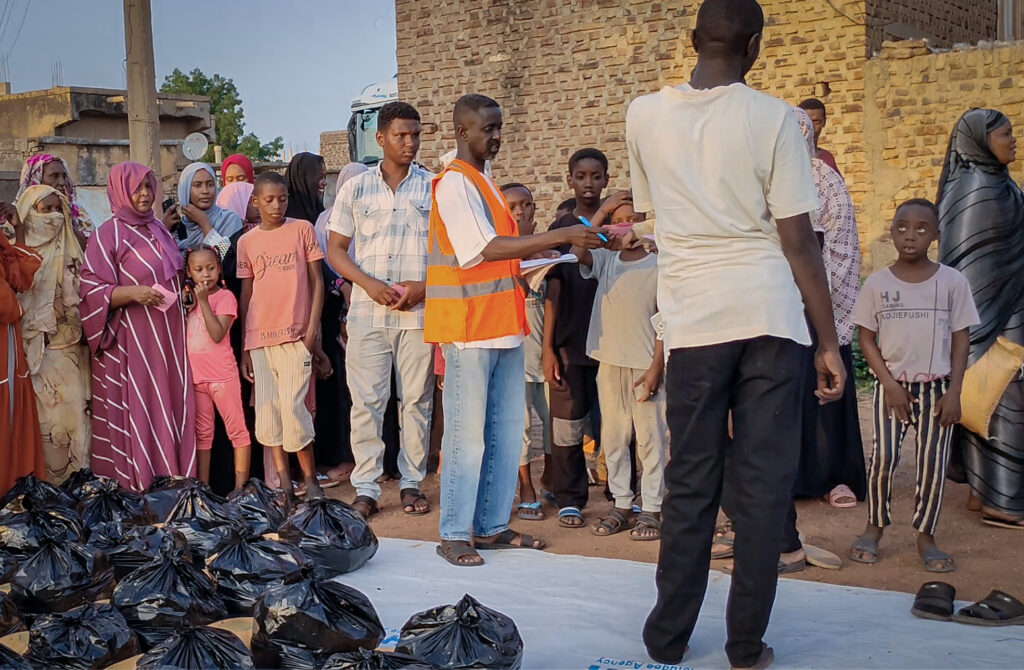
A humanitarian distribution at an Emergency Response Room.
It’s clear that the Sudanese population is incredibly resilient and resourceful. At the same time, these qualities are being tested, as the conflict doesn’t seem to be ending anytime soon. What is your view on where Sudan is heading?
‘Honestly, it’s looking very bad. Between 25 and 27 million people are internally displaced. Any area of Sudan could be a frontline tomorrow. One of our volunteers said the other day that even if a peace agreement were signed today, Sudan would need five to ten years to recover.
‘I do not want to be pessimistic, though. I am always hopeful that this will end and that things will get better. What I do know is that as long as Sudanese communities are on the ground, they will support one another. I believe that this system will evolve into community peacebuilding, civic engagement, mental health support, and even economic initiatives. There are so many areas we can expand into once the security situation allows it.’