In the Teso region of Uganda, Cordaid and its partner organisation, SOCADIDO, support female farmers who struggle to maintain their livelihoods due to climate change, land depletion, or a lack of tools and agricultural knowledge. Cordaid and SOCADIDO provide seeds, tools, technology and training.
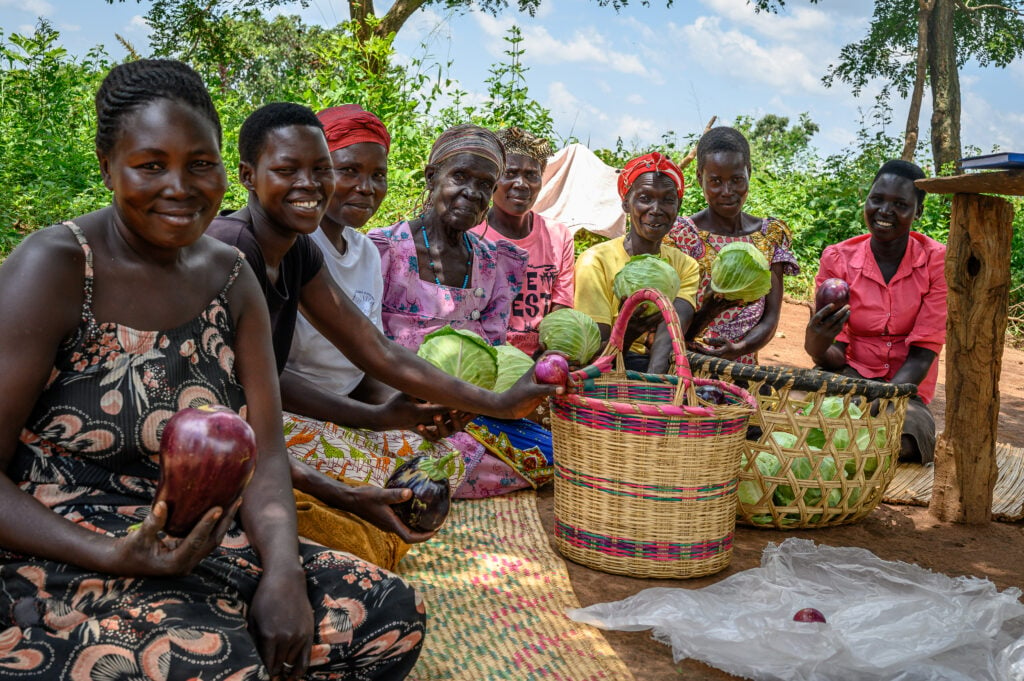
The program started in August 2017 and has been implemented in 9 sub-counties in Teso, supporting 15.000 farmers in total. The main objective is threefold: increase food production, reduce post-harvest losses and improve access to finance for the farmers.
Drought
Amoding Sarah (35) and her husband Enou own a plot of land where they grow a variety of vegetables, for their own consumption as well as generating an income. Amoding, Enou, and their three kids have been through hard times, during which drought and poor harvests have pushed the family to the brink of famine.
“Life was hard”, says Amoding. “We couldn’t support our family. There was no money. Thanks to the programme, we acquired the knowledge we needed to increase our income. Our children are now attending school, and we have enough food for our household. We can even make juice from the passion fruit we are growing.”
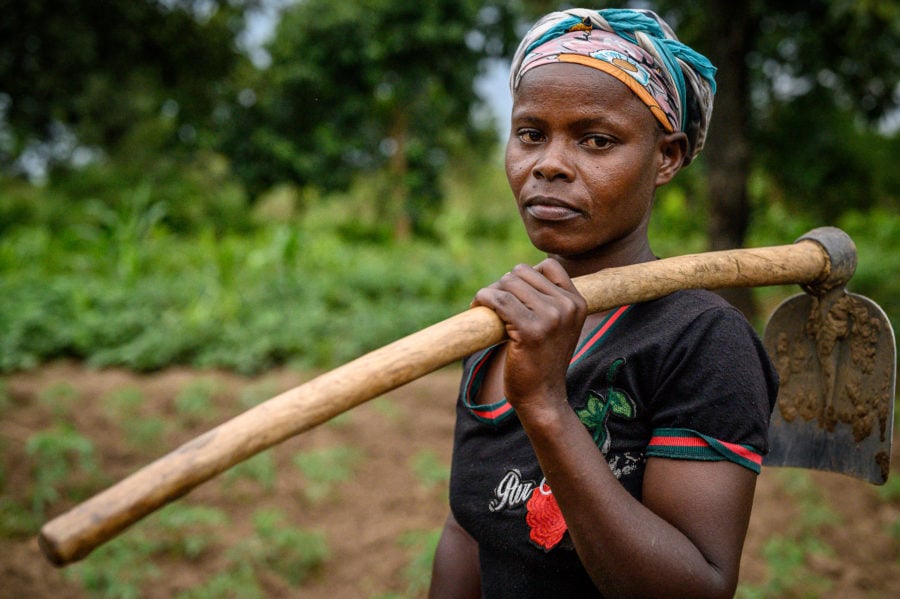
Each participating farmer received 2 kilograms of seeds at first, mainly black-eyed peas, corn and vegetables like cassava and potato, which they plant in a plot of land of about one acre.
“We also gave different types of seeds to the model farmers”, says Tom Edul, Program Coordinator for the Female Farmers Farm Better programme. “Those are farmers who have more expertise in growing a diverse range of crops and have knowledge of how to handle certain equipment and technology. They become an example to the other farmers in the area who can learn from them how to improve and grow their business.”
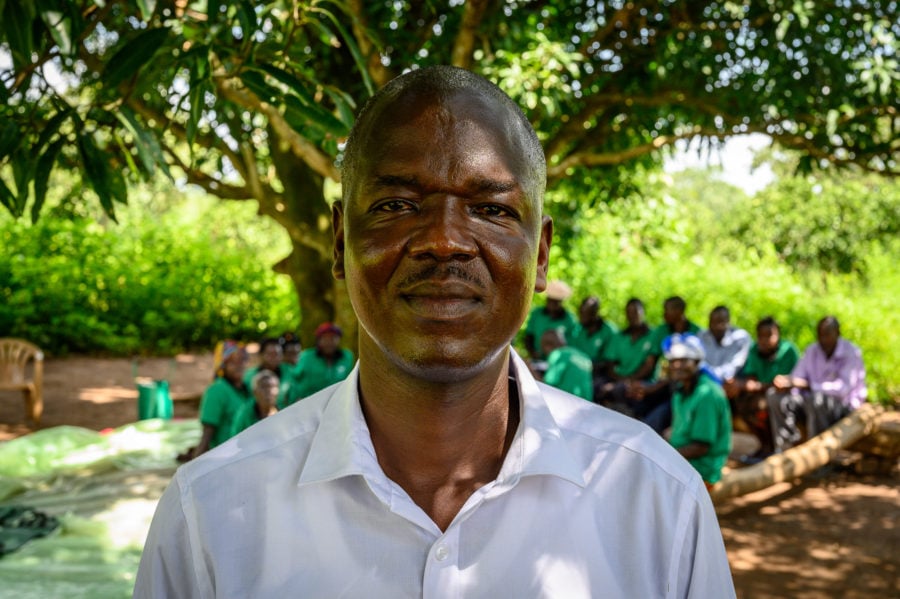
All 15.000 participating farmers, of which 105 are model farmers, are organised into groups of 30. These farming groups are trained in harvest loss reduction, organising savings and credit, and improving economic activities.
Each sub-county also has a marketing association. That is where farmers collect produce reserved for the market after they set aside what they need for their own consumption. Farmers are paid per kilogram of product sold. The association connects the sellers and buyers.
Improve income
“The problem was that they had a poor bargaining position and often had to sell their products for a bad price”, says Tom Edul. “As a group, the farmers are much stronger and better equipped to improve their income.”
“Climate change remains one of our biggest worries. But if we keep strengthening their capacities, the farmers will be up to this challenge.”
Another vital factor in increasing the value of their products is the ability to store harvests for longer. In some cases, the time of year significantly affects product pricing. By providing the farmers with special bags, called PICS bags, grains and pulses can be saved for months. Now they can wait for the right time to sell and get a much better price.
In this video, the farmers introduce themselves and talk about their challenges and how the program has improved their lives:

Climate change
Though the program has helped farmers in Teso improve their lives, they still face significant challenges, with climate change the most pressing. During prolonged dry spells, farmers risk losing their harvest and livelihoods. Cordaid and SOCADIDO help set up irrigation systems that enable farmers to grow crops even during drought. The organisations also provide drought-tolerant seeds, like pumpkins.
Tom Edul: “Climate change remains one of our biggest worries. But if we keep strengthening their capacities, the farmers will be up to this challenge.”
Thankfully, this past year, the climate has been forgiving to the Teso farmers. Uganda typically has two crop cycles, so in a good year, farmers can earn enough profit to set aside some cash for tougher times.
Livestock
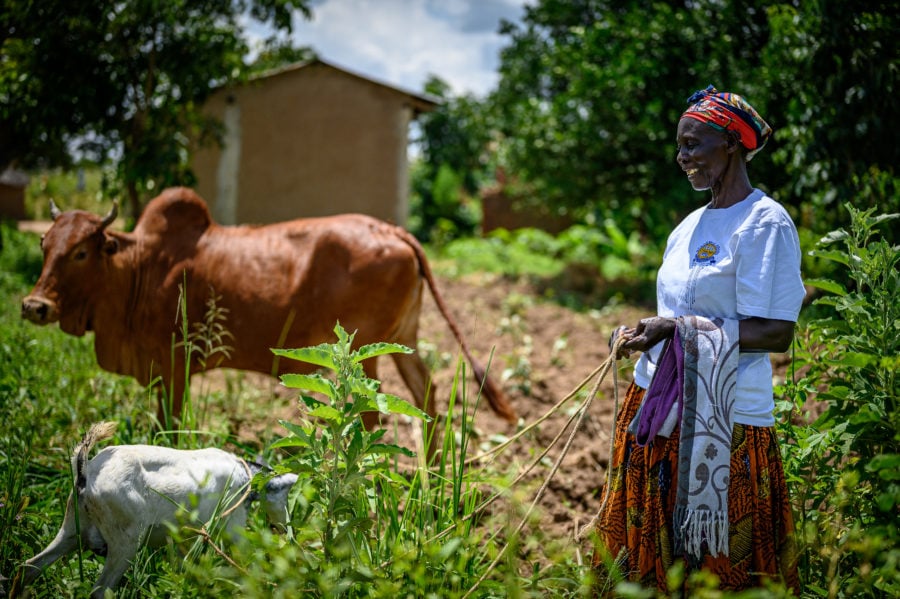
Out of the savings, many farmers are now also able to buy cows, goats, poultry and pigs. Livestock generates even higher income, which they can put toward their children’s school fees. In the long run, quality education is what will really help these families out of poverty.
“We really want to continue. The results are great, and we have really made a difference in the lives of these farmers.”
66-year-old Ruth Ongiji grows sesame seeds, black-eyed peas, peanuts, corn and cassava. After her yield improved significantly, she decided to purchase livestock. “We had problems, like inadequate finance”, says Ruth. “We didn’t have enough knowledge about agriculture. Once I earned more money from selling black-eyed peas, I took that money and bought a cow and a goat.”
The project is called Female Farmers Farm Better because it focuses on improving the situation of women in rural Uganda. However, men in the region benefit just as much from the support. “In the end, we help families, because husbands and wives work together in the field”, says Tom Edul. “The role of the men is to clear the land, after which the women plant the seeds. Both men and women harvest and are involved in the process of selling the products and organising the savings.”
Eager to extend
The successful project is set to conclude in a few months, but SOCADIDO is eager to extend and expand it. Edul: “We really want to continue. The results are strong, and we have made a real difference in these farmers’ lives. Our methods of distributing PICS bags, providing tarpaulins to dry the harvest, which improves produce quality, and implementing irrigation systems are unique in this region. The farmers truly appreciate our efforts, and they now have the confidence and courage to sell their products in the markets at reasonable prices. They can sustain themselves and even grow their businesses.”
This project is supported by
