In the dry, rugged landscape of Marsabit County in northern Kenya, the (B)eat The Locust Project is supporting women to rebuild livelihoods eroded by climate change. Launched in response to the environmental and economic damage caused by repeated droughts and desert locust invasions, the project has introduced insect-based value chains as a practical alternative to declining pastoralist systems.
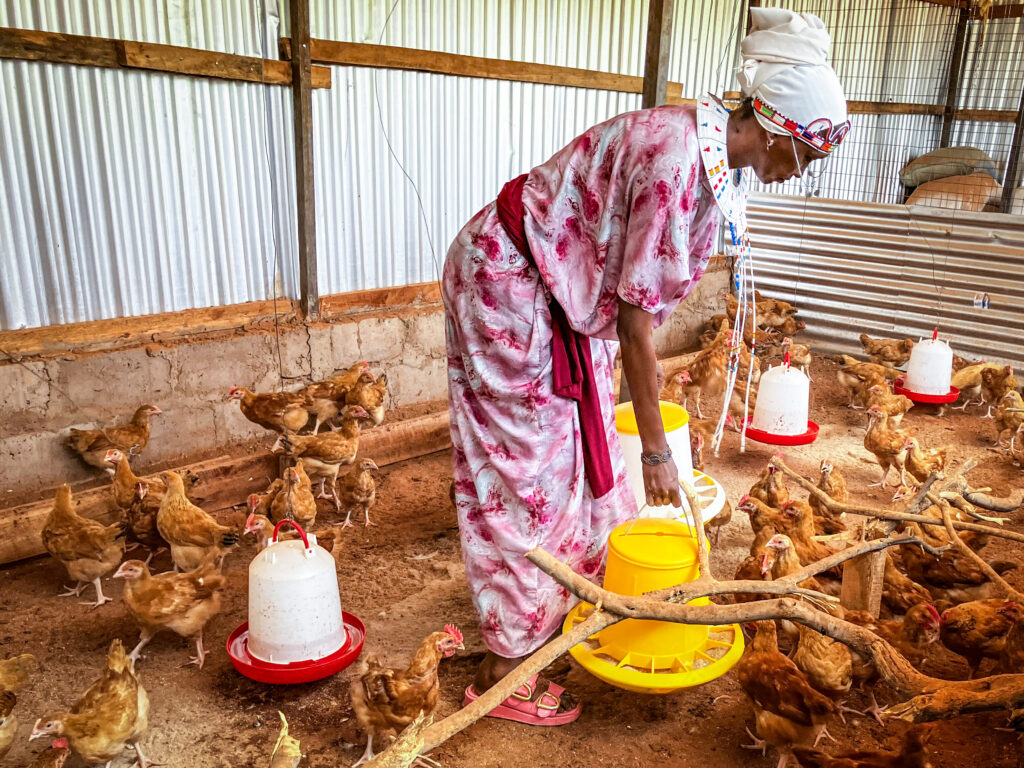
For the 24 women of the Nalotu Self-Help Group, this intervention has transformed crickets from an overlooked insect into a source of food security, income, and resilience in one of Kenya’s most climate-vulnerable regions.
The group began as a savings and loan association, pooling small amounts of money to support household needs. Over time, this grew into a collective business. For a period, the venture worked. Profits were shared, loans were repaid, and families were supported.
Then prolonged drought swept across the region. Grazing land disappeared, rainfall became unreliable, and livestock died in large numbers. The pastoralist economy on which the women depended collapsed.
Rosemary Gumato, the group’s chairlady, remembers the moment when it became clear that change was unavoidable. ‘As women, we realised we could not depend on the livestock alone. The climate has changed, and we don’t know when it will rain again for pasture to grow for our livestock.’
A Turning Point With The (B)eat The Locust Project
In response, the women began searching for alternatives. With land donated by local leaders, they established a kitchen garden to grow vegetables for household use. During this period, IMPACT Kenya identified the group and began supporting them through livelihood programmes.
Their first breakthrough came with beekeeping. After receiving training and beehives, the women harvested honey on their first attempt. The success built confidence and opened the door to more ambitious change.
That opportunity arrived through the (B)eat The Locust Project, which selected 38 entrepreneur groups to pilot cricket rearing. Rosemary was invited to Nairobi for lead-trainer training at the International Centre of Insect Physiology and Ecology.
At first, she was sceptical. Crickets were small, overlooked, and widely dismissed. Yet the training challenged those assumptions.
Back home, she conducted a simple experiment. She collected wild crickets and fed them to her chickens. The effect was immediate. The chickens grew faster, laid more eggs, and produced larger, healthier ones. Convinced by the results, she returned to her community determined to convince the rest of the group.
Breaking Cultural Barriers
Introducing cricket rearing to a pastoralist community was not straightforward. Eating crickets was taboo, much as eating chicken once had been. Many women were unsure. Their first question was practical rather than ideological: ‘What will we do with crickets?’
Rosemary explained their nutritional value and commercial potential. ‘One kilogram of crickets can fetch up to KES 2,500 (EUR 16.50),’ she told them. By comparison, selling five goats might earn each woman only KES 1,000 once profits were divided.
With support from IMPACT Kenya and Cordaid, the group replaced makeshift carton boxes with proper cricket-rearing kits. They introduced a strict routine. Every woman was required to bring crickets to the weekly Wednesday meeting. Anyone who arrived empty-handed was sent home to collect some. The discipline paid off. The crickets multiplied, and so did their confidence.
‘We don’t need to leave our land to look for opportunities. They are right here with us.’
Nutrition, Income And A Circular Economy
As their skills improved, the women began integrating crickets into every part of their livelihoods. They learned that ground cricket powder is richer in nutrients than omena fish meal. When used in poultry feed, it produces healthier chickens that grow more quickly. The eggs, in turn, are more nutritious, strengthening household diets.
Two malnourished children from the group showed clear improvement after eating porridge fortified with cricket flour. What had once required hospital-based nutritional support was replaced with a home-based solution. The women now use cricket-fed eggs in their meals, embedding improved nutrition into everyday life.
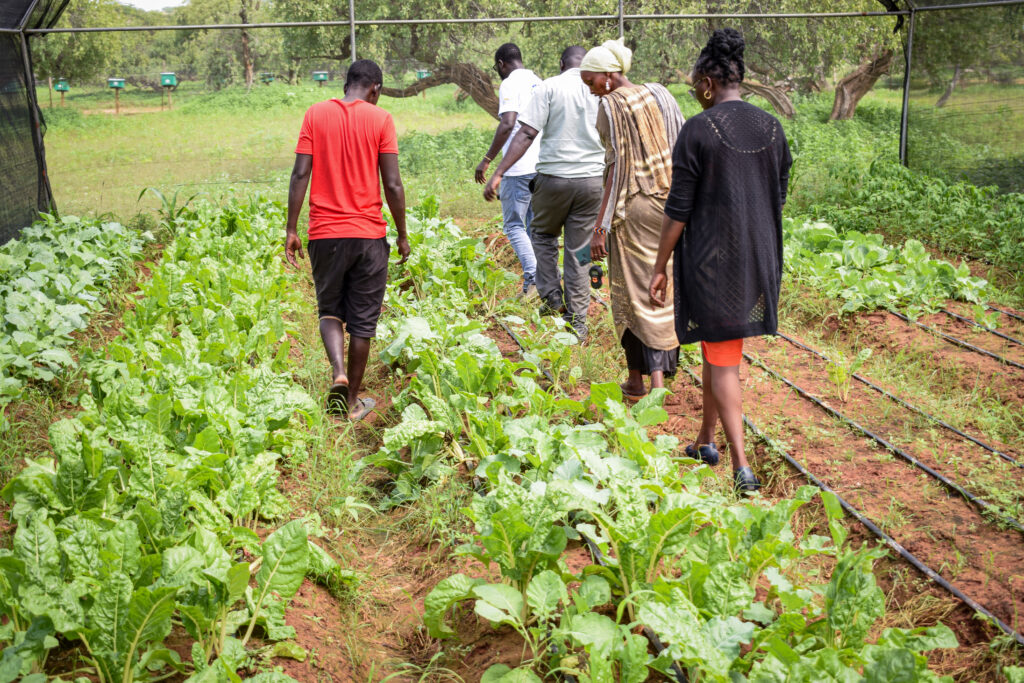
The benefits extend to farming. Cricket manure is mixed with goat manure to create compost that has significantly increased vegetable yields while reducing pest damage. Every three days, the women clean the cricket boxes and collect the waste for use in their greenhouses. Their vegetables are now known locally for their deep green colour and flavour.
Economic independence has followed. By contributing directly to food production and income, the women have gained greater influence in household decisions. ‘We no longer ask our husbands for money to buy vegetables,’ says Rosemary. ‘We get them from our group’s work.’
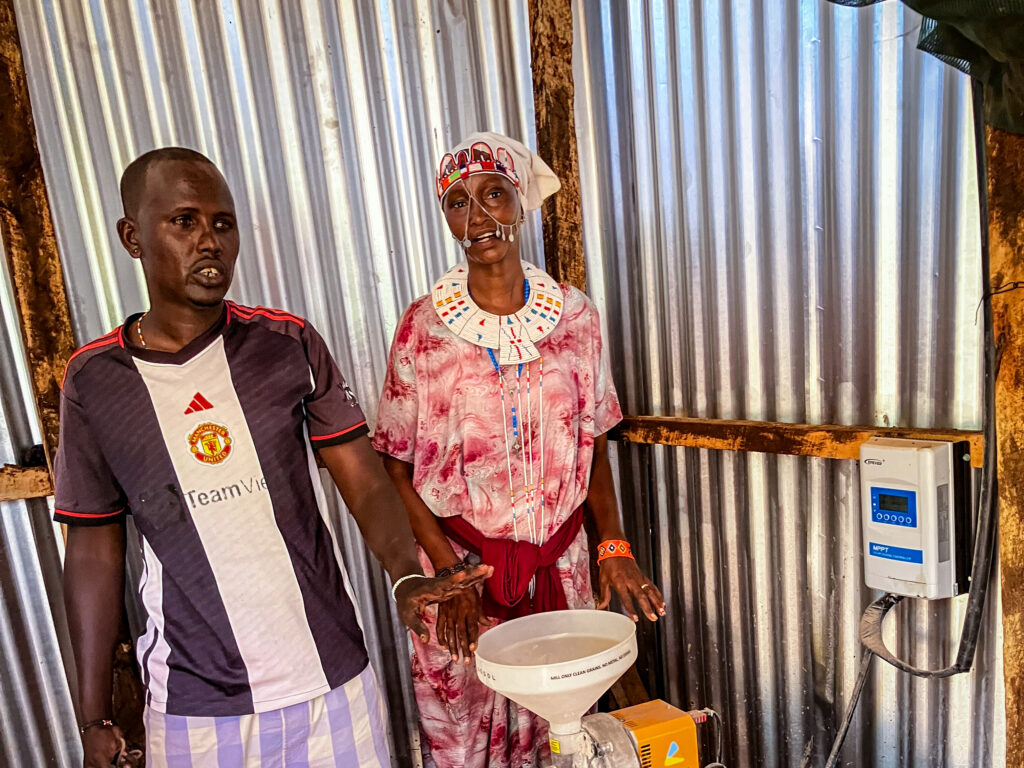
External partners have taken notice. The group has received an incubator, a solar dryer, and a solar-powered grinding machine. These investments allow them to process cricket-based feed for poultry and goats, expanding income streams while reinforcing a closed-loop production system.
Looking Ahead
Rosemary’s ambitions continue to grow. She hopes to produce cattle feed pellets to help pastoralists cope with drought cycles. ‘We already have crickets, vegetables, and maize. With the right machine, we can make our own feed. Why not reduce our vulnerability to drought?’ she asks.
Her message to other women is grounded in experience rather than optimism. ‘Nothing is impossible as long as we have water. We don’t need to leave our land to look for opportunities. They are right here with us.’
About (B)eat The Locust
The (B)eat the Locust Project emerged in response to Kenya’s most recent desert locust invasion, which was largely addressed through conventional methods and synthetic chemicals with harmful environmental effects. The project aims to diversify livelihoods in locust-prone areas by developing environmentally sustainable insect value chains.
Its approach focuses on promoting biopesticides through county and national policy, supporting pastoralist livelihoods based on insect production, and establishing insect value chains for human and animal consumption. Funded by the Postcode Lottery, the project works with pastoralist and agro-pastoralist communities in Laikipia, Samburu, Isiolo, and Marsabit counties.
This project is supported by
