Across Rwanda, youth and smallholder farmer cooperatives are transforming agriculture through skills development, savings, and extension services. Their stories prove how the sector is moving beyond subsistence toward professionalism, resilience, and opportunity.
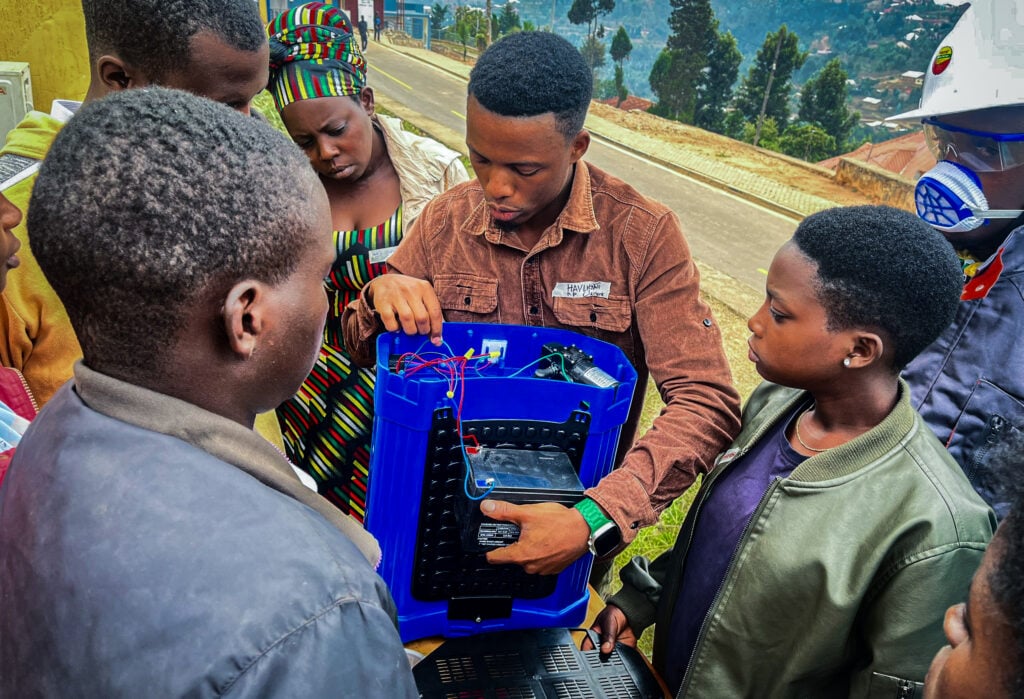
For years, limited access to equipment maintenance services has slowed agricultural mechanisation. Smallholder farmers often hesitated to invest in machinery for fear of breakdowns they had no means to repair.
Jean Denys Kwizera, a 24-year-old from Ruhango District, once shared this scepticism. After secondary school, he drifted through unemployment, convinced that agriculture offered ‘no future’ without land or capital.
That belief shifted when Kwizera joined the Ruhango Itoshye Youth Community and later enrolled in the Promoting Smallholder Agro-Export Competitiveness Project (PSAC), a nationwide training programme in agricultural equipment maintenance, funded by the International Fund for Agricultural Development (IFAD) and implemented by the National Agricultural Export Development Board (NAEB) in partnership with Cordaid.
A Youth-Led Network of Mobile Technicians
In July 2025, 136 young people across Rwanda’s four provinces were trained to operate and repair machinery, building a youth-led network of mobile technicians capable of supporting farmers where services had long been absent.
Kwizera quickly put his skills to work. With support from a local agronomist, he repaired an irrigation pump for farmer Sabit Nkundukuzera. His first job was unpaid, but it offered credibility.
‘Before this training, I never imagined I could earn a living in agriculture without owning land,’ he says. ‘Now I see agriculture differently, it’s full of business potential.’ Sabit agrees. ‘As smallholder farmers, we struggled significantly when our machinery broke down. Now, we have local youth who can help us. It’s a big relief.’
Kwizera and ten fellow trainees are now registering a business to serve farmers across three districts. Their goal, he says, is clear: ‘In three years, I see us running a fully registered company, employing youth and serving farmers throughout the region.’
While these youth tackle gaps in mechanical systems, other communities are confronting different barriers: financial inclusion, market access, and cooperative governance.
Farming as a Business
In Musanze’s Rwaza Sector, the Ntukabumwe Kabushinge cooperative has undergone a wholesale transformation through training in collective marketing, financial literacy, and the Farming as a Business approach.
Previously, members lacked key agribusiness skills and struggled to present themselves as credible partners to banks or buyers. Weak governance and limited financial planning restricted their growth.
PSAC training introduced new systems: the cooperative adopted a complete set of financial records, 12 books tracking income, expenses, loans, savings, and investments, and launched a Farmer Field School where members jointly cultivated French beans and refined production to meet market standards.
The cooperative’s turning point came when it secured a supply contract with La Palme Hotel in Musanze, demonstrating its new ability to deliver consistent, high-quality crops. Financial inclusion followed. All members opened accounts with SACCO Rwaza, and four farmers secured loans totalling RWF 4,700,000 (2,764 euros) with the cooperative acting as guarantor. What once appeared beyond reach, formal finance and formal markets, became attainable through skills and structure.
‘We decided to invest in livestock, so each member can start seeing real change in their homes. It’s more than animals. It’s dignity, food security, and a step toward independence.’
Business Development Services
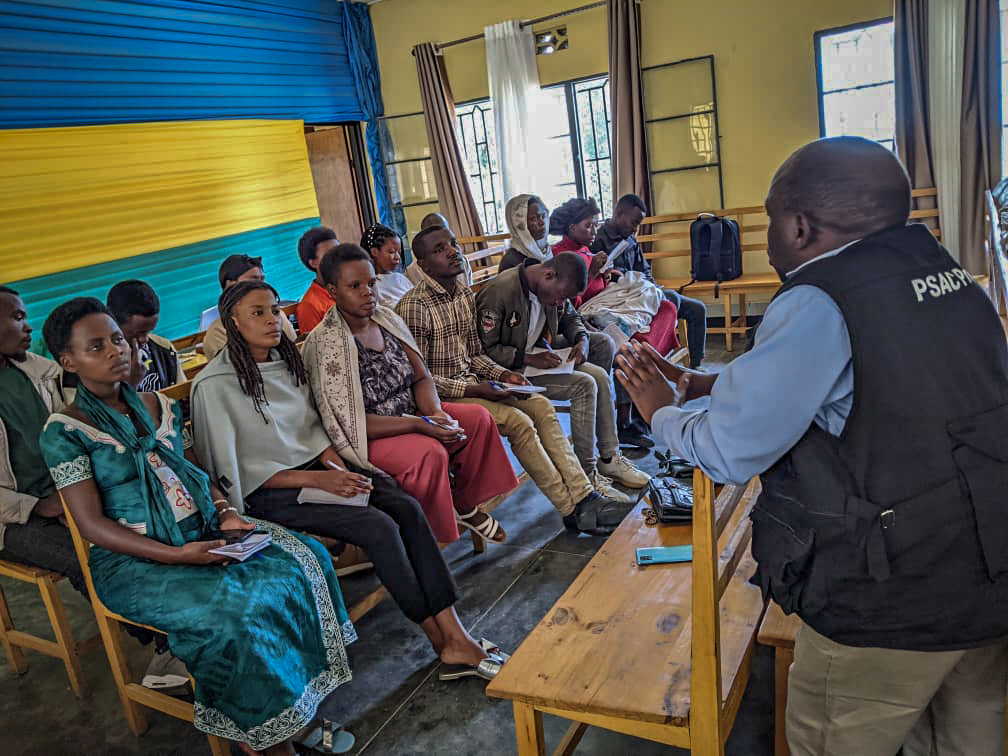
In Rwamagana District, 30-year-old Elly Nduwayezu has taken a different path, becoming a youth Business Development Services (BDS) provider through PSAC’s strategy of integrating young professionals into the agricultural financial ecosystem. Before the project, Elly faced chronic underemployment. Training in business planning, farmer engagement, and financial literacy equipped him to support smallholder farmers in developing bankable business plans.
In September 2025, he assisted five farmers, two of whom secured loans from Munyaga SACCO. With earnings from BDS fees, supplemented by his savings, Elly invested in a laptop and a bicycle to expand his services.
‘After receiving training, I felt empowered and motivated. I now receive regular work opportunities and believe that PSAC has given me a meaningful chance to grow and succeed,’ he says. His ambition is to become a recognised district-level BDS provider and deepen financial access for farmers.
Grassroots Empowerment
Further north, in Musanze’s Nkotsi Sector, a community group is demonstrating yet another model for grassroots empowerment. The Abanyamurava Ruyumba farmer group (19 members, mostly women) began with the intention of producing patchouli seedlings but had no seeds or operational structure. Through PSAC mobilisation, they formed a savings group.
Within months, they formalised governance systems, opened collective and individual bank accounts, and raised RWF 190,000 (112 euros) toward cooperative registration fees.
Most notably, they launched an internal livestock investment fund, allocating RWF 50,000 (29 euros) every two weeks for one member to purchase small livestock. Five members have already acquired pigs and goats.
‘We decided to invest in livestock, so each member can start seeing real change in their homes. It’s more than animals. It’s dignity, food security, and a step toward independence,’ says group chairperson Beatrice Ntirenganya.
Their vision is to evolve into a fully registered horticulture cooperative, with every member eventually owning livestock.
Reshaping the Agricultural Landscape
Across these stories, the through-line is clear: targeted training, inclusive financial systems, and youth engagement are catalysing rural transformation. Whether repairing equipment, negotiating contracts, drafting business plans, or building savings groups, Rwanda’s young agripreneurs and farmer collectives are demonstrating that community-driven change can reshape the agricultural landscape.
For Jean Denys Kwizera, the message is simple: ‘Before, I had no land. Now, I have a future.’